Go Back
Roasted Peach Bundt Cake

Roasted Peach Bundt Cake

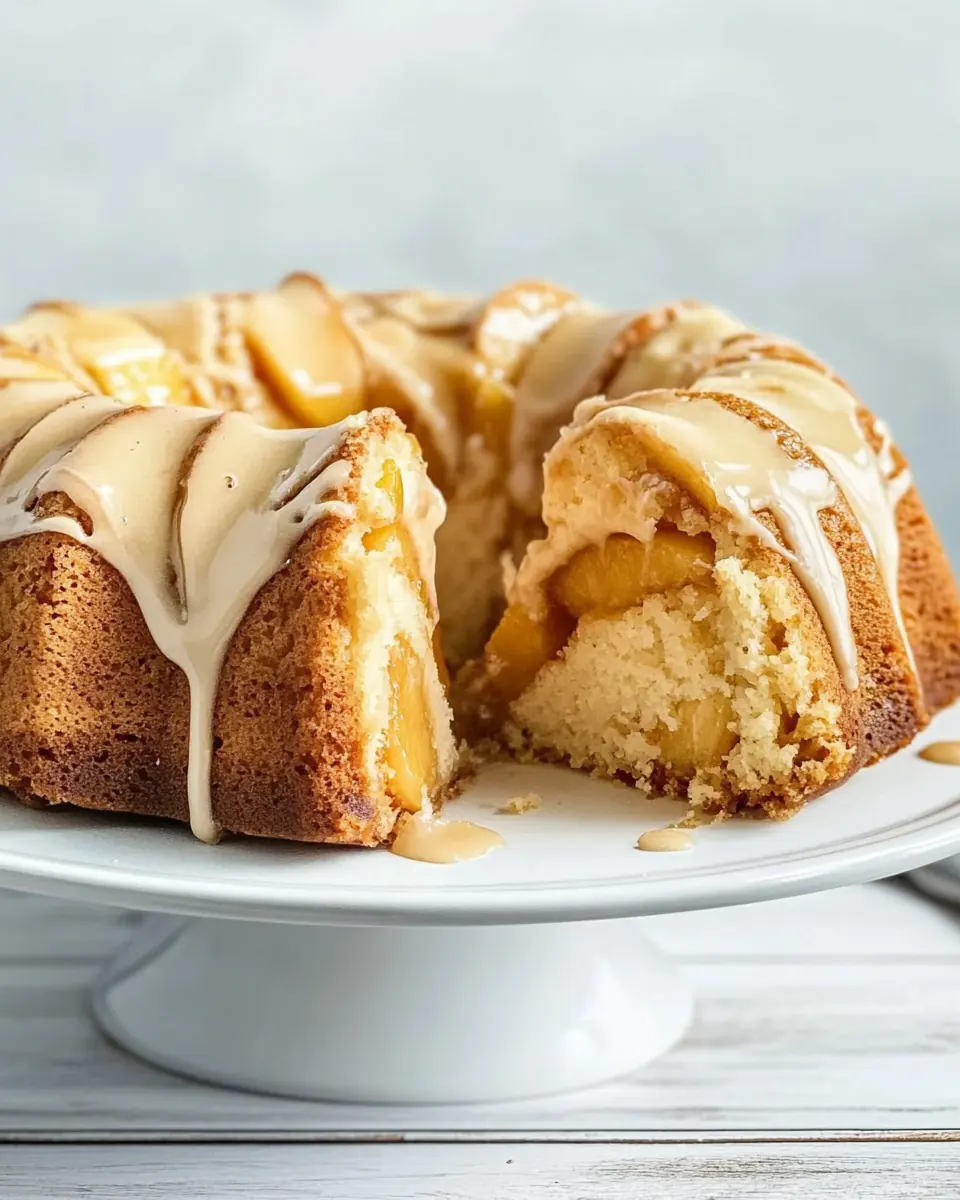
Roasted Peach Bundt Cake is a tender, buttery cake studded with caramelized peaches and finished with a glossy peach glaze, offering warm spice notes and a melt in your mouth crumb. This easy yet elegant dessert captures bright summer fruit, making it perfect for brunches or relaxed gatherings. Bake it when peaches are at their peak for an irresistible crowd pleaser.
Prep Time 30 minutes
Cook Time 1 hour 45 minutes
Total Time 2 hours 15 minutes
Servings: 4 servings
Course: Desserts
Cuisine: American
Calories: 300

Ingredients
  

  • 1 3/4 pound (s) fresh peaches, halved and pitted Halve and pit the peaches before roasting or arranging in the cake pan to concentrate their sweet, juicy flavor; roasting caramelizes natural sugars and adds depth to the cake. Use tender, ripe fruit to ensure soft texture inside the cake and vibrant aroma that complements the spices. Chop or slice any extra pieces as needed for folding into batter or arranging on top before baking.
  • 1/4 cup (55 grams) firmly packed light brown sugar Pack the light brown sugar firmly to measure accurately and sprinkle over peaches prior to roasting to encourage caramelization and a rich molasses note. Incorporate into batter if a touch of warm sweetness and moisture is desired to balance the fruit and spice. Adjust packing if substituting to maintain moisture and texture in the finished cake.
  • 2 tablespoon (s)(28 grams) unsalted butter, melted Melt the unsalted butter and brush over peach halves or mix with brown sugar to create a caramelized topping that enhances flavor and prevents sticking. Use melted butter to coat fruit so it browns evenly and releases juices during roasting, contributing to the cake’s moist crumb. Reserve any extra melted butter for greasing the pan to ensure clean release.
  • 1 cup (227 grams) unsalted butter, softened Soften the unsalted butter at room temperature to create a smooth, aerated base when creaming with sugar, which provides structure and tenderness to the cake. Beat until light and fluffy to trap air that helps leavening agents produce a fine, even crumb. Maintain unsalted butter to control overall salt level and balance sweetness and spice.
  • 2 cup (s)(400 grams) granulated sugar Combine granulated sugar with softened butter and beat until pale and creamy to incorporate air, which contributes to leavening and a tender crumb in the Bundt cake. Adjust creaming time to ensure sugar dissolves partially into butter for optimal texture and even sweetness. Use the specified amount to achieve proper balance between richness and sugar-snap exterior.
  • 3 large eggs (150 grams), room temperature Bring large eggs to room temperature and add one at a time while beating to emulsify fat and liquid, stabilizing the batter and contributing structure. Use eggs to help bind ingredients and set the cake’s texture during baking, creating moisture and richness. Weighing eggs ensures consistent batter hydration and predictable baking results.
  • 1 large egg white (30 grams), room temperature Separate and bring the large egg white to room temperature to incorporate later for added structure or sheen if brushed on fruit, contributing to a glossier finish and slightly firmer crumb. Whisk into batter or fold gently if needed to increase lift without overworking gluten. Use the single white precisely to maintain balance in moisture and protein.
  • 2 3/4 cup (s)(344 grams) plus 3 tablespoons (24 grams) all-purpose flour, divided Measure the all-purpose flour accurately, keeping 2 3/4 cups plus 3 tablespoons divided so some is reserved for dredging fruit or adjusting batter thickness as needed. Sift or whisk before mixing to remove lumps and ensure even distribution of leavening agents and spices. Add reserved flour gradually to avoid overworking the batter and maintain tender crumb.
  • 1 3/4 teaspoon (s)(5.25 grams) kosher salt Dissolve kosher salt evenly into dry ingredients to enhance overall flavor and counterbalance sweetness while strengthening the gluten network slightly for better crumb structure. Use the measured amount for balanced seasoning without overpowering delicate peach and spice notes. Adjust only if using a different salt type, since kosher granule size affects salinity.
  • 1 1/2 teaspoon (s)(7.5 grams) baking powder Combine baking powder with dry ingredients to act as the primary chemical leavening agent, producing gas during baking that helps the Bundt cake rise into a light, even texture. Ensure it’s fresh and evenly distributed by sifting or whisking with flour to avoid uneven rise or dense pockets. Use the specified amount to match the batter acidity and volume.
  • 1 1/2 teaspoon (s)(3 grams) Chinese five-spice powder Add Chinese five-spice powder to the dry mix to introduce warm, aromatic notes—typically a blend of star anise, cloves, cinnamon, fennel, and Szechuan pepper—that complement roasted peaches and brown sugar. Use sparingly to provide depth without overwhelming the fruit; balance with vanilla and buttermilk. Toast lightly if desired to intensify fragrance before adding.
  • 1 cup (240 grams) whole buttermilk, room temperature Bring whole buttermilk to room temperature and fold into batter to add tangy moisture and acidity that reacts with baking powder for tender, moist crumb and subtle flavor brightness. Whisk buttermilk smoothly into wet ingredients to prevent lumps and maintain batter consistency. Use specified amount for proper hydration and leavening balance.
  • 1 1/2 teaspoon (s)(6 grams) vanilla extract, divided Measure and divide the vanilla extract, adding most to the batter and reserving a portion for glaze or fruit to provide floral, sweet aromatic lift that enhances peach and spice flavors. Stir into wet ingredients to distribute evenly and avoid pockets of flavor. Use pure vanilla for the most natural, complex aroma.
  • 1 1/2 cup (s)(180 grams) confectioners’ sugar Sift the confectioners’ sugar to remove lumps and use it to make a smooth glaze or dusting that adds delicate sweetness and a polished finish to the Bundt cake. Combine with reserved vanilla or a splash of buttermilk to reach desired pourable consistency for drizzling over cooled cake. Adjust thickness for drizzle versus thicker coating as preferred.

Equipment

  • Rimmed Baking Sheet
  • Parchment Paper
  • Stand mixer with paddle attachment
  • Large mixing bowls
  • 10-Cup Bundt Pan
  • Wire Rack
  • Fine Mesh Sieve

Method
 

  1. Preheat oven to 425°F (220°C). Line a rimmed baking sheet with parchment paper.: As the oven warms, you should notice a dry, warm breath when you open it, and the parchment-paper-lined sheet will prevent sticking while allowing juices to collect and bubble slightly. This high initial temperature helps the peaches begin to caramelize quickly, creating those lightly charred edges that deepen the flavor. A common mistake is skipping the parchment; without it, juices can burn to the pan and create bitter smoke. Make sure the oven reaches temperature before you slide the peaches in, and check that the rack is centered for even heat circulation.
  2. On prepared pan, toss together peaches, brown sugar, and melted butter until peaches are well coated. Arrange peaches cut side down.: You should hear a soft clink as the bowl hits the counter while tossing, and the peaches will glisten with a glossy coat of butter and sugar. Arranging them cut side down encourages direct contact for caramelization, giving a slightly crisped surface and intensified flavor. If you pile them too close they will steam instead of roast, producing less color, so give each half room. Watch for the sugar to turn syrupy but not burn; if it smokes, reduce the heat slightly next time.
  3. Bake until lightly browned on bottom, about 10 minutes. Turn peaches, and bake until fork-tender, 7 to 10 minutes more. Let cool completely on pan on a wire rack. Reserve 4 ounces (113 grams) roasted peaches. Chop remaining roasted peaches into small pieces. Reduce oven temperature to 325°F (170°C).: You will smell a warm, caramel aroma as sugars brown. Turning the peaches midway ensures even roasting and that both sides get golden. The second bake will soften the flesh so it yields easily to a fork without collapsing. Cooling on the pan allows juices to settle and prevents sogginess. Reserving some roasted peaches for the glaze concentrates flavor, while chopping the rest adds tender fruit pockets in the cake. A pitfall is undercooking, which leaves the fruit firm and less flavorful; test with a fork to ensure tenderness. After roasting, lowering the oven temperature creates a steadier environment for the dense Bundt cake to bake through without overbrowning.
  4. In the bowl of a stand mixer fitted with the paddle attachment, beat softened butter and granulated sugar at medium speed until light and fluffy, 3 to 4 minutes, stopping to scrape paddle and bottom and sides of bowl. Add eggs and egg white, one at a time, beating well after each addition.: You'll notice the mixture lighten in color and develop a billowy texture, which traps air that helps the cake rise. Scraping the bowl ensures even mixing and prevents streaks of unincorporated butter . Adding the eggs gradually helps create a stable emulsion and keeps the batter from splitting. If the batter seems curdled, stop and scrape, then resume beating slowly; overworking at this stage is a common error that can toughen the cake. Aim for a silky, cohesive batter before you move to the dry ingredients.
  5. In a large bowl, whisk together 2 3/4 cups (344 grams) flour, salt, baking powder, and five-spice powder. In a small bowl, stir together buttermilk and 1 teaspoon (4 grams) vanilla. With mixer on low speed, gradually add flour mixture to butter mixture alternately with buttermilk mixture, beginning and ending with flour mixture, beating just until combined after each addition.: The dry mix should smell faintly spiced and look uniform, while the buttermilk will shimmer slightly with vanilla. Alternating wet and dry helps maintain a tender crumb by minimizing gluten development, and the low speed prevents overmixing. You want the batter homogenous but not overworked; a few tiny streaks are fine. Overmixing here leads to a dense, chewy cake. Be attentive when adding the last of the flour, stopping as soon as it disappears for the lightest texture.
  6. In a medium bowl, toss together chopped peaches and remaining 3 tablespoons (24 grams) flour to coat. Gently fold peach mixture into batter.: Coating the chopped peaches in flour keeps them suspended so they do not sink to the bottom. When you fold them in, you should see flecks of fruit distributed through the pale batter, and the batter will feel slightly heavier. Use a gentle hand to avoid deflating the air you worked into the batter earlier. A common issue is rushing the fold and overmixing, which causes the cake to collapse; fold just until the fruit is evenly dispersed.
  7. Spray a 10-cup Bundt pan with baking spray with flour. Spread batter into prepared pan. Tap pan on a kitchen towel-lined counter a few times to settle batter and release any air bubbles.: The batter will flow into the pan's nooks and crannies, and tapping helps remove trapped air that could create tunnels or large holes in the crumb. A properly greased pan prevents sticking while preserving the cake's fluted silhouette. If you skip thorough greasing, the cake can cling and tear during unmolding, so be generous with the spray or use softened butter and flour to coat every ridge. After tapping, the batter surface should look smooth and even, not glossy with bubbles.
  8. Bake until a wooden pick inserted near center comes out clean and an instant-read thermometer registers at least 205°F (96°C), 1 hour and 35 minutes to 1 hour and 45 minutes. Let cool in pan for 15 minutes. Invert cake onto a wire rack, and let cool completely.: As the cake bakes, the top will set and the edges will pull slightly from the pan. You should notice a deep, warm aroma evolving and a gentle bounce when you press the surface lightly. The specified internal temperature ensures the dense cake is fully cooked without drying out. Letting it rest in the pan for 15 minutes helps the structure stabilize so it unmolds cleanly. Rushing the inversion while the cake is too hot risks breakage, while leaving it in the pan too long can trap moisture and make the crust soggy. Aim for that perfect balance where the cake slips free and the exterior is lightly set.
  9. Using a rubber spatula, press reserved roasted peaches through a fine-mesh sieve into a small bowl, reserving liquid.: As you press, bright, glossy peach liquid will collect in the bowl, smelling intensely of caramelized fruit. This strained concentrate becomes the foundation for a vibrant glaze. Leaving solids out of the glaze ensures a smooth pour and a silky finish on the cake. A common slip is pressing too aggressively and forcing pulp through; use steady pressure and discard any large solids left in the sieve for the clearest liquid.
  10. In another small bowl, whisk together 3 tablespoons (45 grams) reserved peach liquid, confectioners’ sugar, and remaining 1/2 teaspoon (2 grams) vanilla until smooth and well combined. Pour onto cooled cake. Let stand until glaze is set before serving, about 30 minutes. Cover and refrigerate for up to 3 days.: The glaze should be glossy and pourable, with a delicate peach perfume. Drizzle it slowly over the fully cooled cake so it glazes the contours and settles into crevices for a pretty finish. Letting it set about 30 minutes gives a slight skin that keeps the glaze from running off when sliced. If you try to glaze a warm cake, the glaze will melt and weep; always ensure the cake is completely cool. Stored in the fridge, the cake keeps its texture and flavor for a few days, and the aroma of roasted peaches remains vibrant.
Notes

  • Pick the right peaches Choose fruit that is fragrant and slightly yielding to the touch, not rock hard or overly mushy, to ensure both texture and sweetness after roasting.
  • Even roasting Spread the peaches in a single layer with space between halves so air circulates and every piece browns evenly instead of steaming.
  • Room temperature eggs Let eggs and buttermilk come to room temperature before mixing, this helps the batter emulsify smoothly and hold air for a tender crumb.
  • Scrape the bowl Pause to scrape the paddle and bowl during creaming to avoid pockets of unmixed butter or sugar which can create uneven texture.
  • Test for doneness Use an instant-read thermometer aiming for around 205°F to ensure the dense Bundt cake is fully baked without drying out.
  • Glaze consistency Adjust the glaze with a touch more reserved peach liquid or confectionerss sugar to reach a pourable but not runny consistency that will set nicely on the cooled cake.