Preheat oven to 400 and line a baking sheet with parchment paper.: As the oven comes up to 400 degrees, you will feel a gradual warmth in the kitchen and may notice the faint metallic scent of a hot oven. Lining your baking sheet with parchment prevents sticking and makes cleanup effortless, and it also ensures the potatoes brown evenly without clinging to the pan. The surface should be dry before you place vegetables on it, because excess moisture will steam the vegetables rather than roast them, causing limp textures. A common mistake is rushing this step, so wait until the oven fully reaches temperature for the best caramelization.
Place potatoes in a mixing bowl with garlic and 2 tablespoons olive oil. Mix well to evenly coat.: When you toss the cut red potatoes with minced garlic and 2 tablespoons of olive oil , you should feel the oil lubricate each piece and see the garlic threads cling to the surfaces. The potatoes will glisten, which helps them brown in the oven and lets the garlic slowly roast and sweeten with the starches. If pieces are crowded, they will steam instead of roast, so keep them in a single layer on the sheet later. Avoid using too little oil, because then the potatoes will dry out and not develop the golden edges you want.
Break the ends off of the fresh asparagus and discard. Place asparagus on baking sheet and drizzle with remaining 2 tablespoons olive oil. Use your hands to mix the asparagus and coat evenly. Spread asparagus in a single layer on the baking sheet. Add potatoes to baking sheet, keeping in a single layer.: Snap the woody ends off each asparagus spear where it naturally breaks, and you will notice the fibrous section separate easily. Laying the asparagus on the sheet and drizzling the remaining oil allows the stalks to roast without becoming greasy. Using your hands to coat creates an even film of oil, so heat transfers uniformly and the tips brown lightly. Arrange both vegetables in single layers so air circulates freely; otherwise, they steam and lose crispness. One trap is putting the thinner asparagus under a mound of potatoes, which overcooks the stalks; keep them side by side for best results.
Sprinkle with salt and pepper.: As you season with salt and pepper , the aroma sharpens and the surfaces begin to glisten. Salt draws moisture to the surface, aiding in browning, and pepper adds a subtle warmth. Season evenly so every bite has flavor. Over-salting at this stage is easy to do, so start with a modest pinch and adjust after roasting if necessary. If you skip seasoning now, the vegetables can taste flat even after roasting.
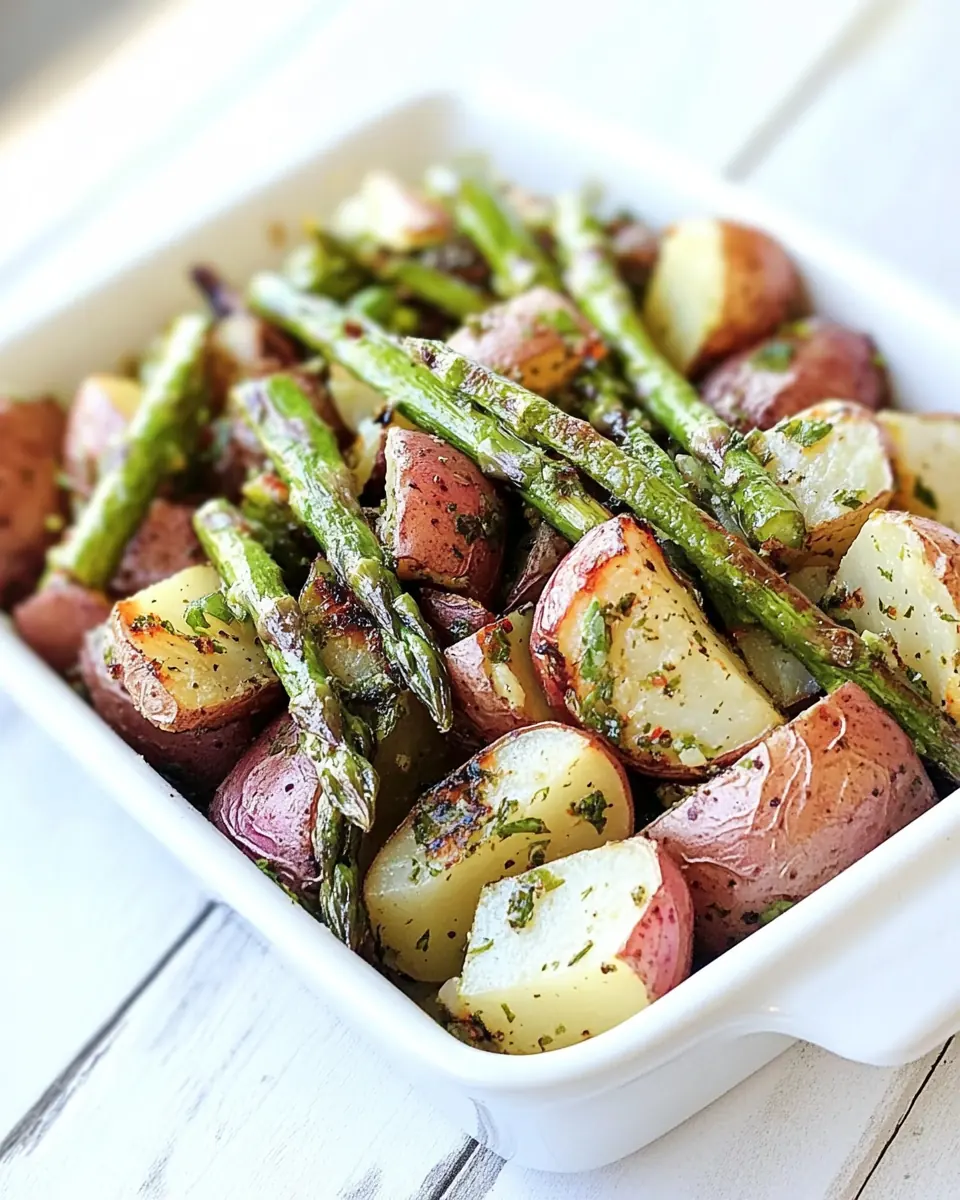
Roast vegetables for 20 minutes. Check the doneness of the potatoes and if necessary continue to roast for 2-5 minutes or until tender. Remove from oven and serve with shredded cheese.: As the vegetables roast for about 20 minutes, listen for a soft sizzle and watch the potatoes develop golden brown, slightly crisp edges while the asparagus tips darken and take on a glossy sheen. The kitchen will fill with a warm, savory scent; the garlic scent will deepen and smell almost nutty. Test a potato piece with a fork to ensure tenderness and, if needed, roast an additional 2 to 5 minutes to reach your preferred level of browning. Once out of the oven, the residual heat will soften the asparagus a touch and melt the shredded Parmesan cheese into the crevices. A classic mistake is removing the tray too early, leaving potatoes underdone, so trust the fork test and visual cues. Serve promptly so textures remain at their peak.