Preheat oven to 425 degrees. Line an 18 by 13-inch rimmed baking sheet with parchment paper.: The room will warm and the oven will start giving off a dry heat that helps the squash caramelize rather than steam. You should feel the heat when you open the oven, and the fanless roar will be steady. Using parchment prevents sticking and makes cleanup simple. If your oven runs hot, rotate the pan midway through roasting to avoid uneven browning. A common mistake is skipping the parchment which can make the squash stick and tear when you remove it.
Cut top and bottom ends off each squash. Then set squash upright on flat bottom and carefully slice down through center to create 4 halves total.: When you slice, the knife should meet a firm, slightly waxy resistance before giving way to dense flesh. Cutting the ends first creates a stable base so the squash does not roll, which makes the vertical slice safer. You might hear a sharp, clean sound as the knife breaks the skin. If your knife slips, stop and reposition to avoid injury. Using a large, sharp chef knife will make these cuts far easier.
Using a spoon scoop seeds and stringy center portion from squash, discard or reserve seeds for another use.: As you scoop, the texture shifts from dense flesh to a sticky, fibrous center loaded with seeds. The scraping sound and tugging sensation mean you are removing the correct material. Clearing these strings ensures the squash strands will be tender and uniform later. Avoid leaving large chunks of stringy pulp, because they can make the finished strands gummy.
Place squash on lined baking sheet flesh side up and brush flesh lightly with olive oil, season with salt and pepper.: Brushing adds a faint sheen and helps the surface brown. You will see the oil glisten and feel the slight tack when you touch the flesh. The salt will draw out flavor as it roasts. Be conservative with oil and salt, as too much will pool and inhibit proper roasting. Uneven oiling can lead to patchy browning, so try to coat the flesh uniformly.
Rotate to opposite side (rounded side facing up) then roast in preheated oven until squash feels fairly soft when pressed and squash strands are al dente tender.: During roasting you will notice the squash soften and the edges darken slightly. A gentle press with an oven mitt should give way to a tender surface but not collapse entirely. When you fork test the strands, they should separate easily yet retain a slight bite, not mush. Overcooking yields a soggy texture, so check early if your squash is smaller than average. If the skin looks shriveled and the flesh collapses, it is likely overdone.
During last few minutes of squash roasting melt butter in a medium, light colored skillet over medium heat. Stir butter occasionally and let cook until it has browned (careful not to burn).: The butter will foam and sputter, then the foam will subside and solids will begin to brown, releasing a warm, nutty aroma that is unmistakable. You will see tiny brown flecks form on the bottom of the pan and smell toasted notes. Use a light colored skillet so you can monitor color changes. If you step away, the same warm scent can quickly shift to acrid smoke, so stay attentive and lower the heat if necessary.
Pour butter into a dish if you aren't yet ready to toss with squash (otherwise it will burn from residual heat of pan).: Transfer prevents carryover cooking that would darken the butter too much. The butter will continue to sizzle slightly after moving, and the bowl will show the glossy amber liquid and speckled solids. If you skip this, the hot pan will keep browning the butter and it may become bitter. Let the pan cool before washing to avoid warping from cold water on a hot surface.
Let roasted squash cool slightly or use an oven mitt to hold squash, and shred each spaghetti squash with a fork.: As you fork the flesh, it will pull away into long, glossy strands that look like thin ribbons. The sound is soft and dragging, and the texture should be springy. Cooling a bit makes shredding safer and neater. If the squash is too hot, you risk burning your hands or steaming the strands into a mush; if it is too cool, the strands can firm up and be harder to separate.
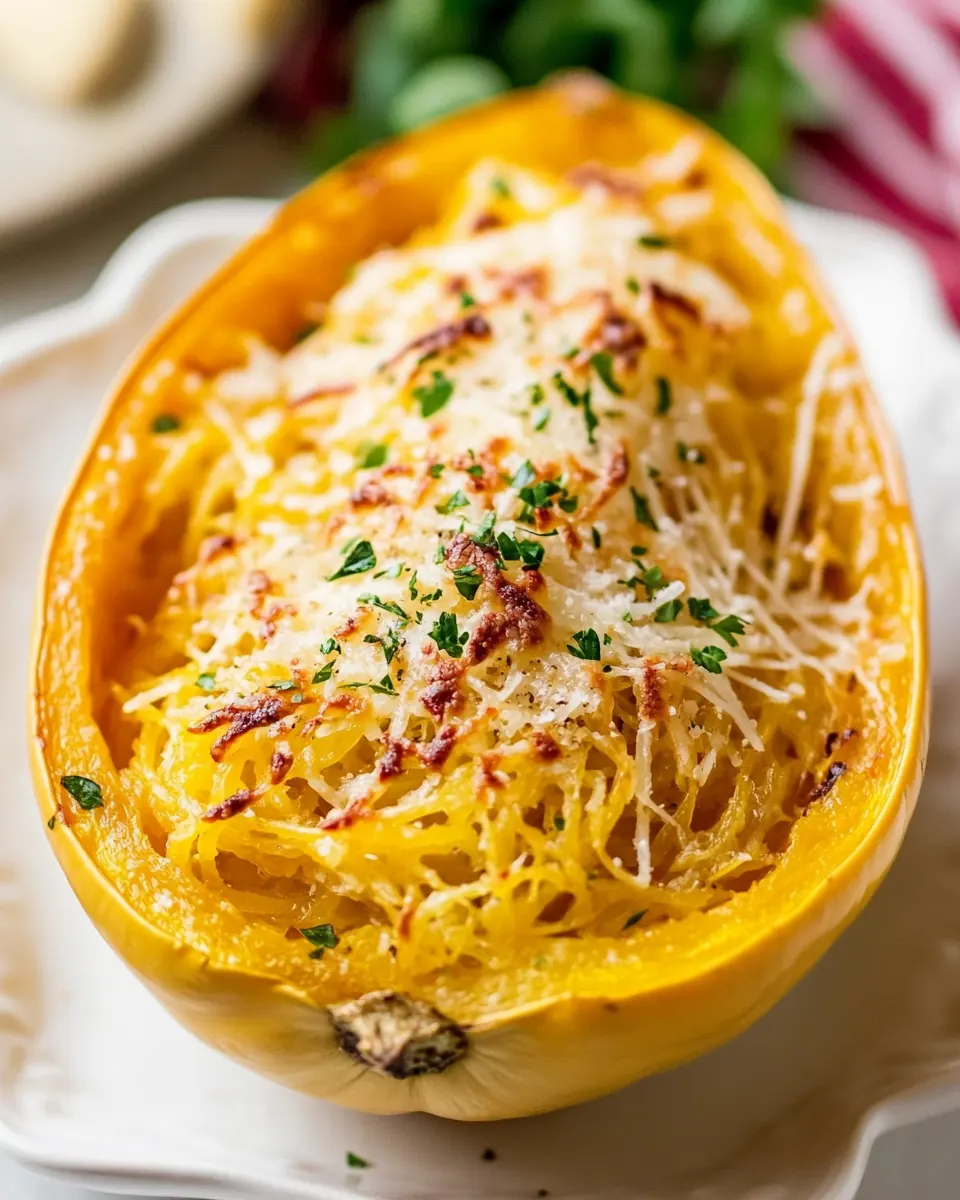
Pour browned butter over each squash. Divide 3/4 cup parmesan among squashes, then toss. Season with more salt and pepper as needed.: When the warm butter hits the strands, steam will rise and the aroma of toasted butter will spread. Tossing helps the butter coat each strand so the flavor is evenly distributed, and the grated parmesan will begin to melt into pockets that give savory bursts. Taste and adjust seasoning carefully, because the parmesan adds saltiness; over-salting at this stage can make the dish too briny. If the strands clump, gently separate them with a fork rather than stirring vigorously which can bruise the texture.
Finish with remaining 1/4 cup parmesan and garnish with parsley if desired.: The final sprinkle of parmesan creates a bright, salty top layer that contrasts with the glossy strands. If you add parsley , it will pop visually and add a fresh, green note. Serve immediately to enjoy the contrast of warm strands and melting cheese. Letting it sit will cause some moisture to accumulate, softening the texture and muting the brightness of the finish.