Preheat oven to 400 degrees F. Spray a baking dish with nonstick spray. Line a baking sheet with aluminum foil.: The room fills with warm oven air and the aluminum lined sheet makes cleanup simple, which I appreciate after a busy prep. A properly preheated oven gives the vegetables a chance to sear and caramelize quickly, creating those golden edges that bring concentrated sweetness. Common mistakes are not waiting for the oven to fully preheat, which leads to steaming rather than roasting, and using too small a baking sheet, which crowds the vegetables and prevents browning.
In a large bowl, combine corn, peppers, squash and onions with salt and pepper. Whisk together olive oil and vinegar, then add over top and toss to coat. Spread on the baking sheet and roast for 25-30 minutes.: You will hear little pops as the corn begins to cook and see the edges of the red bell pepper blister and char slightly, sending up a sweet, almost caramel aroma. The olive oil helps the vegetables develop golden, lacy edges while the balsamic gives a glossy tang that balances the sweetness. I flip the vegetables halfway through for even browning. An easy trap is overcrowding the pan, which causes steaming instead of the desired roast, so spread them in a single layer.
When the veggies are almost finished roasting, bring water to a boil and prepare pasta according to directions – shaving 1-2 minutes off of the cooking time.: The kitchen will fill with the comforting scent of pasta water and you should notice the shells becoming pliant but still firm to the bite. Cooking slightly under al dente is crucial because the shells will finish softening in the oven and soak up the cheese sauce. A common mistake is overcooking the pasta which makes the final bake mushy, so set a timer and taste early.
To make the cheese sauce, heat butter in a medium saucepan over medium heat. Once sizzling, add flour and whisk constantly to create a roux, until golden and bubbly, about 2 minutes. Pour in milk and whisk constantly, stirring until the mixture slightly thickens. Reduce heat to low and add in 6 ounces of the havarti and cheddar and all of the parmesan, along with the minced garlic. Stir until cheese melts and sauce is thick. Taste and season with a bit of salt and pepper if desired. I usually add a pinch of nutmeg.: Right away you will notice the butter foaming and the roux taking on a pale toasty color, releasing a cozy aroma. Adding warmed milk in a slow stream prevents lumps and creates a smooth texture; vigorous whisking keeps the sauce satin and glossy. As the cheeses melt, the sauce will sigh into a velvety ribbon that coats the back of a spoon. The minced garlic becomes aromatic but not sharp when cooked slowly in the sauce. Overheating at this stage will cause the cheese to seize and grain, so maintain low heat and stir constantly. Avoid adding very cold cheese which can cause clumping, and do not rush the thickening phase because undercooked roux tastes floury.
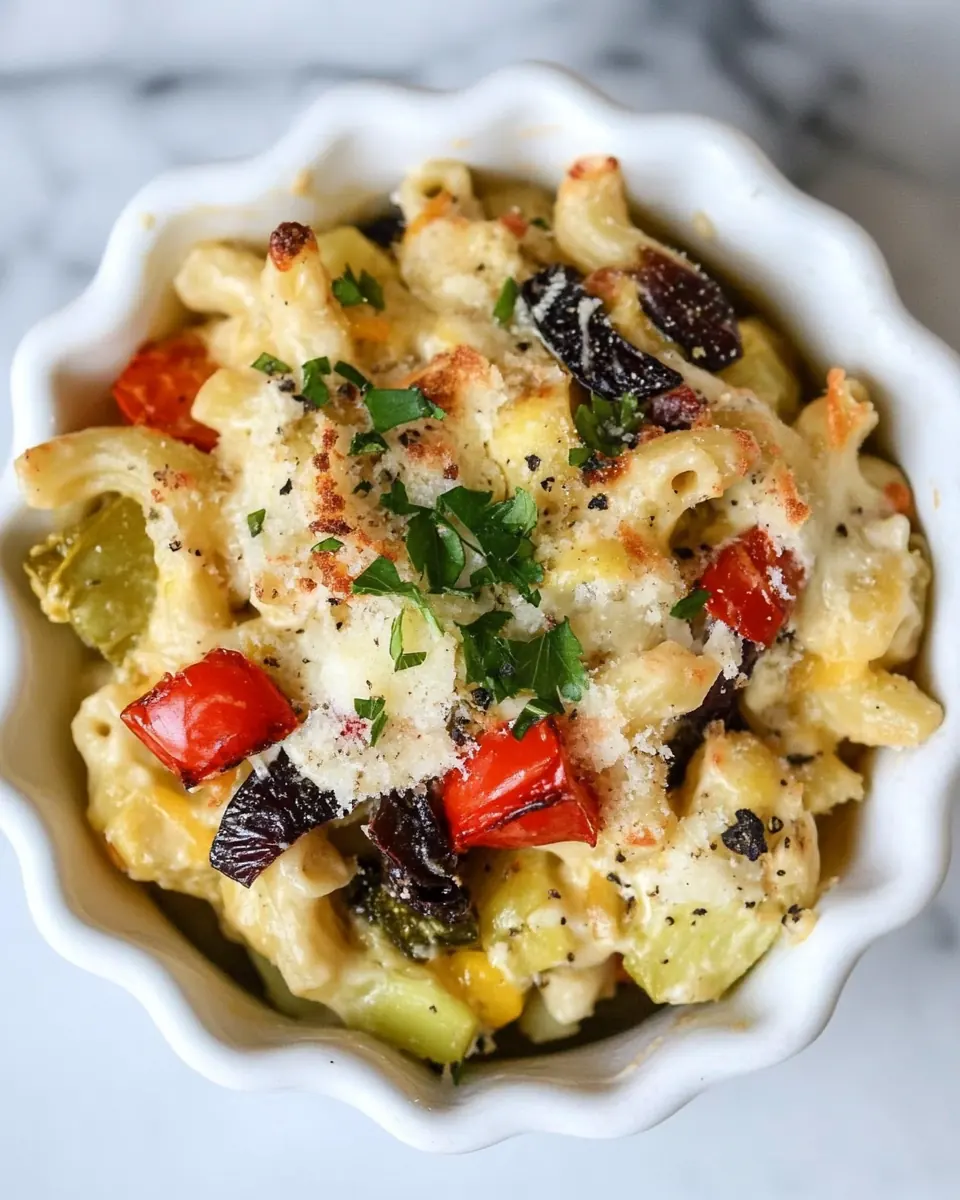
Add cooked pasta and vegetables to a large baking dish, tossing to coat. Pour cheese soup over top and stir to evenly distribute. Cover the top the the remaining havarti and cheddar, then the breadcrumbs. Bake for 30-35 minutes, or until cheese is golden and bubbly on top. Serve with sliced avocado if desired.: As you mix, you should see steaming tendrils rising and a glossy coat forming on the whole wheat shell noodles . The casserole will smell rich and inviting with sweet roasted vegetable notes and a milky, savory cheese aroma. The topping should turn a warm golden brown and the edges will bubble, sending little lakes of melted cheese around the sides. A mistake to watch for is adding the breadcrumbs too early, which may brown too quickly and not provide an even crunchy layer; sprinkle them on top right before baking. Let the dish rest a few minutes before serving so the sauce sets and the slices hold together. The avocado adds a cool, buttery counterpoint, so add it at the table to preserve its color and texture.