Preheat oven to 425˚F.: As the oven warms, you will hear its steady hum and begin to smell a faint warmth in the kitchen. This high heat is deliberate, it encourages the edges of the sweet potato to caramelize and crisp while keeping the interior tender. A common mistake is using a lower temperature which leads to soft, uncaramelized pieces, so resist turning the oven down. Make sure the rack is centered for even heat distribution, and if your oven runs hot, position a tray lower or higher by a notch to prevent burning.
In a small bowl, combine the chili flakes, garlic, honey, vinegar, sesame oil, and salt. Cut sweet potato into long and thinner sticks (1/4" thick). Slice the scallions lengthwise into quarters and roughly the same length as the sweet potatoes. Toss sweet potato and onion with the chili mixture. Place on a baking tray and roast for 25-30 minutes - sweet potato should be just beginning to brown. Remove from the oven and let cool slightly before assembly.: The aroma evolves quickly as you whisk, the sweet and tangy notes marrying with the roasted sesame scent. This mixture is the flavor anchor for the sweet potato , clinging to each stick and creating those caramelized edges. Stir until the honey dissolves, tasting for balance, since a pinch more salt can elevate the whole batch. Avoid overmixing with too much oil which can inhibit caramelization, and if the garlic pieces are too large they may concentrate and create sharp pockets of flavor.
Roughly chop the spinach and place in a bowl.: As you slice, the bright orange flesh feels dense and slightly starchy under the knife. Uniformity matters, because equal thickness ensures even roasting and consistent bite across every roll. If slices are uneven, thinner parts will crisp prematurely while thicker parts remain undercooked. A vegetable peeler or mandoline can help you get consistent pieces if you struggle with hand slicing.
Set up an assembly station with the slightly cooled sweet potatoes, spinach, sesame seeds, a bowl of warm water, and a cutting board.: The thin, bright strips of scallions bring a clean, green aroma that cuts through the roasted sweetness. Cutting them to match the sweet potato length makes the rolls tidy and easier to fold in. If scallions are cut too long they may poke out and tear the rice paper when rolling, so trim any overly long ends.
Soak the rice paper for 10-15 seconds (you don’t want it too soft when taking it out of the water.) Place rice paper on a cutting board and load with spinach and sweet potatoes. Sprinkle with the sesame seeds then roll, tuck, and fold in sides as you go. Continue with remaining ingredients.: When you combine them, watch the sheen form on the vegetable surfaces as the honey and oil coat each stick. This glaze is what browns and intensifies during roasting. Toss until every piece is lightly coated but not dripping, because excess sauce can cause steaming rather than roasting. A common error is overcrowding the bowl which produces uneven coating, so mix in batches if needed.
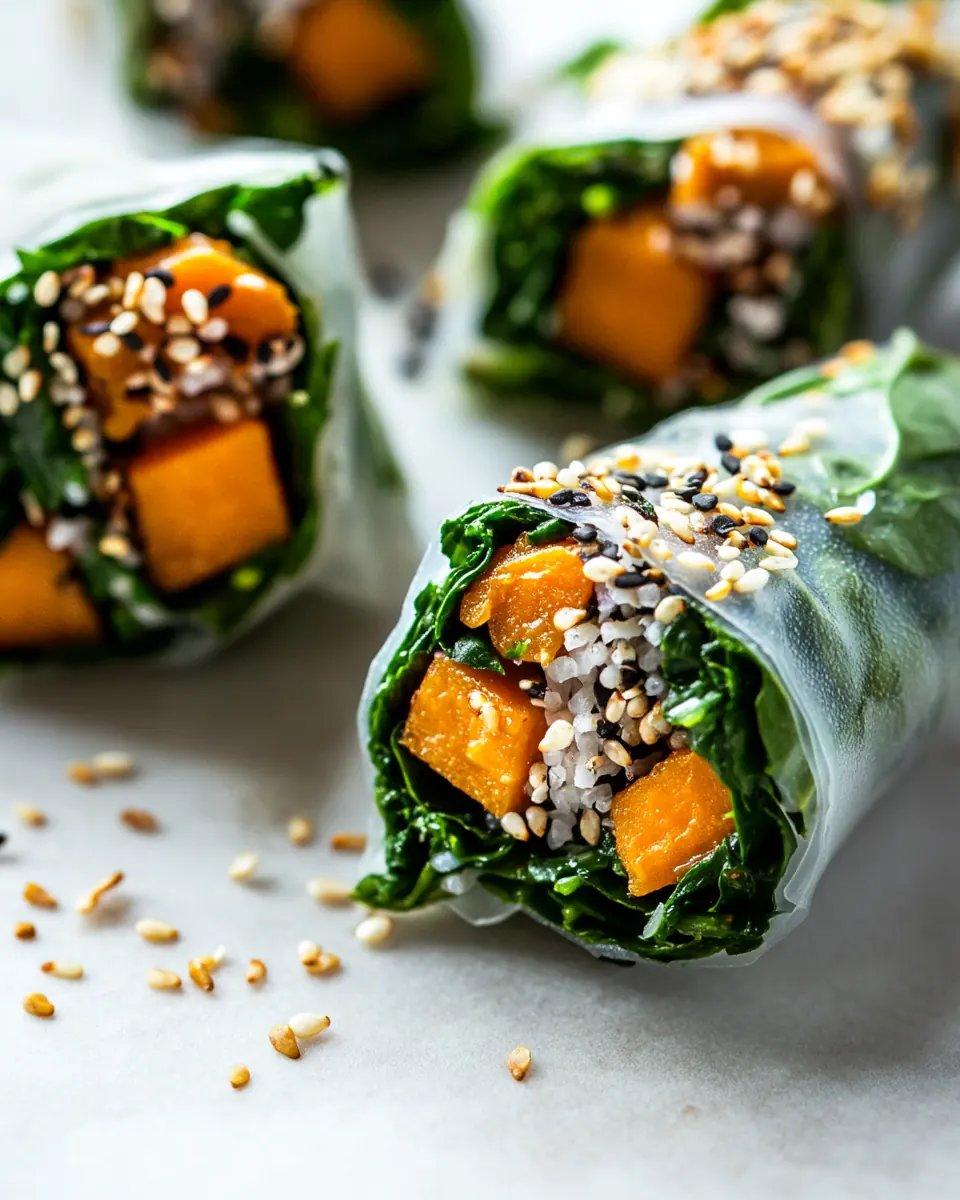
Once done slice in half and serve with a little bowl of soy sauce.: During roasting you will hear a low crackle and later detect a toasty scent as sugars caramelize. The visual cue is golden edges and a slightly shriveled surface while the interior remains tender. Avoid opening the oven frequently, which drops the temperature and prolongs cooking. If pieces brown too fast, rotate the tray and reduce time by a few minutes next round.
Remove from the oven and let cool slightly before assembly.: Warm fillings are ideal because they gently wilt the spinach , but they should not be scalding, which can tear the rice paper on contact. Cooling also helps the glaze set so it does not make the rice paper soggy. A common slip is starting assembly while fillings are piping hot, creating steam that ruins the wrapper texture.
Roughly chop the spinach and place in a bowl.: The chopped spinach should feel tender and slightly crisp, and when piled it invites easy portioning for each roll. The aroma is grassy and fresh, a nice counterpoint to roasted notes. If the leaves are wet, pat them dry, because excess moisture can lead to soggy rolls during assembly.
Set up an assembly station with the slightly cooled sweet potatoes, spinach, sesame seeds, a bowl of warm water, and a cutting board.: A well organized station keeps the rhythm smooth, and the warm water softens rice papers quickly without overdoing it. The tactile process of dipping and rolling is more enjoyable when everything is at hand. Keep a clean towel nearby to rescue any torn papers, and ensure the workspace is clear because clutter leads to rushed mistakes.
Soak the rice paper for 10 to 15 seconds.: The paper will go from opaque to pliable, and you want it just soft enough to work with, because it will continue to relax as you fill it. If it becomes too soft, it tears or becomes gummy, so lift it gently and lay it on the board while still slightly firm. A frequent mishap is over soaking, which makes rolling nearly impossible, so test one first to calibrate your timing.
Place rice paper on a cutting board and load with spinach and sweet potatoes.: As you layer the warm sweet potato and fresh spinach , notice how heat slightly wilts the greens and how the glaze clings to the vegetable surfaces. Sprinkle toasted sesame seeds for a little crunch. Packing too much filling leads to tearing, so reserve a modest amount and aim for a snug but not overstuffed roll.
Sprinkle with the sesame seeds then roll, tuck, and fold in sides as you go.: The motion should be firm and deliberate, creating a tight package that holds together. The rice paper seals as it stretches and the tucked sides prevent spillage. A rolling tip is to keep one hand steady while the other tucks, which reduces accidental tearing. If a seam does not stick, dampen the edge lightly with water to seal it.
Continue with remaining ingredients.: Maintain a steady pace, and you will notice rhythm and speed improve after a few rolls. Arrange completed rolls seam side down to keep them sealed. If some papers tear, reserve the fillings for a new sheet rather than forcing a damaged wrapper, which can lead to a messy presentation.
Once done slice in half and serve with a little bowl of soy sauce.: Cutting exposes the colorful cross section, and the soy sauce adds a salty, umami lift that rounds every bite. Use a sharp, slightly damp knife for clean slices, wiping between cuts to preserve neat edges. Overcutting or pressing down can squeeze out fillings, so make confident, single cuts.