Preheat the oven to 425˚F.: As you feel the kitchen begin to warm, notice the slight hum of the oven and the clean, dry heat that will make vegetables caramelize. Preheating is crucial for immediate searing on the pan, which triggers Maillard reaction and gives you those browned edges. If you skip preheating, the vegetables will steam instead of roast and the whole casserole will be less flavorful, so always wait until the oven reaches temperature.
Toss the cubed sweet potato, red pepper, onion, and mushrooms with the olive oil and 1/2 teaspoon of salt. Spread the vegetables on a baking sheet and roast in the oven for 14-18 minutes or until the sweet potato is tender.: You should hear a soft rustle as oil coats each piece, and the scent of raw vegetables will deepen slightly. Coating with oil helps conduct heat and encourages browning, while the salt draws out surface moisture, allowing better caramelization. A common mistake is overcrowding the pan which causes steaming rather than browning, so spread pieces in a single layer for the best color.
Spread the vegetables on a baking sheet and roast in the oven for 14-18 minutes or until the sweet potato is tender.: Watch for the sweet potato to develop golden brown corners and the peppers and onions to show caramelized edges, the smell shifting from raw to sweet and nutty. Roasting concentrates flavors and gives texture contrast that is key to the dish. Avoid underroasting, because firm sweet potato will make the casserole uneven in texture after baking.
While the vegetables cook, whisk together the eggs, half and half, remaining salt, pepper, and thyme.: The beaters will create a pale, slightly frothy custard with an aromatic lift from the thyme . Whisking incorporates air and ensures the dairy and eggs emulsify, producing a creamy set rather than a rubbery one. If you overmix vigorously for too long, you can incorporate too much air, which can lead to an unstable custard that puffs and collapses in the oven.
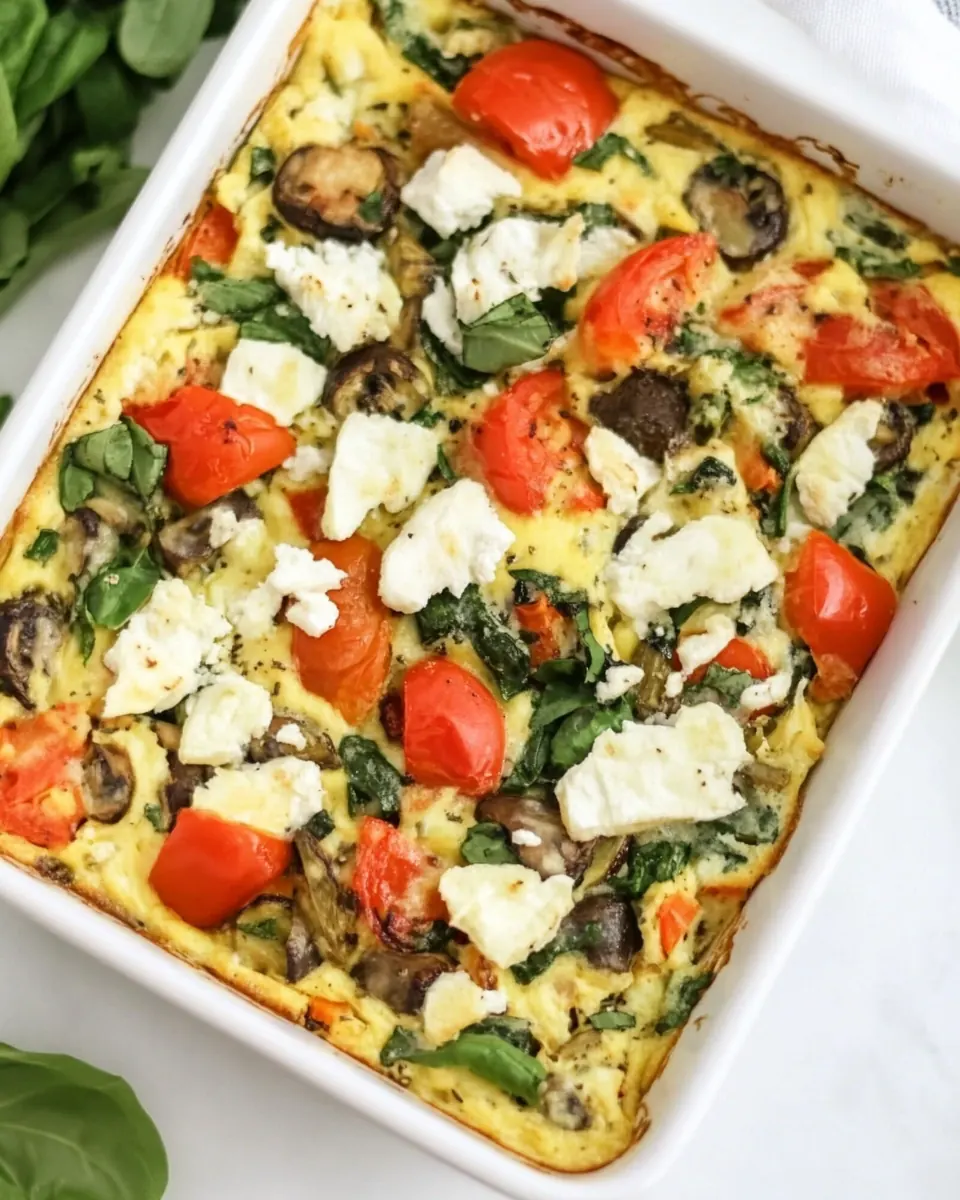
Once done, transfer the roasted vegetables to a 13×9" baking dish, or large casserole dish and spread evenly over the bottom. Mix in the chopped spinach, then sprinkle the goat cheese crumbles over the top.: The roasted pieces will release a warm, savory perfume as you transfer them, and the browned bits on the pan add flavor when scraped into the dish. Spreading evenly ensures consistent texture in each slice. A frequent oversight is leaving large clumps of vegetables which makes some slices dense and others sparse.
Mix in the chopped spinach, then sprinkle the goat cheese crumbles over the top.: The wilted warmth of the roasted vegetables will gently soften the spinach , and the creamy goat cheese will stand out as white pockets against the roasted colors. This layering creates visual contrast and flavor pockets. Be mindful of excess moisture in the spinach, as too much water can make the casserole runny; squeeze frozen spinach thoroughly if used.
Pour the egg mixture evenly over the vegetables and gently shake the pan if needed to allow it to distribute throughout the pan.: You should see the custard settle into crevices and coat the vegetables, producing a uniform surface. Shaking helps the liquid find empty pockets so the bake sets evenly. If you pour and do not allow the custard to level, you can end up with sections that cook differently, leaving some under set and others fully set.
Bake for 30-40 minutes or until the center of the casserole is cooked through. Cut the casserole in 12-15 slices and serve warm.: The top will go from glossy to matte, and the center will no longer jiggle when you gently shake the pan. The aroma will be rich and toasty, with a hint of tang from the goat cheese . Using a knife to test the center should reveal a clean pull when it is done. Overbaking dries the custard, while underbaking leaves it runny, so check visually and with a gentle wobble test to get the perfect set.
Cut the casserole in 12 to 15 slices and serve warm.: As you slice, you will notice a clean cross section with roasted bits and creamy pockets of custard, and the goat cheese may form soft ribbons. Serving warm highlights the custardy texture and bright vegetable flavors. If you cut too early while piping hot, the slices may fall apart, so let it rest briefly for cleaner portions.