Preheat the oven to 425 degrees.: You will notice the oven warming and the smell of dry heat as it reaches temperature, which is important for achieving evenly roasted yams . A properly preheated oven creates consistent browning on the skins and ensures the interior cooks through. If you skip preheating, yams may cook unevenly, resulting in a chewy center. Ensure your oven racks are positioned so the yams have space for air to circulate.
Wash the yams and pat them dry.: Running water removes soil and debris, while patting them dry with a towel helps the skins crisp slightly while roasting. If the skins are wet, they can steam instead of roast, preventing caramelization. A common mistake is not drying well enough, which leads to soggy skin and less developed flavor.
Poke yams a few times with a fork, wrap them in aluminum foil and bake them in the oven for 45 to 60 minutes (depending on size. Mine took a full hour). The yams are done when thick juice is seeping out of them and they’re soft when poked.: As the yams roast, you will hear subtle quietness from the oven and later detect a sweet, roasted aroma. Juices seeping and a tender center when pierced with a fork are visual and tactile signs of doneness. Wrapping in foil traps steam which helps them cook through without drying out, but be careful not to overwrap if you want slightly drier, caramelized skins. A common error is underestimating size differences, so test with a fork at the earliest time suggested for smaller tubers.
Remove yams from the oven and set aside.: Letting the yams rest briefly allows internal steam to redistribute, making them easier to handle and slice. You may notice residual warmth and a concentrated sweet scent. If you cut into them immediately, hot syrupy juices may spill out, so let them cool until you can handle them safely. Avoid leaving them wrapped too long, as trapped steam can make skins soggy.
Add remaining ingredients to medium-sized skillet and heat to medium or medium high. Stir with a wooden spoon until the pure maple syrup (or honey) is coating everything, walnuts become fragrant and raisins plump up, about 2 to 5 minutes, careful not to burn. Taste mixture for flavor and add more sea salt to taste.: The skillet will start to sing with the oil in the walnuts warming and the sweet syrup thickening into a glossy glaze. You will see tiny bubbles form and smell nutty toasty notes as the walnuts release aroma. Stirring constantly ensures even coating and prevents the syrup from sticking and burning, which can quickly ruin the topping. If the heat is too high, the syrup may darken too fast, so lower the heat if you see rapid browning.
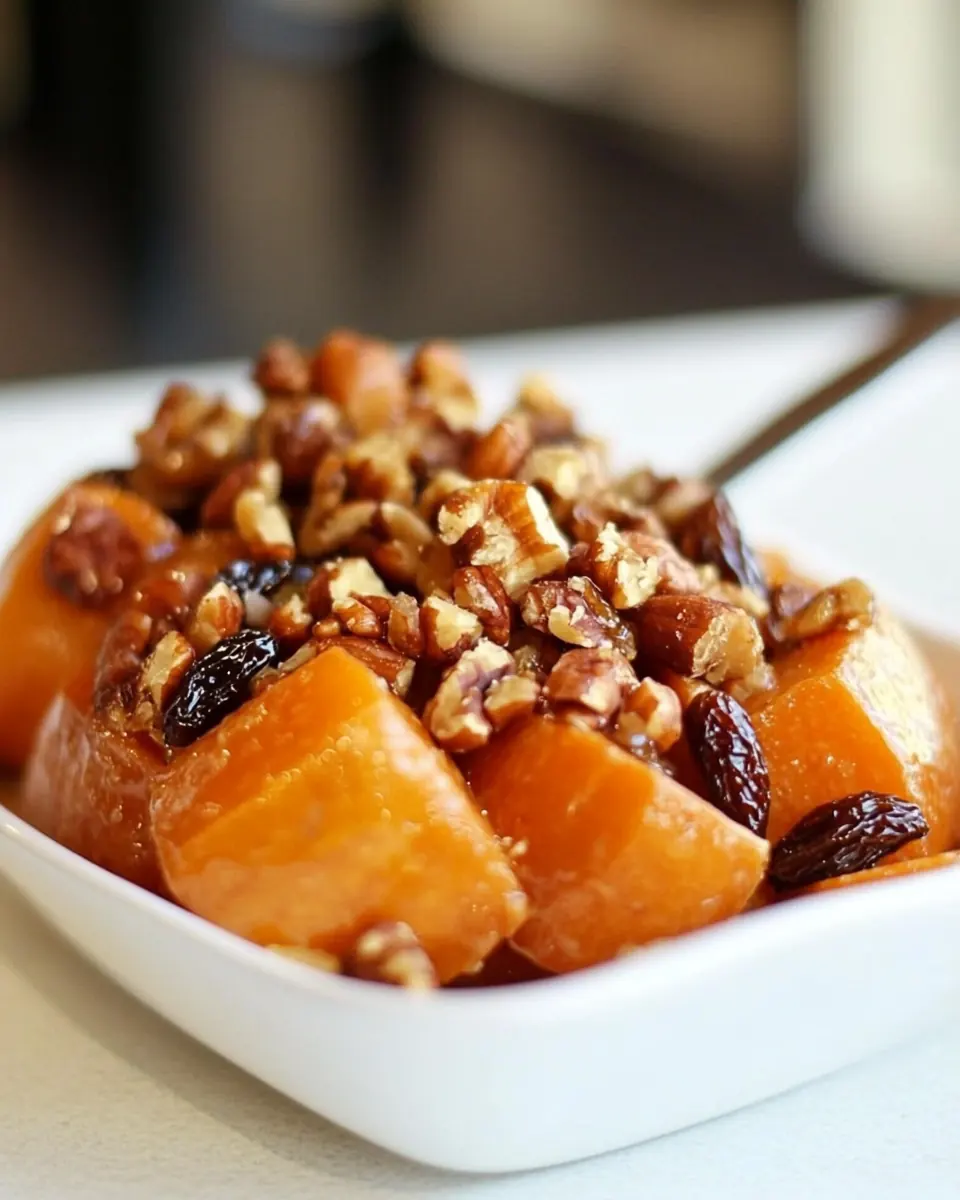
Once yams are cool enough to handle, quarter them and top with desired amount of topping.: When you cut into the yams , you should see a deep orange interior that is silky and steaming slightly. The contrast between hot tender flesh and the warm crunchy topping makes the dish special. Spoon the topping over each quarter, allowing syrup to drip into the crevices for pockets of concentrated sweetness. A mistake to avoid is adding cold topping onto cold yams , which reduces the melding of textures and flavors.
Serve hot!: Serving immediately ensures you capture the peak of warmth and the gloss of the syrup, with walnuts at their crispiest. You will experience a melody of textures and warming spice in every bite. Serving too late causes the topping to soften and lose its snap, so time plating close to serving. If you need to hold the dish briefly, keep it in a low oven to maintain warmth.
A fabulous idea: give them a squirt of whipped cream or a drizzle of melted butter.: A small addition of a rich element will add silkiness and a cooling contrast to the spiced topping, enhancing the overall mouthfeel. The whipped cream adds a light airy counterpoint while melted butter deepens the savory richness. Avoid overdoing these extras, as they can overwhelm the balance you built with the topping.