Go Back
Salisbury Steak

Salisbury Steak

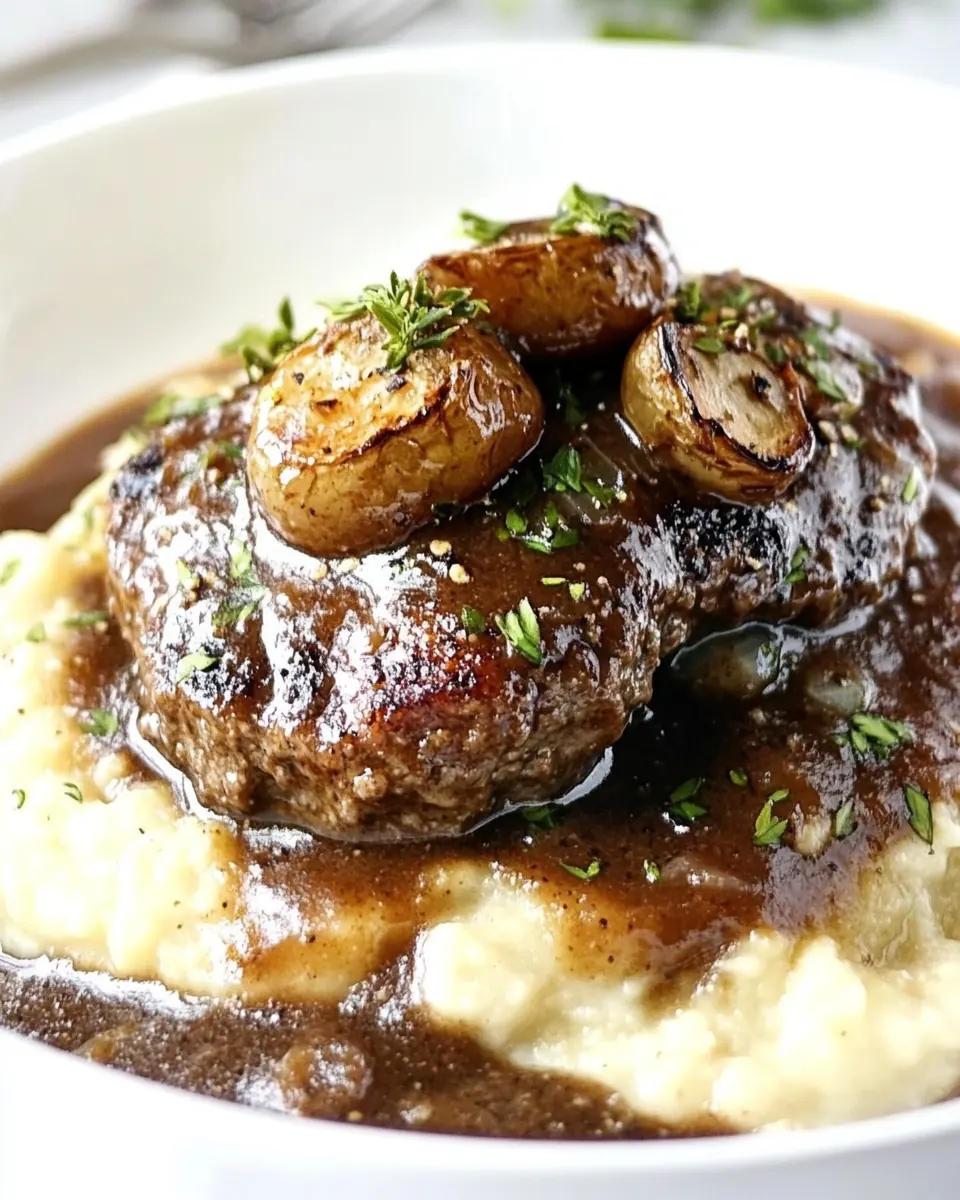
Salisbury Steak is a comforting, savory skillet meal featuring tender beef patties and a silky mushroom gravy. This easy weeknight dinner combines seared edges, earthy mushrooms, and a rich beef broth based sauce for a crowd pleasing, family friendly main. It reheats well and is perfect for serving over mashed potatoes or noodles, making it a reliable, satisfying choice for any cold evening.
Prep Time 25 minutes
Cook Time 25 minutes
Total Time 50 minutes
Servings: 4 servings
Course: Dinner
Cuisine: American
Calories: 450

Ingredients
  

  • 1 large egg Bind and add moisture to the ground beef mixture; beat until combined so patties hold together while remaining tender and slightly rich. Provide a subtle custardy texture that prevents dryness during cooking. Enhance browning and give the finished steak a cohesive mouthfeel.
  • 2 tablespoons dried minced onion Impart concentrated savory onion flavor without adding fresh moisture; sprinkle into the meat or sauce to rehydrate slightly and provide aromatic depth. Add convenience and consistent onion notes throughout the dish. Complement other savory seasonings and balance beefy richness.
  • 1/3 cup panko breadcrumbs Provide light structure and moisture absorption to the meat mixture; fold in gently to prevent soggy patties while contributing a tender crumb. Help bind juices and maintain patty shape during cooking. Offer a neutral flavor that carries other seasonings.
  • 2 tablespoons ketchup Lend sweet-tangy tomato flavor and act as a mild binder; mix into the ground beef to balance richness and add glossy caramelized notes to the finished patties. Bring familiar ketchup sweetness that complements Worcestershire and mustard. Support browning and flavor complexity.
  • 1 tablespoon Dijon mustard Introduce sharp, tangy mustard brightness and acidity; whisk into both meat and sauce to lift flavors, cut through fat, and add a subtle pungent edge. Provide a balancing note that highlights other savory elements. Offer mild emulsifying properties to help bind ingredients.
  • 1 1/2 teaspoons Worcestershire sauce Deliver complex umami and tang that deepens savory flavor; incorporate into the meat to enhance overall richness and harmonize with ketchup and soy sauce. Add a slightly fermented, sweet-savory layer that complements beef. Boost the savory backbone of both patties and gravy.
  • 1 teaspoon granulated beef bouillon, or 1 cube, crumbled Provide concentrated beefy seasoning and depth; crumble or dissolve into mixtures to intensify meat flavor and help season both patties and gravy uniformly. Offer convenient, consistent seasoning control compared to fresh stock. Help mimic depth of long-simmered broth in a pinch.
  • 1 tsp EACH dried parsley, dried oregano Impart herbaceous freshness and Mediterranean aroma; sprinkle dried parsley and oregano through the meat to add subtle green notes and layered complexity to the profile. Contribute visual flecks and light herbal lift. Pair well with other dried herbs to round out the flavor.
  • 1/2 tsp EACH salt, pepper, garlic powder, dried basil Season evenly with salt, pepper, garlic, and basil to balance and elevate all components; measure carefully to avoid over-salting and to harmonize flavors. Provide savory, spicy, and aromatic elements that enhance the beef’s natural taste. Work together to produce a well-rounded patty and sauce seasoning.
  • 1 pound lean ground beef Deliver the primary protein and rich beef flavor that defines Salisbury steak; handle gently to avoid compacting and yielding tough patties. Provide fat for flavor and moisture while taking on seasonings and binders well. Form patties that sear beautifully and carry the gravy.
  • 6 tablespoons unsalted butter, divided (less if not using mushrooms) Add richness and silky mouthfeel to the sauce and optionally to mushrooms; divide butter to brown patties and finish the gravy for shine and depth. Provide a creamy, slightly nutty flavor when browned and help mellow acidity. Use less if skipping mushrooms to control fat.
  • 3 tablespoon olive oil, divided (less if not using mushrooms) Offer a cooking fat for searing patties and sautéing mushrooms; divide olive oil to get high-heat browning and a fruity, savory backbone. Help achieve a crisp exterior and prevent sticking without overpowering other flavors. Combine with butter for an ideal browning medium.
  • 12 ounces baby bella/cremini mushrooms, sliced 1/4-inch thick (optional) Introduce earthy, savory mushroom flavor and texture when included; sauté until browned to contribute umami to the gravy and a tender bite. Add moisture and a meaty component that pairs naturally with beef. Optional use enhances depth and complexity of the final dish.
  • 1 shallot, minced (may sub 1/2 teaspoon onion powder) Provide a mild sweet-onion and subtle shallot pungency to the sauce and optional mushroom mixture; mince finely for even distribution. Behave as a delicate aromatic that softens when cooked and adds complexity to the gravy. Substitute onion powder if fresh shallot isn’t available.
  • 4 garlic cloves, minced (may sub 1 tsp garlic powder) Contribute bright, aromatic garlic flavor to both patties and gravy; mince to blend uniformly and release essential oils during cooking. Add pungency and savory depth that complements beef and mushrooms. Substitute garlic powder for convenience when necessary.
  • 1/8 teaspoon red pepper flakes Add a touch of heat and subtle chili complexity to the sauce; use sparingly to provide background warmth without dominating. Enhance savory notes and balance richness in the gravy. Allow flakes to bloom briefly in fat to release flavor.
  • 1/4 cup + 1/2 tablespoon flour Thicken and slightly coat the gravy for a smooth, velvety texture; use the combined flour amounts to create a roux or slurry depending on technique. Help the sauce cling to patties for a satisfying mouthfeel. Toast lightly to eliminate raw flour taste before adding broth.
  • 3 cups reduce sodium beef broth Provide a savory liquid base that builds the gravy’s body and deep beef flavor; use reduced-sodium beef broth to control overall salt levels. Supply moisture for simmering and deglazing the pan to incorporate fond. Allow simmering to concentrate and develop the sauce.
  • 1 tablespoon reduced sodium soy sauce Add concentrated salty-umami and slightly sweet soy notes to the gravy; stir into the broth to deepen flavor and provide savory complexity. Complement Worcestershire and bouillon for a layered sauce profile. Use reduced-sodium soy sauce to manage overall saltiness.
  • 1 1/2 teaspoons Worcestershire sauce Elevate savory complexity and add a fermented tang when mixed into the sauce; include Worcestershire to reinforce meaty, slightly sweet, and tangy notes. Pair well with soy sauce and bouillon to create a rich, restaurant-style gravy. Use measured amounts to avoid overpowering.
  • 1 teaspoon Dijon mustard Contribute a subtle sharpness and mustard depth to the gravy; dissolve into the sauce to brighten flavors and cut through richness. Reinforce the mustard flavor already in the meat for cohesion. Add just enough to lift the overall profile.
  • 1 1/2 teaspoons granulated beef bouillon, better than bouillon or 1 1/2 cubes, crumbled Enhance beefy richness and savory intensity in the sauce; dissolve better-than-bouillon or crumbled bouillon to boost umami and create a more concentrated stock flavor. Allow it to meld with broth and soy for a robust gravy. Adjust salt accordingly because bouillon is salty.
  • 1 teaspoon dried parsley Add herbaceous brightness and visual flecks to the gravy; sprinkle dried parsley to unify flavor with the patties and provide a fresh note. Rehydrate slightly in the simmering sauce to release aroma. Use as a finishing herb for subtle color and balance.
  • 1/2 tsp EACH dried oregano, dried thyme Infuse the gravy with earthy, floral, and aromatic herb tones; measure dried oregano and thyme to support the meat and mushroom flavors without overwhelming. Provide Mediterranean herb character that complements parsley and basil. Blend into the sauce early to allow flavors to marry.
  • Salt and pepper to taste Adjust final seasoning and balance flavors to taste after combining patties and gravy; add salt and pepper gradually while simmering to avoid over-seasoning. Use tasting as the guide since other components contain sodium. Finish with a final check before serving.

Equipment

  • Large Skillet
  • Spatula
  • Mixing Bowl
  • Whisk
  • Instant read thermometer

Method
 

  1. Add all of the steak ingredients to a large bowl EXCEPT the ground beef. Whisk together with a fork until thoroughly combined. Add the ground beef and combine with your hands.: Right away you will notice the blend of ketchup, Dijon mustard , bouillon and seasonings smelling tangy and savory, a prelude to the finished patties. Use your hands to fold gently so the mixture becomes cohesive without overworking it, which keeps the texture tender. A common mistake is squeezing too firmly, which yields dense patties, so handle the mix lightly. If the mixture feels dry, a small splash of broth can help, but avoid adding too much liquid because that will make the patties loose and prone to falling apart while searing.
  2. Divide the mixture into 4 equal portions, and pat firmly into oval patties around 3/4”-inch thick. Make a shallow depression/dimple in each patty so the outer border is about a 1/4 inch higher than the middle (see pics). This will help them cook more evenly/quickly/not bulge.: When you press the patties, you should feel them hold their shape but still yield slightly under pressure, signaling the right texture. The dimple is subtle but crucial, preventing the center from puffing up as the proteins contract. If patties are too thick the centers will take long to cook through, and if too thin they will overbrown and dry out. Keep them uniform so they finish at the same time in the gravy.
  3. Heat 2 tablespoons olive oil in a large skillet over medium-high heat. Sear the steaks on each side, about 3 minutes total. Transfer steaks to a plate (use along enough spatula! so they don't fall apart!) but leave the drippings behind. Note: the steaks will NOT be cooked through but will finish cooking in the sauce.: As the meat hits the hot skillet you should hear a lively sizzle and see a rich mahogany crust form within moments, signaling proper caramelization. That crust is packed with flavor and helps the patties hold juices. Avoid flipping too soon, which tears the surface and prevents a good sear. If the pan smokes excessively lower the heat slightly, and if the oil is barely shimmering raise it a touch so the crust develops properly.
  4. Melt 1 tablespoon butter with 1 tablespoon olive oil over medium heat in the leftover drippings. Increase temperature to medium-high and add half of the mushrooms. Give them a stir to evenly coat in the butter then arrange mushrooms in a single layer. Cook mushrooms for 2-3 minutes per side or until golden.: When the mushrooms hit the fat they should hiss and begin to exude moisture, then slowly brown as the water evaporates. You will smell a deep, toasted aroma as the natural sugars caramelize, and visually the edges will take on a golden color. Crowding the pan will steam them instead of browning them, so work in batches. A common misstep is stirring too often, which prevents proper color development.
  5. Remove mushrooms from skillet with a slotted spoon and repeat with remaining mushrooms; transfer all mushrooms to a plate.: The mushrooms will continue to release flavor into the pan as they rest, and removing them keeps the pan free for the shallots and gravy base. They should feel tender but still substantial to the bite. If any pieces start to burn, lower the heat for the next batch; burnt mushrooms give a bitter note that can dominate the sauce.
  6. To the now empty skillet, melt 2 tablespoons butter with 1 tablespoon oil. Add shallots and sauté over medium-high heat for 2-3 minutes to soften.: As the shallots sweat they will become translucent and release a sweet, oniony perfume. This softening step builds the aromatic foundation for the gravy. If the shallots begin to darken too quickly, reduce the heat, because burned aromatics create an acrid taste. You want them softened and lightly golden, not crisp.
  7. Reduce heat to low, add garlic and red pepper flakes and sauté for 30 seconds. Add flour and cook for 1 minute, scraping up the browned bits on the bottom of the pan.: The brief garlic sauté should release a fragrant, toasty scent without browning the garlic, which turns bitter. When you add the flour , it should bubble gently and smell slightly toasty, indicating the raw flour taste is cooking off. Scraping up browned bits incorporates concentrated flavor. A frequent error is cooking the flour too long or at too high heat, causing a pasty texture rather than a smooth thickener.
  8. Slowly whisk in beef broth and all remaining gravy ingredients. Whisk until most of the lumps are gone.: Pouring the broth slowly while whisking prevents lumps and creates a silky texture; you will see the sauce transition from opaque to glossy as it smooths out. The aroma will shift to a rich, savory stew like scent. If lumps form, use a small mesh strainer or a vigorous whisk to break them up. If the sauce seems thin, continue to simmer gently to reduce and concentrate flavor.
  9. Add the partially cooked steaks back to the skillet (use along enough spatula) and nestle into the gravy (it’s okay if most of the gravy covers them).: Nestling the steaks into the sauce allows them to finish cooking evenly while absorbing the gravy flavors. You will see the surface of the sauce ripple around the steaks as it simmers. Avoid overcrowding, which can cool the pan and slow the simmer; leave a little space so the liquid can circulate and reduce properly.
  10. Bring to a simmer over high heat then reduce to medium. Cook for 5-7 minutes or until the internal temperature of the steaks reaches 160 degrees F, stirring occasionally around the steaks. If the gravy thickens too quickly, add additional broth.: The sauce should show gentle bubbles and a fragrant steam as it reaches a simmer. Use an instant read thermometer to check 160 degrees F internal for safety and juiciness. If the sauce thickens before the steaks are done, thin with splash of extra broth so the steaks finish in a silky sauce. Overcooking will dry the patties, so monitor temperature closely.
  11. Once the steaks are done, stir in the mushrooms.: Returning the golden mushrooms at the end preserves their texture and concentrated flavor while letting them soak up the gravy. You will notice the dish gaining layers of aroma as the mushrooms mingle with the sauce. If you add them too early they can become overly soft, losing their pleasant chew.
  12. Serve Salisbury Steaks topped with the mushroom gravy over mashed potatoes (the BEST), noodles or rice. Season with freshly cracked salt and pepper to taste.: The final presentation should be glossy and inviting, the gravy pooled around the steaks and seeping into mashed potatoes or over noodles. Freshly cracked salt and pepper at the end sharpens flavors and brings brightness. If the dish tastes flat, a tiny pinch of salt can elevate the savory notes instantly.
Notes

  • Reduce sodium: Use reduce sodium beef broth and reduced sodium soy sauce as listed, and taste before adding extra salt to avoid over seasoning.
  • Swap protein: If you choose ground turkey follow the note proportions and consider adding an extra teaspoon of beef bouillon to boost savoriness since turkey is milder.
  • Make gluten free: Replace panko with gluten free breadcrumbs and use a gluten free flour or cornstarch slurry to thicken the gravy, maintaining texture without gluten.
  • Thicken the gravy: For thicker gravy either continue to simmer uncovered to reduce it, or whisk a cornstarch slurry of 1 tablespoon cornstarch and 2 tablespoons cold water and simmer until glossy.
  • Prep ahead: Form patties and refrigerate up to 24 hours or freeze on a tray until solid for longer storage, separating with parchment to make thawing and cooking convenient.
  • Reheating: Reheat gently on the stove over medium, adding a splash of broth if the gravy becomes too thick, or use the oven at 350 degrees F covered until warmed through.