Season the salmon fillets with salt and pepper.: Right away you'll notice how simple seasoning sharpens the natural oils of the salmon , giving the flesh a savory edge when heated. As you press the salt and pepper into the surface, breathe in the faint sea like scent that hints at the richness to come. Avoid salting too early, which can draw moisture out, making the exterior less likely to crisp. A common mistake is over seasoning to hide flaws instead of enhancing the fish's inherent flavor.
Heat the oil in a medium non-stick skillet over medium heat. Cook the salmon fillets flesh-side down first, for 5 minutes on each side, or until cooked to your liking. Once cooked, remove them from the pan and set aside.: As the olive oil warms, it will shimmer and emit a soft aroma, signaling the right temperature; you should hear a moderate sizzle when the fillets hit the surface. The flesh side first sear helps form a flavorful crust while protecting the interior moisture. Watch the color change at the edges from translucent to opaque as a visual cue that they are approaching doneness. Resist flipping too often, which prevents the formation of that golden exterior. Overcooking is the most frequent error here, leading to dry flakes rather than luscious, tender layers.
To the same pan, add butter and garlic. Cook for 1 minute, add the roasted peppers, and cook for 2 more minutes.: When the butter melts into the pan, it picks up any browned bits left by the salmon , lending deep savory notes to the sauce. The aroma of gently sizzling garlic will rise quickly, warm and fragrant, but stay vigilant since it can brown in seconds and become bitter. Adding the roasted red peppers introduces sweet smokiness; as they warm, they release a slightly caramelized scent that blends with the butter and garlic. A typical pitfall is overheating, which scorches garlic and muffles the pepper's bright character.
Add the spinach and allow it to wilt.: As the fresh baby spinach hits the pan, it will visibly collapse and turn a deeper green while releasing a gentle vegetal steam. Stirring helps the leaves fold into the warm pepper and garlic mixture so they cook evenly. The wilted texture brings a soft, silky contrast to the dish and adds freshness that balances the rich components. Overcrowding the pan can trap steam and make the spinach soggy rather than tender, so give it room to breathe by adding in batches if necessary.
Reduce the heat to low, and add Half & Half, Parmesan, red pepper flakes, parsley, salt, and pepper. Stir and bring to a simmer.: Lowering the heat before adding the Half & Half prevents splitting and ensures a smooth incorporation with the Parmesan cheese . As the sauce comes together, you will notice a gentle thickening and a glossy sheen that indicates proper emulsification. The scent becomes creamy with pops of herb and mild heat from the red pepper flakes . Stirring constantly helps the cheese melt evenly, and tasting at this stage lets you adjust seasoning. A common error is rushing the simmer, which can cause the dairy to separate or the sauce to reduce too quickly.
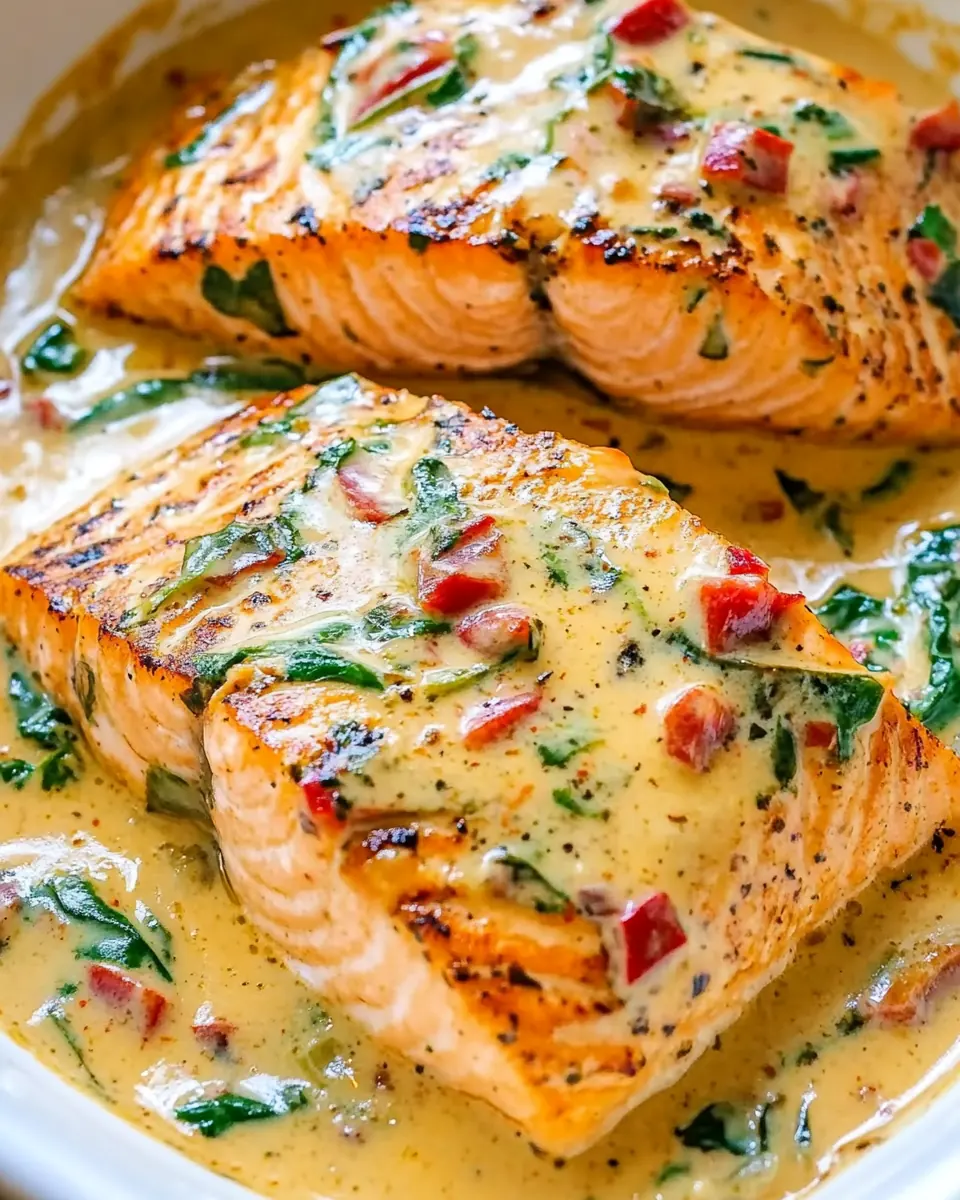
Return the salmon to the pan and spoon the sauce over each filet.: When the fillets nestle back into the sauce, the heat finishes the cooking process while the sauce clings to the sides of the fish. You'll see the sauce glisten as it coats the flakes, and the aromas will blend into a cohesive, inviting perfume. Spoon continuously for even coverage so each bite has sauce and texture. Avoid letting the pan boil, since aggressive bubbling can thin the sauce and overcook the salmon .
Serve over pasta, rice, or steamed vegetables.: The final plating determines how the sauce and salmon play with the sides, offering different textures and ways to enjoy the meal. If you choose a starchy base, it will soak up the creamy sauce and make the dish heartier, while steamed vegetables keep the plate lighter and more focused on the fish. Garnish with a sprinkle of chopped parsley for a fresh, herbaceous finish. A common serving mistake is piling hot ingredients too high, which traps steam and softens crisp edges that were intentionally created.