In a large Dutch oven or soup pot, heat the olive oil over medium-high heat. Once hot, add the sausage and cook for 5 minutes or until the sausage is browned, breaking up the sausage up with a wooden spoon as it cooks. Transfer the sausage to a plate and set aside.: The moment the olive oil becomes glossy and shimmery you can hear a soft sizzle as the sausage hits the pan, which signals the Maillard reactions that create depth and complexity. As you break the meat up, watch for golden edges and small browned bits stuck to the bottom, those are flavor pockets you want to build. When the sausage is cooked through but still juicy, transfer it off the heat to prevent overbrowning and to keep the pan from becoming bitter. If you leave the meat in too long, it can dry out and lose the succulent texture that balances the beans. A common mistake is crowding the pan, which causes steaming instead of browning; if the pot is too full, brown in batches so each piece gets seared.
Add the onion, celery, carrots, and cook for 5 minutes until softened, stirring occasionally. Add the garlic and cook for 1 minute.: As the trio of onion , celery , and carrots hit the warm fat, you should notice a fragrant, sweet aroma rising; this is the base flavor forming. Stir occasionally so they soften evenly and develop gentle color without burning. When the vegetables become translucent and slightly glossy, they are ready for the garlic , which you should add briefly to release aromatic oils. The garlic will shift the scent toward savory and fragrant; keep it moving because burned garlic turns bitter quickly. A frequent error here is rushing the step on high heat; keep it moderate so the vegetables sweeten rather than blacken.
Add 2 cans of the white beans, Parmesan rind, Italian seasoning, salt, pepper, and crushed red pepper flakes.: Introducing the white beans and the Parmesan rind immediately starts to deepen the broth as they mingle with the softened vegetables. You will hear a gentle clink as the cans go in and then see the pot come together with steely, creamy tones. The dried Italian seasoning and seasonings should be sprinkled evenly so they integrate while the soup simmers. This is a place to be mindful of salt because the Parmesan and canned beans can add sodium; season conservatively and adjust later. A common oversight is adding all the beans at once, which reduces the chance to build creaminess through partial blending later.
Pour in the broth and bring the soup to a boil, then reduce the heat to low and simmer for 20 minutes, stirring occasionally.: When the chicken broth meets the pot the aromatics lift and steam in a comforting rhythm; you may see small bubbles forming as it comes to a boil. Reducing to a low simmer allows flavors to marry gently and the Parmesan rind to release savory notes into the liquid without aggressively evaporating it. Stirring occasionally prevents sticking and helps the vegetables break down slightly, which is important for the texture. If you simmer too vigorously you risk reducing the liquid too far and concentrating salt, so keep it calm. A typical mistake is neglecting to skim any foam or impurities early on; a quick skim yields a clearer broth.
Remove the Parmesan rind. Use an immersion blender to blend the soup in the pot to make it more creamy. Alternatively, you can use a blender or food processor to puree the soup in batches, leaving some texture. Return the soup to the pot after blending.: Once the rind has infused, the broth smells round and savory; removing the rind prevents chewy surprises. Blending partially creates a velvety mouthfeel from the white beans while still preserving body. You should listen for the immersion blender's steady hum and watch as the mixture turns from chunky to silky, with steam releasing a warmer aroma. If using a stand blender, let the liquid cool slightly and blend in manageable batches to avoid pressure build up. Don't overblend if you want texture, pulse instead. Many cooks make the error of pureeing everything into oblivion; blending only part of the pot maintains an inviting contrast.
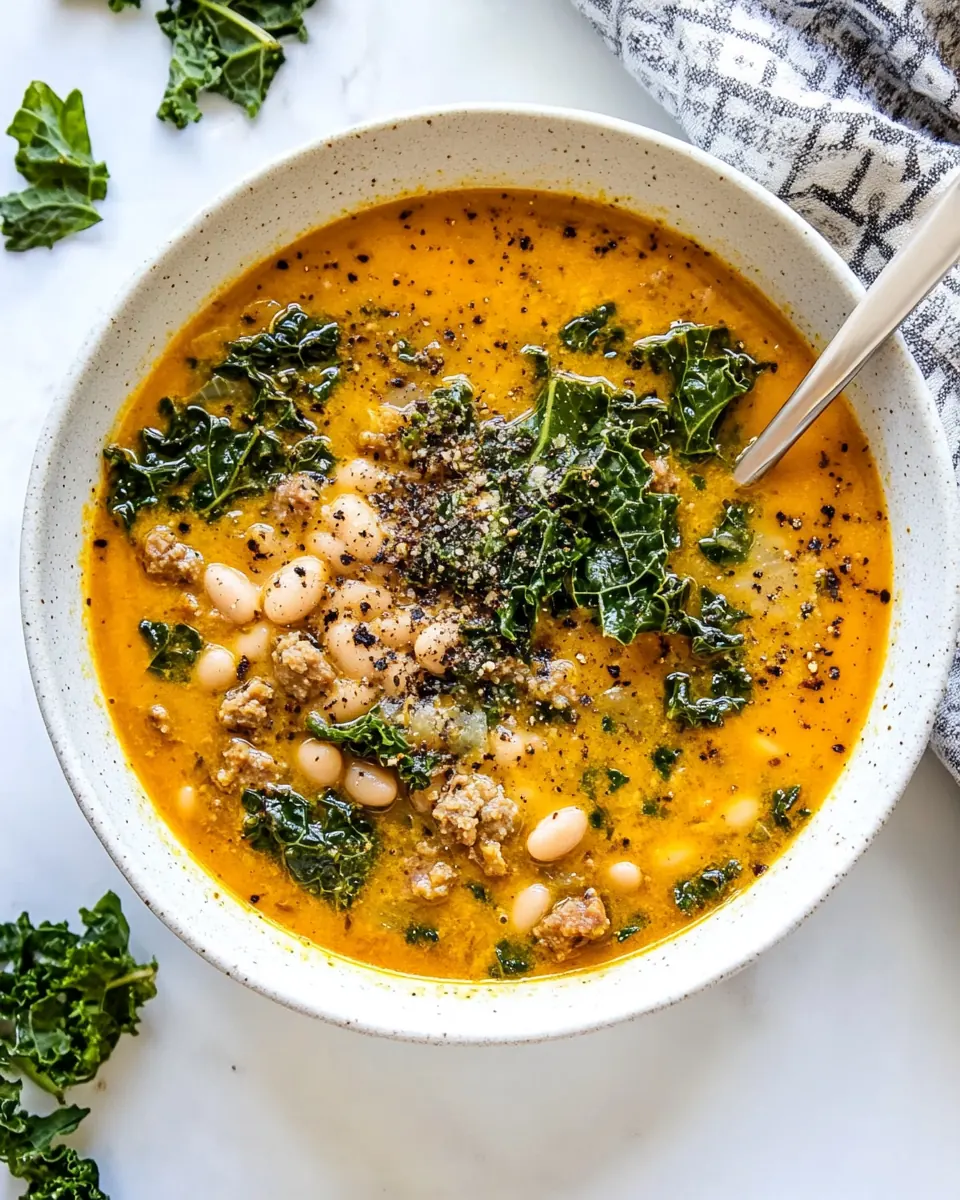
Add the sausage back to the pot. Stir in the remaining can of beans, kale, lemon juice, and parsley. Allow the soup to cook for a few more minutes. Stir in Parmesan cheese. Taste and adjust seasonings, if necessary.: Returning the browned sausage reintroduces those caramel notes and a meaty chew. The remaining whole white beans give pocketed creaminess, while the kale will wilt and shift the bowl toward green freshness. The bright pop of lemon juice wakes the palate and balances fatty elements, and the parsley adds a clean herbaceous finish. Cook just until the kale softens but keeps structure, otherwise it becomes limp and loses character. Stirring in the grated Parmesan melts into the broth creating silk. A common mistake is overcooking the greens or adding the acid too early which can flatten flavors; add them near the end for the best vibrancy.
Ladle the soup into bowls and serve with extra Parmesan cheese, if desired.: Serving time is about aroma and presentation, the steam should carry warm, herbaceous scents and the bowls should glisten with a light sheen from the olive oil . A final sprinkle of extra Parmesan adds a pleasant salt forward finish and an attractive dusting on top. Encourage diners to taste and add a touch more cheese or crushed red pepper if they like heat. The most common misstep is letting the soup sit too long without reheating; if serving later, gently warm to revive the aromas without boiling away nuance.