Melt the butter in a large skillet over medium heat.: You will hear a soft sizzle and smell a warm, nutty aroma as the butter liquefies and begins to coat the pan. This scent is a cue that the fat is ready to carry flavors. Heat that is too high will brown the butter too quickly and can make the sauce bitter, while heat too low will not give you the subtle toasty notes that develop when the fat warms properly. A common mistake here is overheating, which causes fast browning, so keep an eye on the color and lower the heat if the butter darkens.
Add the shallots and sauté them until they are soft and almost translucent. Season the shallots with salt and pepper while they are cooking.: As the shallots hit the pan, they should hiss gently and soon exhale a sweet, savory perfume. Watch them change from opaque to translucent, and stir so they soften evenly. Salting them early helps draw out moisture so they cook tender without burning. If you leave them too long without stirring they can brown unevenly and develop a bitter edge, so keep them moving in the skillet.
Add the asparagus and toss to coat with the butter. Cook the asparagus until it changes color. The cook time will depend on the thickness of the asparagus.: When you add the asparagus , you should see a vivid shift in color from dull green to a brighter hue, and you may hear a brief pop and sizzle as water escapes. Tossing helps each spear pick up the flavored fat and allows even cooking. Pay attention to the texture by testing a spear at the thickest part for tenderness; overcooking makes them mushy, while undercooking will leave them too fibrous. A frequent error is crowding the pan, which steams instead of sautéing, so give room for the spears to contact the hot surface.
Add the lemon juice and heavy cream, and stir to combine. Cook for 5 minutes.: As the lemon juice and heavy cream hit the pan, steam will rise and the aroma of citrus will enliven the buttery scent. The cream will begin to shimmer and slightly thicken into a silky sauce that clings to the asparagus . Gentle simmering helps reduce the liquid just enough to concentrate flavors, but a vigorous boil can separate the cream. If you see the cream break or curdle, lower the heat and whisk gently. One mistake is adding the cream to a pan that is too hot, which risks splitting, so aim for a steady gentle bubble.
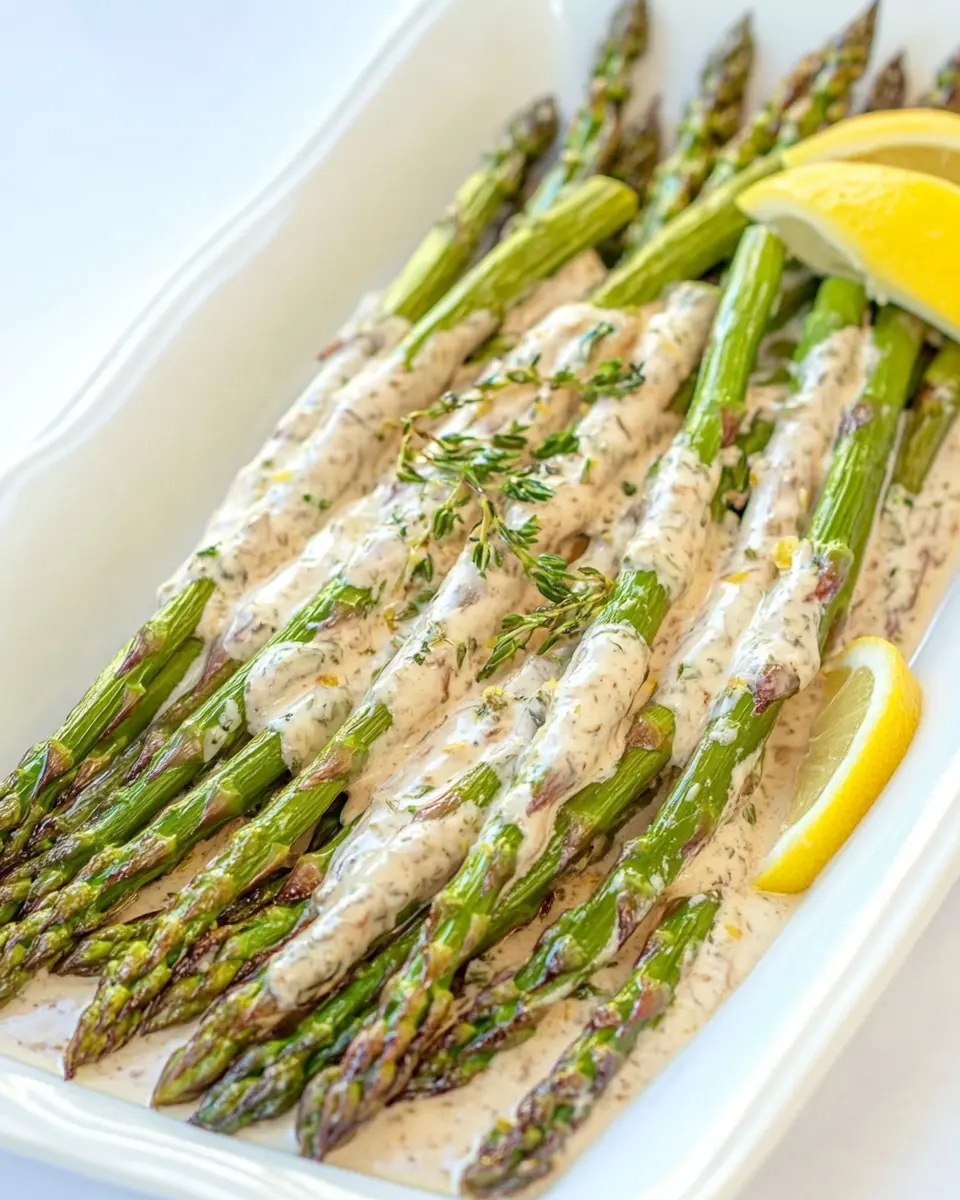
Transfer the asparagus from the skillet to a serving dish.: As you lift the spears out, notice how the sauce clings and how the surface of the stalks glistens. Serving promptly preserves the warm texture and keeps the sauce smooth. Leaving the asparagus sitting in the hot pan can continue to cook them and make them softer than desired, so transfer them once they reach your preferred tenderness. A common oversight is waiting too long to plate, which causes the vegetables to overcook.
Pour the sauce over the asparagus.: Pouring the sauce creates a glossy finish and ensures each spear receives the creamy, lemony coating. The sauce should shimmer and have a light coat, not puddle excessively. If it seems too thin on the plate, return to low heat briefly to reduce; if it is too thick, a splash of warm water or a tiny extra squeeze of lemon juice will loosen it. Do not reheat aggressively, because high heat can change the texture of the cream.
Garnish with lemon slices if desired.: Adding lemon slices gives a fresh, visual contrast and offers an optional additional squeeze for diners. The bright yellow against the green creates an appealing plate, and the citrus scent lifts the whole dish. If you skip garnish, consider a small additional scatter of freshly ground black pepper to finish. Avoid overdecorating, which can distract from the clean flavors of the asparagus .