Peel and thinly slice the onions.: The first thing you will notice is the sharp, stinging scent as you peel and slice the onions . Thin, even slices ensure uniform cooking and predictable caramelization, so take a little time to make the slices consistent. As you cut, the sound is a clean, crisp whisper, and the layers separate easily. If slices are uneven, you will end up with some pieces that are raw while others are overdone. A common misstep is slicing too thick, which prolongs cooking and can prevent proper browning.
Heat olive oil in a large skillet over medium heat until shimmering.: When the olive oil warms, it will move across the pan in a smooth, glossy sheet and start to shimmer, releasing a faint, fruity scent. This shimmer is your visual cue that the pan is ready, it ensures a gentle, even transfer of heat to the onions . If the oil smokes, the heat is too high and the oil will taste bitter, so lower the temperature. Another error is using too little oil, which can cause sticking and uneven browning.
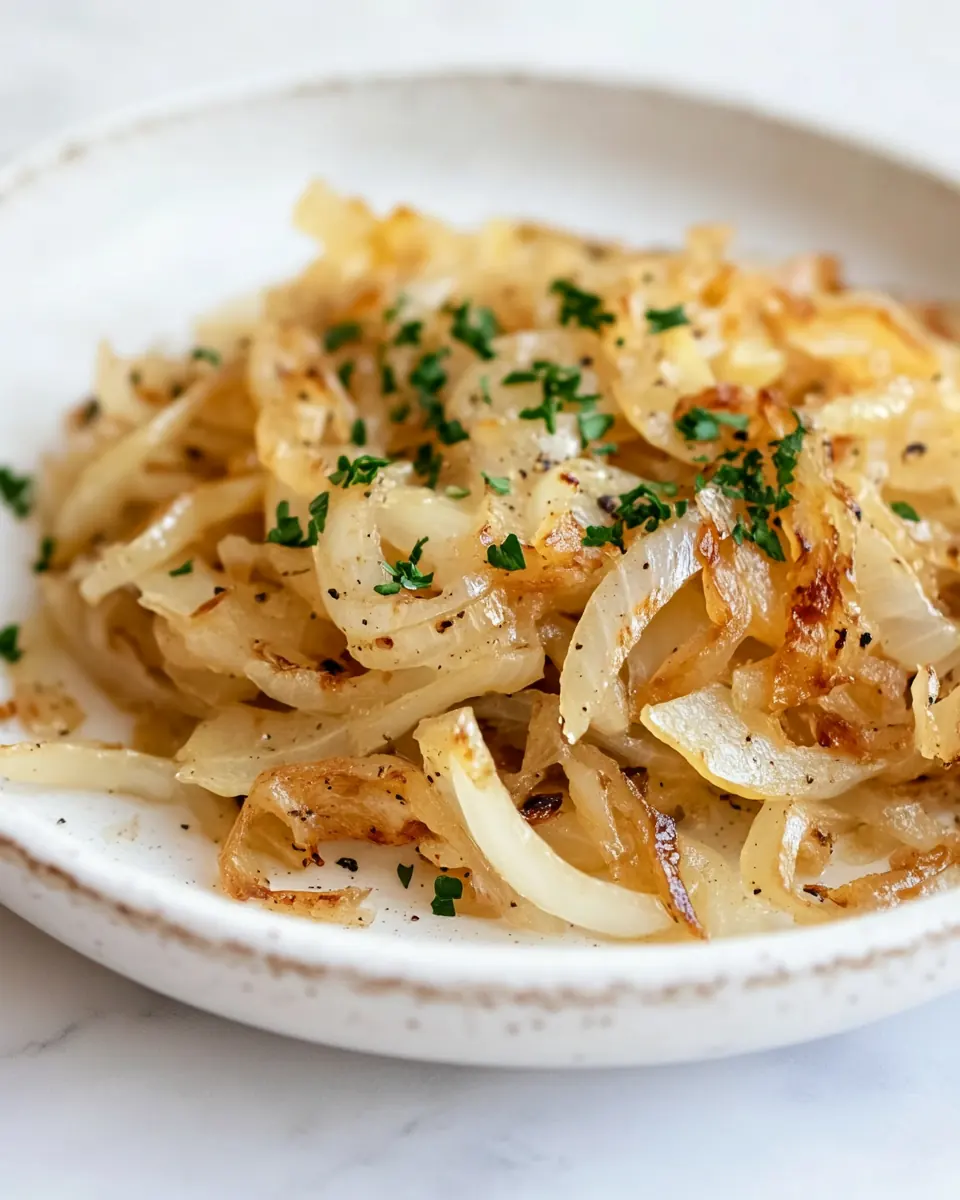
Add the onions to the skillet, sprinkle with salt and pepper, and cook, stirring occasionally, until onions are golden and soft, about 15 minutes.: Once the onions hit the oil, they will sizzle softly and begin to wilt, releasing a sweet, savory steam that fills the kitchen. Stirring occasionally allows the exposed surfaces to brown to a warm golden color while preventing burning. Listen for a steady, moderate sizzle and watch for translucence turning to gold, then to deeper amber on some edges. The smell will change from pungent to sweet and nutty as sugars caramelize. If you stir constantly you will slow browning, while leaving them untouched for too long can create scorched bits. One typical issue is rushing the process with high heat, which produces a bitter char instead of a sweet caramelized flavor.