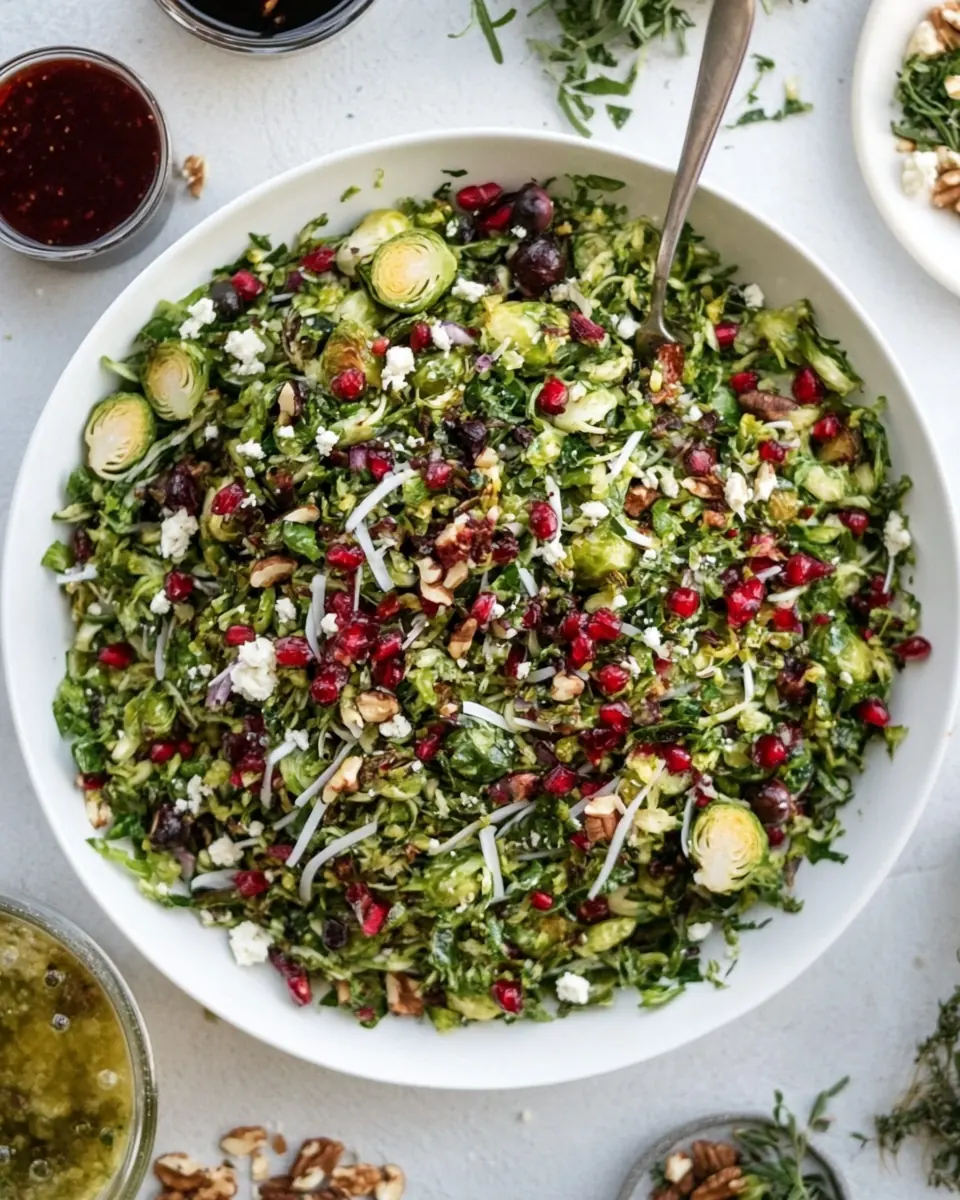
For the salad: Place chopped kale in a large serving bowl. Top with salt and pepper. Massage kale by grabbing large handfuls and squeezing gently until the kale is darker in color, softened, and more fragrant. Repeat several times, grabbing fresh handfuls of kale as you go. This will make the kale more tender and less bitter – don’t skip this step!: As you massage the chopped kale , notice how the leaves darken and release a faint, green aroma, and listen for a subtle change in texture as the fibers relax; this signals tenderness. The why is simple, massaging breaks down tough fibers so the leaves are pleasant to eat with raw components. If you skip this the kale can taste fibrous and strong. Common mistake to avoid, massaging too briefly which leaves the kale coarse and chewy instead of soft.
Add shaved Brussels sprouts to bowl, fluffing the strands with your fingers to separate the shreds. Toss to combine Brussels sprouts with the kale.: When you sprinkle the kosher salt and ground black pepper onto the greens, the salt will draw out a slight sheen of moisture and amplify the kale's natural flavor, while pepper adds a warm note. This subtle seasoning helps the dressing adhere and marry flavors. The why is that early seasoning starts flavor development and reduces the need for adjustments later. Troubleshooting tip, do not over-salt since the Parmesan cheese will add more salt at the end.
For the dressing: In a small mixing bowl, whisk together all dressing ingredients. Taste and adjust the seasoning as desired. Use immediately or refrigerate in an airtight jar for up to 1 week.: As you grip bunches of kale and squeeze, you should feel the leaves give and a fragrant, almost herbaceous scent will emerge; that tells you the cell walls are loosening. This technique reduces bitterness and creates a tender mouthfeel that contrasts nicely with raw Brussels sprouts . The why is texture, softened kale blends seamlessly into the salad and is easier to chew. A frequent error is massaging too aggressively which can bruise the greens and make them limp rather than tender.
To assemble the salad: Drizzle two-thirds of the dressing over the top and toss to combine.: Working in fresh sections ensures all the leaves receive attention and soften evenly, creating consistent texture throughout the bowl. The sensory cue is uniform color and softer stems when you run your fingers along the pieces. The reason to do this in batches is that cramming everything at once makes it harder to massage thoroughly. Avoid the mistake of working only the top layer which leaves the bottom leaves tough.
Sprinkle salad with Parmesan, cranberries, and sunflower seeds over the top. Toss lightly. Season with additional salt and pepper to taste and add as much extra dressing as you like. Enjoy immediately or refrigerate until ready to serve.: After a few massages, the bitterness will mellow and the kale will have a silkier bite, which improves interplay with sweeter ingredients like dried cranberries. The why is chemical, as the cell walls break down mild compounds that can taste sharp are released and mellow. Common troubleshooting, if the kale still tastes bitter, a light sprinkle of lemon before assembly can help balance it.
Add shaved Brussels sprouts to bowl, fluffing the strands with your fingers to separate the shreds: When you add the thinly shredded Brussels sprouts , use your fingers to tease apart the strands so they do not clump, creating airy pieces that catch dressing evenly. Visually they should look like fine green threads that move freely in the bowl. The why is better coating and mouthfeel, as separated shreds pick up dressing and mix with kale more uniformly. A common mistake is pressing them in, which causes compaction and uneven dressing distribution.
Toss to combine Brussels sprouts with the kale: Gently toss until you see a uniform mix of greens and an even distribution of color and texture; this tactile motion ensures both components are balanced in every bite. The why is consistency, ensuring each forkful has kale and Brussels sprouts together. Avoid over-tossing, which can bruise the greens and make the salad droop prematurely.
For the dressing: As you whisk the Greek yogurt , lemon juice, zest, extra virgin olive oil , honey, minced garlic , salt, and pepper, pay attention to the dressing becoming glossy and smooth, indicating proper emulsification. The citrus scent should come forward, and the yogurt should feel silky. The why is texture and coating ability; a well-emulsified dressing clings to leaves without pooling. A common error is adding oil too quickly which prevents emulsification, leading to separation.
In a small mixing bowl, whisk together all dressing ingredients: Whisk until the mixture is homogenous and has a pleasant balance of tang and sweetness, with no visible streaks of oil. Smell the bright lemon and taste for balance, adjusting honey or salt sparingly. The reason to whisk well is to aerate the dressing slightly and build texture. Troubleshooting note, if the dressing is too tart, add a small additional pinch of honey; if too thick, whisk in a teaspoon of water at a time.
Taste and adjust the seasoning as desired: Always taste the dressing and tweak acid, salt, or sweetness to your preference before adding it to the greens, because small adjustments can transform the profile. The sensory check is crucial, noticing how acidity and salt interact with the dairy creaminess. Why take this step, pre-tasting prevents over or under seasoning the entire salad. A mistake people make is skipping this and ending up with a dressing that overwhelms the salad.
Use immediately or refrigerate in an airtight jar for up to 1 week: If storing, the dressing will thicken slightly when chilled and can be brought back to pourable texture by stirring or letting it sit at room temperature briefly. The why is convenience, having dressing ready speeds assembly. Common issue, refrigerated dressings can separate slightly; just whisk before using to recombine.
To assemble the salad: Drizzle two-thirds of the dressing over the top and toss to combine, watching how the greens take on a light sheen, indicating they are properly coated but not drenched. The visual cue is a glossy finish and leaves that still hold shape. The reason for using most but not all the dressing is to reserve some for additional seasoning after the cheese and seeds are added. Avoid adding all the dressing at once which can make the salad soggy.
Sprinkle salad with Parmesan, cranberries, and sunflower seeds over the top: Scatter the Parmesan cheese , dried cranberries, and dry roasted sunflower seeds evenly so you get balanced bites of salty, sweet, and crunchy. The crunchy seeds should remain audible when you bite, and the cheese will add savory depth. The why is layering finishing textures last preserves their character. A frequent mistake is mixing them in too early which softens the seeds and buries the crunchy notes.
Toss lightly: Give the salad a gentle toss so the toppings integrate without losing their individual textures, and then taste for final seasoning adjustments; you may want a touch more salt or pepper. The sensory moment is the first bite where all components should harmonize. Why toss lightly, you preserve the crispness of the toppings and avoid bruising the greens. Avoid over-handling which mashes delicate shreds.
Season with additional salt and pepper to taste and add as much extra dressing as you like: Finish by tasting a forkful and adding small amounts of seasoning if needed, remembering that the Parmesan cheese contributes salt. The why is final balance, tailoring the salad to your palate. Troubleshooting, if it tastes flat, add a squeeze of fresh lemon to lift the flavors immediately.
Enjoy immediately or refrigerate until ready to serve: If you plan to serve later, chill the salad briefly and add any remaining dressing just before serving to keep the textures lively. The sensory cue for readiness is bright aroma and crisp texture. The reason is peak freshness and contrast; stored too long the salad will wilt. A common mistake is storing fully dressed salad overnight, which can lead to soggy greens.