Preheat the oven to 400° Fahrenheit. Spray a sheet pan with non-stick cooking spray and set aside.: You will notice the oven warming and the air in the kitchen becoming dry and warm, which sets the stage for crisping. A fully preheated oven ensures the exterior of the potatoes and brussel sprouts begin browning immediately, creating a contrast between a crunchy surface and a tender inside. The sound is subtle here, mostly the hum of the oven and the faint scent of heat. If you do not preheat correctly, items may overcook while waiting for color, so avoid starting with a cold oven. A common mistake is setting the wrong temperature, which can lead to limp vegetables rather than roasted ones.
Cut the potatoes and Brussel sprouts by cutting them into halves. Place the potato and Brussel sprout halves into separate bowls. You can combine them into one bowl if you like! I just like how pretty it looks separated on the pan. My guests can also pick how much of each ingredient they would like.: The slick surface prevents sticking and promotes even contact so the vegetables can brown. When the pan is ready, the surface will glisten slightly under the light. This small step matters because stuck bits are harder to turn and can tear delicate edges off the brussel sprouts . If you prefer, a light coating of olive oil works too, but be careful not to use too much oil as it can pool and steam rather than roast. Avoid placing ingredients on a cold or untreated pan, which increases the chance of uneven cooking.
Add 2 tablespoons olive oil to the potatoes and the remaining 1 tablespoon to the bowl of Brussel sprouts. Toss each bowl to coat the ingredients.: The fragrant, slightly earthy scent of freshly cut potatoes will be present, and the exposed surfaces brown more readily. Halving creates similar piece sizes so they roast at roughly the same rate, producing consistent tenderness. Visually, the flat cut side will take on a golden hue and the edges will become crisp. Overcutting into very small pieces can dry them out, while leaving them whole may result in undercooked centers, so aim for uniform halves.
Evenly sprinkle the Italian herbs, salt, and pepper over the potatoes and Brussel sprouts. Toss to coat evenly.: Separating them lets you dress each with the correct amount of olive oil and seasoning for balanced flavor. You will feel the slight weight of the bowls and hear the gentle clink as you move pieces around. This separation helps prevent the denser potatoes from stealing too much seasoning or oil, and it makes arranging the pan more attractive. A common pitfall is overcrowding bowls and mashing pieces together, which makes tossing uneven and can bruise the vegetables.
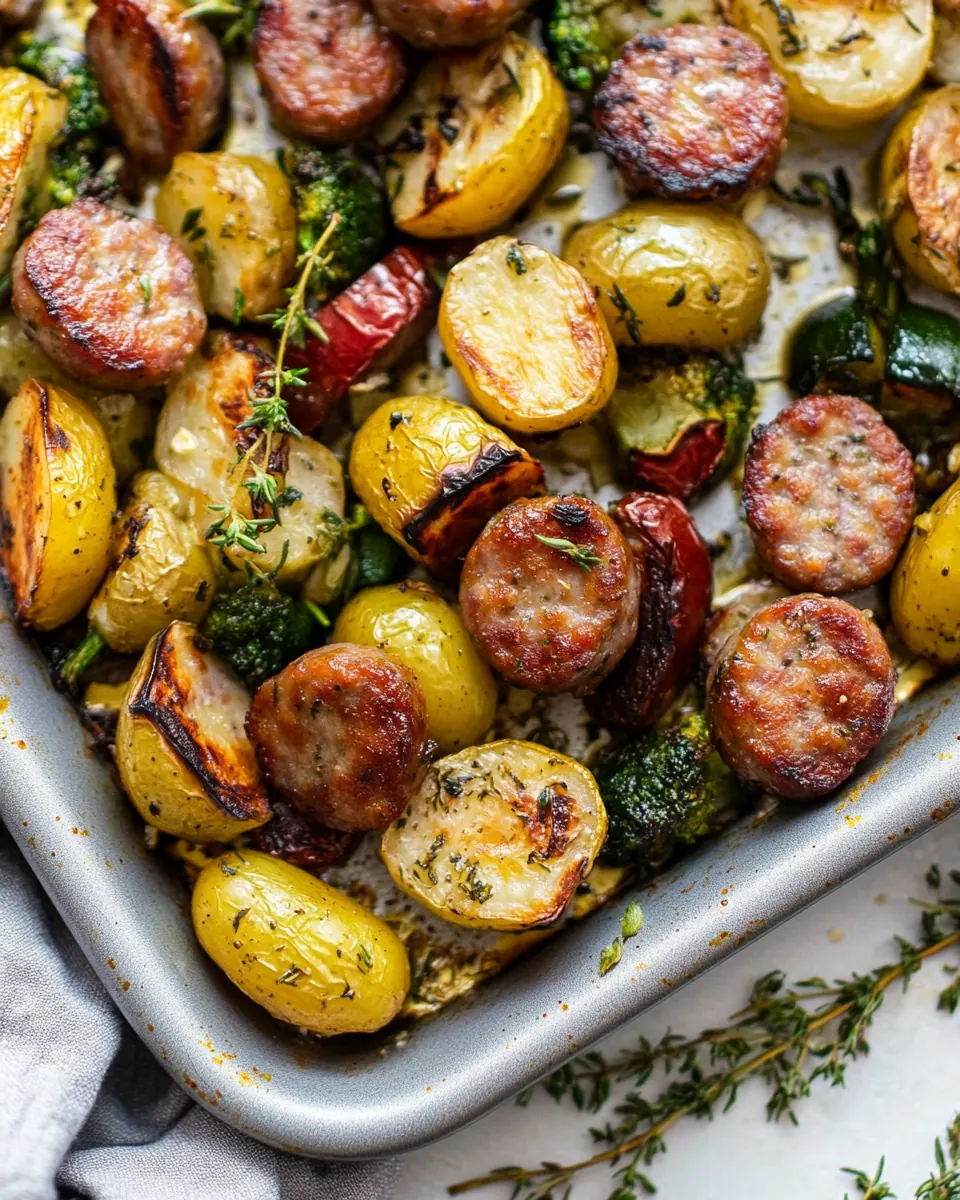
Spread the potatoes, Brussel sprouts, and sliced sausage onto the prepared sheet pan. Place in the oven and cook for 25 minutes or until the sausage is cooked through and the vegetables are fork tender. Enjoy!: The oil will shimmer on the surface of the vegetables and help herbs adhere. Coating the potatoes with more oil than the brussel sprouts helps them brown thoroughly while keeping the sprouts from becoming overly greasy. Oil also helps conduct heat and create those inviting roasted flavors. Too little oil leads to dry, pale vegetables, while too much causes shallow frying rather than roasting, so measure closely.
Toss each bowl to coat the ingredients: As you toss, you will hear soft clattering and see the oil and herbs cling to surfaces, creating a glossy sheen. Proper tossing ensures even seasoning distribution so every bite is flavorful. The tactile feedback of the pieces moving freely indicates they are well coated. If pieces stick together, separate them gently so they roast individually; crowded clumps steam rather than brown, and that prevents the development of caramelized edges.
Evenly sprinkle the Italian herbs, salt, and pepper over the potatoes and Brussel sprouts: The aroma of dried Italian seasoning will bloom as it is scattered, giving a herbal lift. Even sprinkling is critical so you do not get pockets that are over salted or undertitled. When the herbs hit the warm oil on the vegetables, they release scent and begin to infuse the surface. A misstep is dumping seasoning unevenly; to avoid that, pinch and distribute with care, then toss gently to integrate.
Toss to coat evenly: After seasoning, tossing further melds the flavors and ensures each piece has a thin veil of oil and herb. You will see a consistent coating and hear the pieces moving freely again. This step enhances surface contact with the pan, which encourages even browning. If you rush or skip this, some pieces will remain dry and fail to develop the desired color. Be gentle when tossing to keep pieces intact and uniformly seasoned.
Spread the potatoes, Brussel sprouts, and sliced sausage onto the prepared sheet pan: Lay everything in a single layer so air circulates and surfaces brown. The visual cue is a non overlapping arrangement with small gaps between pieces. Proper spacing prevents steaming and promotes the sizzling sound as edges meet the hot metal. Overcrowding is a frequent error that yields soggy, pale results; if your pan is too full, use two pans or roast in batches.
Place in the oven and cook for 25 minutes or until the sausage is cooked through and the vegetables are fork tender: As the pan roasts, you will hear gentle crackling and smell rich, roasted aromas. The Andouille sausage should show browned edges and the juices will mingle with the vegetables, creating concentrated flavor. Test doneness with a fork; the potatoes should pierce easily and the brussel sprouts should have browned outer leaves. If you cut the sausage too thick, it may need a bit more time, so slice uniformly to avoid undercooking. Remove when the sensory cues match these descriptions to ensure perfect texture and safety.
Enjoy: After roasting, allow the pan to rest briefly so flavors settle and the juices redistribute. Take in the final aroma, and serve warm straight from the pan for a rustic presentation. Letting it sit too long can cause the vegetables to lose their crisp edges, so serve within a short window for best texture.