Line two sheet pans with foil for easy cleanup (if desired), set aside. Arrange the oven racks so that one is in the upper third of the oven and one is in the lower third of the oven. Preheat oven to 475 degrees F. Wrap tortillas in a foil packet, set aside.: The kitchen will start smelling faintly of oil and metal as you prepare, and the foil makes cleanup nearly effortless, which is why I always use it. When you line the pans the surface glints, and you can hear the slight crinkle as you press it into place, a small ritual that makes the rest of the cooking feel orderly. This step matters because a clean pan surface prevents sticking and helps the vegetables and meat brown evenly. Common mistake to avoid, do not skip the foil if you want minimal cleanup, but also avoid folding too many layers in one spot or the foil can crease and tear under high heat.
Stir together spices, salt and sugar for fajita seasoning. Slice onion and bell peppers, toss on a second sheet pan with oil and salt.: You will hear the click of the rack as you slide it into position, and the distance between racks creates two distinct heat zones that help the vegetables and steak cook at slightly different intensities. This staging is essential because peppers roast faster and benefit from a higher rack to brown, while the steak needs slightly less direct top heat to develop a crust without overcooking. A typical pitfall is leaving racks at default positions, which can cause uneven cooking, so take a moment to reposition them precisely.
Cut the flank steak into 3 pieces to allow for more even cooking, pat dry with paper towels. Sprinkle fajita seasoning all over both sides of the meat. Arrange meat on sheet pan, set aside. When oven is preheated, place the sheet pan with the onions and peppers on the upper rack, bake for about 10 minutes.: As the oven heats you may notice a dry, warming scent and the kitchen thermostat will tick up; high heat is what gives the peppers their blistered edges and the steak a quick roast. This temperature drives Maillard reactions, creating complex browned flavors and attractive color. If your oven runs hot or cool, an oven thermometer will keep you accurate; common mistakes include relying on a preheated light alone, which can mean the oven has not reached the required temperature.
Remove the sheet pan from the oven and toss vegetables with a spatula, arranging them in an even layer again. Return the peppers and onion to the LOWER rack, place the sheet pan with the flank steak on it on the upper rack. Bake for 8-10 minutes, until flank steak reaches about 135 degrees F internally (use a meat thermometer to check for doneness).: You will want a soft, warm bundle of tortillas at the end, and wrapping them in foil traps steam and protects them from drying out when you warm them in the turned off oven. The packet feels warm and slightly yielding after a few minutes in residual heat, producing pliable tortillas for easy folding. Avoid placing the packet directly on the bottom of an active oven or over high heat before the resting step, as they can crisp too much and lose their flexibility.
Remove both sheets from oven, transfer meat to a cutting board and allow to rest for 5 minutes. Meanwhile, turn off oven and place foil wrapped tortillas inside to warm up.: The aroma of the spices intensifies as you blend them, releasing an earthy, smoky scent from the smoked paprika and cumin . This step allows the flavors to meld so you get even seasoning in every bite. I like to rub a pinch between my fingers to check freshness, and a dusty, potent scent means they're ready. A common error is not mixing them thoroughly, which can create pockets of overly salty or sweet bites.
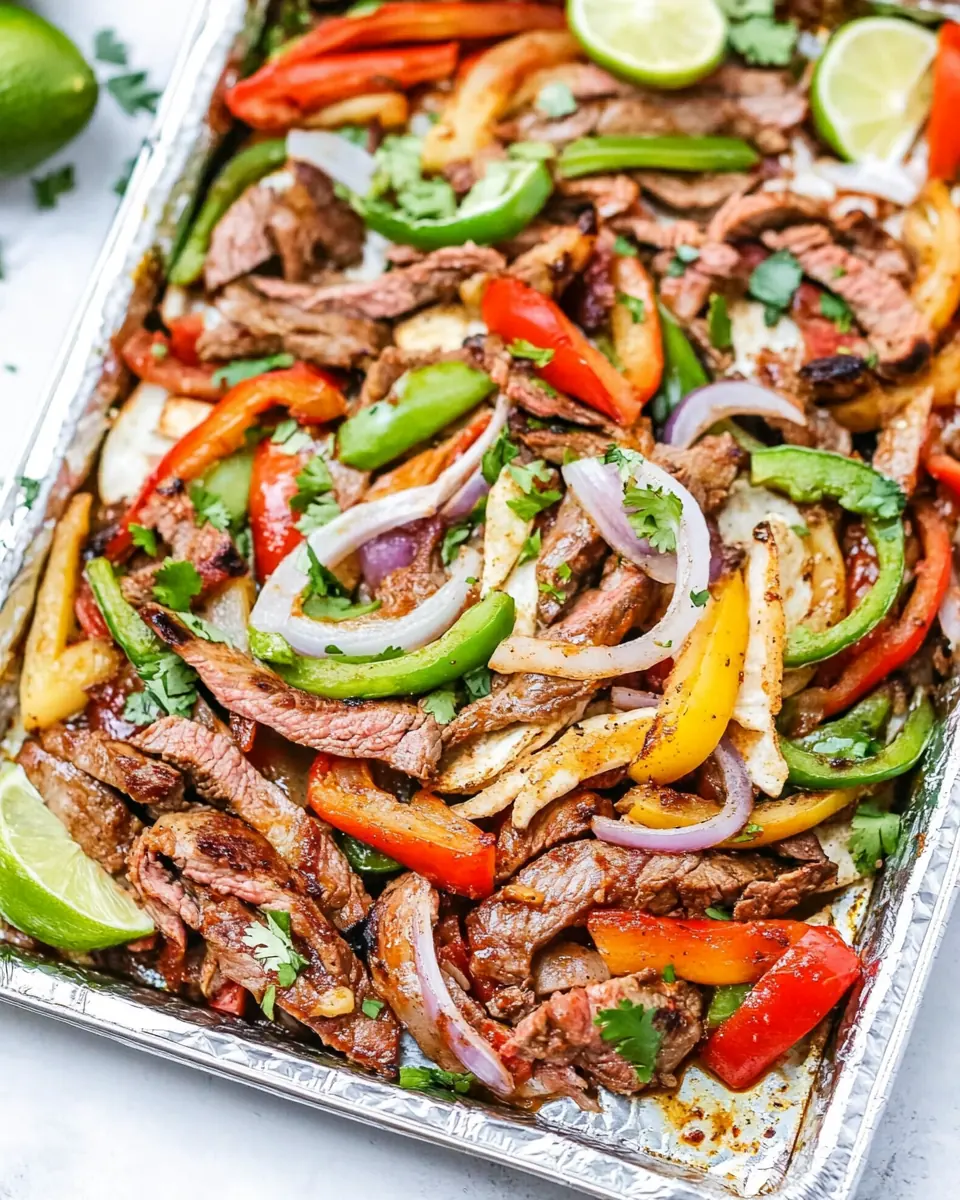
Slice meat against the grain into thin slices, then toss with the peppers and onions. Serve with warm tortillas, salsa, guacamole, limes and cilantro.: When you cut the bell peppers and onion , the sharp knife sound and the burst of fresh vegetable aroma signal the start of roasting. Tossing them with Olive Oil and a bit of salt helps the oil become a glossy sheen on each piece and promotes even browning. Make sure the pieces are similar size so they roast uniformly; a common mistake is uneven cuts that result in some pieces being underdone while others are charred.
Cut the flank steak into 3 pieces to allow for more even cooking, pat dry with paper towels.: Patting the flank steak dry removes excess moisture so the surface can brown; you will see a matte finish when it is adequately dried. Cutting into three pieces helps the heat penetrate evenly and reduces overall cooking time. The why here is straightforward, moisture prevents a proper sear and leads to steaming, so take the time to dry. Avoid cutting into very small pieces which makes controlling doneness difficult.
Sprinkle fajita seasoning all over both sides of the meat.: The seasoning will cling and form a thin, aromatic coat that begins to smell warm and savory as it sits on the meat. This crust is the flavor foundation, so be sure to press the mix gently into the surface for even coverage. Letting it sit briefly helps the flavors adhere, but avoid over-salting by measuring your quantities carefully to prevent the steak from tasting too salty after roasting.
Arrange meat on sheet pan, set aside.: Placing the steak on the pan in a single layer prevents overlapping, which is key for consistent roasting. The steak should sit with room around each piece so hot air circulates and the exterior browns. If pieces are touching, they will steam and lose that desirable roast character, so space them out thoughtfully.
When oven is preheated, place the sheet pan with the onions and peppers on the upper rack, bake for about 10 minutes.: As the vegetables hit the hot oven they begin to blister and the sugars start to caramelize, producing a sweet, roasted perfume. You will hear a faint sizzle as moisture escapes and see the edges take on little darker spots. This step is important because it jumpstarts caramelization before the steak goes in. A typical mistake is leaving them in too long on the high rack which can cause excessive charring instead of a balanced roast.
Remove the sheet pan from the oven and toss vegetables with a spatula, arranging them in an even layer again.: Tossing loosens any pieces that stuck and redistributes juices so the next roast produces even coloring; you will notice a deeper, caramel aroma after the toss. Rearranging matters because it keeps pieces from clumping and ensures uniform exposure to heat. Avoid overcrowding when you return them to the oven, as that will cause steaming rather than browning.
Return the peppers and onion to the LOWER rack, place the sheet pan with the flank steak on it on the upper rack.: Moving the steak to the upper rack places it closer to the oven's hottest element so it can quickly develop a browned exterior while the peppers finish below. You may hear the faint clink as you slide the pan in and then the kitchen will fill with a robust roast smell as the meat and vegetables progress together. This arrangement matters to synchronize cooking times; a frequent error is putting both pans on the same rack which can result in uneven doneness.
Bake for 8-10 minutes, until flank steak reaches about 135 degrees F internally (use a meat thermometer to check for doneness).: You will notice juices start to bead on the surface of the steak and the edges take on a darker, roasted color; that is your visual cue. Using a thermometer is the most reliable way to hit medium rare at about 135 degrees F, preventing overcooking. This timing and temperature preserve tenderness; common mistakes include guessing doneness by time alone without checking internal temperature.
Remove both sheets from oven, transfer meat to a cutting board and allow to rest for 5 minutes.: Resting lets the juices redistribute, producing a juicier slice, and you will see the liquid settle rather than running out when you cut. The board will catch any juices and the meat will relax and become easier to slice thinly. Avoid cutting too soon, which causes juices to pour out and leaves the meat drier.
Meanwhile, turn off oven and place foil wrapped tortillas inside to warm up.: The residual oven warmth gently steams the tortillas in the foil packet, making them soft and pliable. After a few minutes they will feel warm to the touch and flexible for wrapping. Do not leave the tortillas in too long while the oven is still hot, as they can become overly crisp and lose their soft texture.
Slice meat against the grain into thin slices, then toss with the peppers and onions.: The sound of the knife through rested steak is clean and effortless when you slice against the grain, and the resulting ribbons of meat are tender in every bite. Tossing them with the hot vegetables helps the flavors marry and distributes juices across the pan. The reason for slicing against the grain is to shorten muscle fibers for a softer chew; slicing with the grain will make each bite tougher and stringy.
Serve with warm tortillas, salsa, guacamole, limes and cilantro.: The final plate should be a riot of color and aroma, with warm tortillas wrapped around savory flank steak and roasted peppers, brightened by lime and herbaceous cilantro . Serve immediately so the textures remain contrasty and fresh. A common mistake is assembling too early and letting tortillas steam, which makes them soggy instead of pliable.