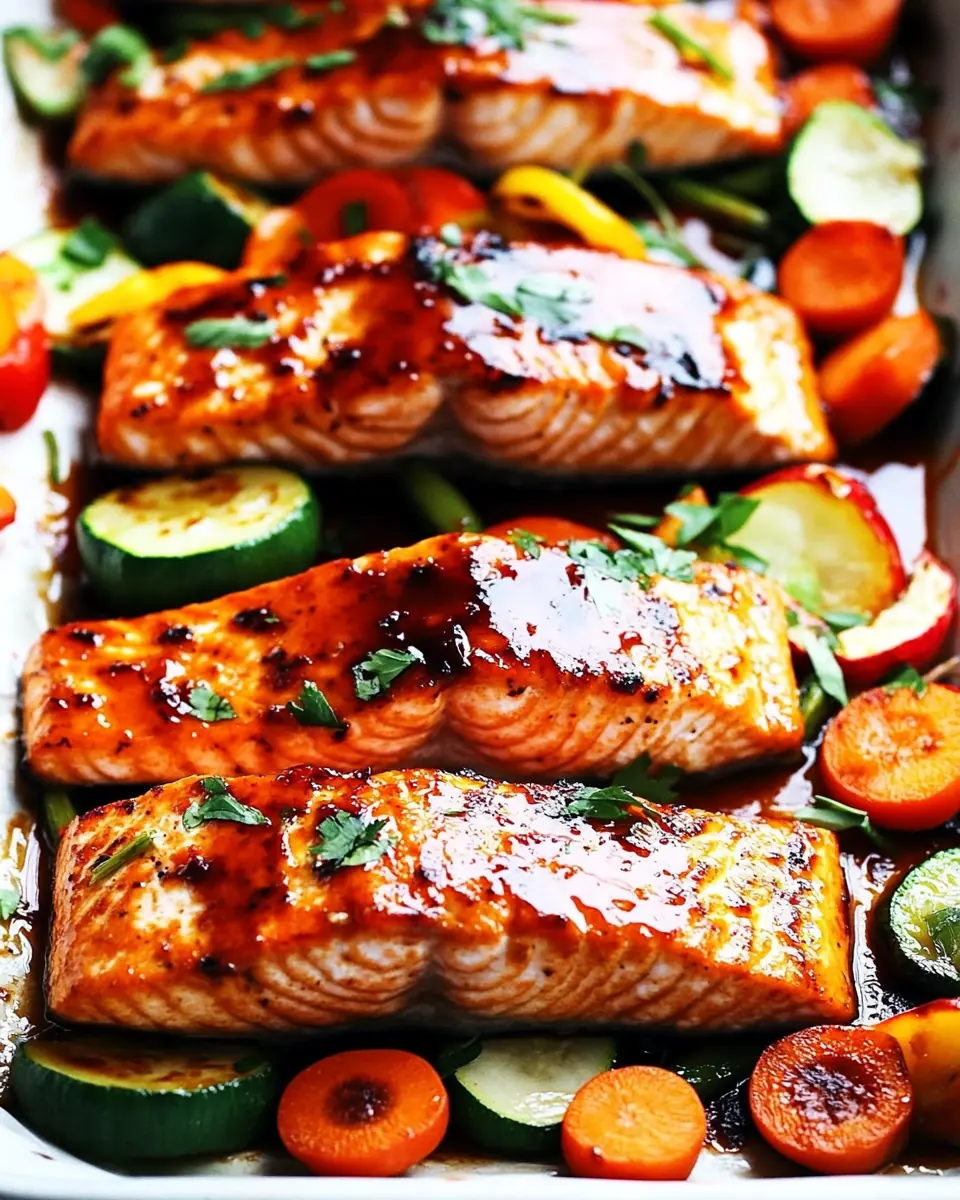
Preheat oven to 375 degrees Fahrenheit and spray a baking sheet with non-stick cooking spray. Lay 4 salmon fillets skin side down surrounded by 1 chopped red bell pepper, 1 chopped green bell pepper, 1 chopped yellow pepper, 1 chopped onion, 1 cup snow peas, and 2 thinly sliced carrots.: As the oven warms you will notice a faint metallic hum and a steady rise in kitchen warmth, signaling the environment that will coax caramelization from the vegetables and gently cook the salmon . This moderate heat allows the sauce to thicken without burning quickly. A common mistake is skipping the preheat which leads to uneven cooking, so always wait until the oven reaches temperature. If your oven is older, rotate the pan halfway through the bake to ensure even browning.
In a small bowl whisk together 1/2 cup Thai sweet chili sauce, 1/4 cup soy sauce, 1 tablespoon grated fresh ginger, 1 tablespoon lime juice, and 1/2 teaspoon red pepper flakes. Reserve 1/4 cup of the marinade and drizzle the rest of the marinade over the salmon and vegetables.: When arranging the tray listen for the quiet scrape of metal as you nestle pieces together, and aim for a single layer so heat circulates evenly. The visual cue you want is space between items, not crowding, so steam can escape and edges can blister. A rookie error is piling ingredients which causes steaming rather than roasting, leaving vegetables limp. If pieces are overlapping, spread them out or use a second sheet for consistent texture.
Cover with foil and bake for 15 minutes. Remove foil and broil for another 5-7 minutes until the top starts to blacken.: As you whisk, inhale the mingling aromas of ginger and lime rising from the bowl, the scent giving a preview of the finished dish. This emulsion harmonizes sweet, salty, and bright notes; whisk until glossy so it coats evenly. One slip is under mixing which leads to pockets of strong soy or sweet chili, so take a few vigorous stirs. If your sauce seems too thick, a teaspoon of warm water will help loosen it for better drizzling.
Remove salmon from the oven and brush remaining marinade on top. Garnish with fresh cilantro and lime slices if desired.: When you pour the glaze you should see it glisten and stream, landing in ribbons that cling to surfaces. The glaze wets the surfaces so they brown attractively and infuse flavor during roasting. Avoid drowning the pan as excess liquid prevents caramelization and yields a steamed finish. If you notice pooling, tilt the pan gently to distribute, or spoon off surplus to maintain crisp edges.
Cover with foil and bake for 15 minutes: The first stage under foil traps steam, gently cooking the salmon and allowing flavors to penetrate the flesh while vegetables begin to soften. You will hear a faint hiss when you remove the foil later, that trapped steam escaping and revealing the roasted aroma. A typical mistake is leaving the foil on too long, which prevents browning; set a timer and resist peeking early. If your fillets are thicker than typical store cuts, you may need a few additional minutes for the center to reach desired doneness.
Remove foil and broil for another 5 to 7 minutes until the top starts to blacken: Broiling creates the final caramelized layer, where sugars in the glaze char slightly, producing a smoky fragrant top and a pleasing texture contrast. Watch closely as this step can go from glossy to burnt quickly; listen for the oven fan and watch the color deepen to a golden dark edge. A common pitfall is stepping away during broil, leading to over blackening. If you want a gentler finish, use the oven at a higher bake setting rather than broil and extend the time slightly.
Remove salmon from the oven and brush remaining marinade on top: As you brush on the reserved marinade the sauce will warm and meld into a shiny finish, and the steam rising will carry those citrus and ginger notes. This finishing stroke intensifies flavor and provides an attractive glossy surface. Beware of adding cold sauce directly to hot fish, which can lower the surface temperature and affect texture; instead, brush evenly and allow the residual heat to meld the flavors. If the glaze seems too thin after broiling, return the pan briefly to low heat to thicken the brushed layer.
Garnish with fresh cilantro and lime slices if desired: The final green of cilantro and bright zing of lime lifts the whole tray, adding herbaceous aroma and a citrus snap to cut through the glaze. Sprinkle chopped cilantro right before serving to keep it vivid and aromatic. A mistake is adding delicate garnishes too early; they wilt under heat, so garnish at the last moment. If you prefer more citrus, a light squeeze of lime over each fillet brightens the finish further.