Place potatoes on a large plate and microwave on high power for 2 minutes.: The kitchen will fill with a faintly earthy steam as the potatoes start to soften, which helps later searing. This step softens the centers so you avoid long stove time. A common mistake is skipping this and ending up with crunchy, undercooked centers when the exterior is already brown.
Turn potatoes then continue to microwave until just tender, about 2 minutes longer (if they aren't really small they'll take a little longer. Make sure they are tender at this point). Let cool slightly then cut in half.: You should hear the faint pop as steam releases when piercing the potatoes, and they should yield under a fork but not collapse. Let them cool slightly then cut in half to increase surface area for browning. If you overcook them in the microwave they will become too mushy when tossed, so check early if your potatoes are tiny.
Meanwhile, heat olive oil in a very large non-stick skillet (at least 12-inches and deep) over medium heat.: The oil will shimmer when hot, signaling it is ready to accept aromatics and brownings. Medium heat gives you control to develop color without burning the fat. Too high a flame will scorch the oil and make the pan taste bitter.
Add onions and saute until tender, about 4 minutes. Push onions over to the far side of pan, add in potatoes.: You will notice the onions turn translucent and soften, releasing sweet, caramel notes that anchor the dish. Stir occasionally to avoid sticking but let them sit enough to brown lightly. Rushing this step leaves the onions sharp and underdeveloped in flavor.
Season with salt and pepper and cook turning occasionally, until lightly golden brown, about 3 minutes. Push potatoes to opposite side with onions.: As you move the softened onions , the potatoes hit the hot oil and begin to sizzle, producing little popping sounds and brown edges. That Maillard browning adds nutty depth. Crowding the pan can steam the potatoes instead of browning them, so give them space.
Add sausage to other side of pan and cook, tossing occasionally until sausage is starting to brown slightly, about 3 minutes. Scoot sausage add in garlic and saute 1 minute, or until lightly golden.: You will smell toasted notes as the cut faces of the potatoes pick up color, which tastes richly savory against the soft insides. Turn so multiple sides brown evenly. Overturning constantly prevents any good crust from forming.
Add butter, shrimp and corn to skillet. Sprinkle in seafood seasoning and thyme and season with salt and pepper to taste (don't overdue it with salt as the sausage is salty).: The sausage will release fragrant fat and a smoky scent as it sears, creating caramelized edges that boost overall flavor. Allow it to sit a bit between tosses so it chars lightly. If you chop or slice too thinly the pieces can dry out rather than caramelize.
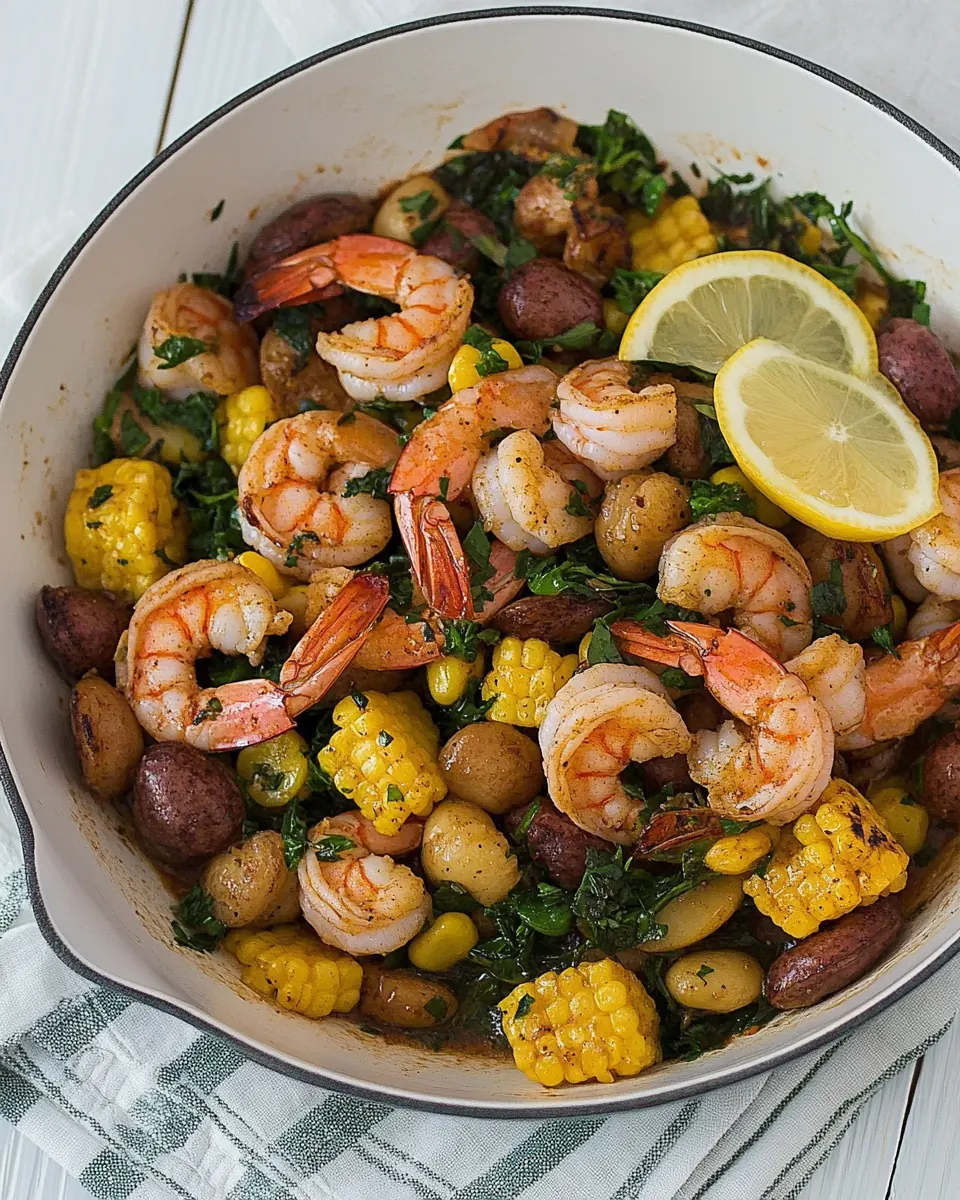
Cook tossing occasionally 2 minutes, then add spinach and cook until spinach has wilted and until the shrimp is cooked through (it should be opaque throughout).: The brief scent of roasted garlic will hit immediately, and those one minute of cooking will mellow raw sharpness into warm, nutty aroma. Garlic burns quickly, so keep it moving and watch for a pale golden color, not dark brown.
Pour in lemon juice and toss. Serve warm garnished with parsley if desired.: When the cubed butter melts it will sizzle and create a glossy coating that helps the shrimp and corn pick up flavor. The contrast between hot pan and cold shrimp makes the butter foam pleasantly. If you add everything too cold to a low heat, steaming will occur instead of searing.
Sprinkle in seafood seasoning and thyme and season with salt and pepper to taste: The spices will bloom in the warm fat releasing aromatic lift, and the thyme will lend a subtle herbaceous backdrop. Taste carefully since the sausage already contributes salt; over salting is easy here.
Cook tossing occasionally 2 minutes then add spinach and cook until spinach has wilted and until the shrimp is cooked through: You should see the shrimp turn uniformly opaque with a slight curl, and the spinach will collapse into dark glossy leaves. The sound changes to a softer simmer as moisture is released. Overcooking makes shrimp rubbery and spinach mushy, so remove from heat promptly when done.
Pour in lemon juice and toss: The bright hiss of acid hitting the pan wakes up the flavors and cuts through the buttery richness, giving a clean finish to each bite. Tossing evenly distributes the tang so each forkful is balanced. Adding lemon too early will dull its fresh brightness.
Serve warm garnished with parsley if desired: The garnish adds a fresh, herbaceous aroma and a pop of green that signals freshness. Serve straight from the skillet so you keep the warm textures intact. Letting it sit too long will lose that crisp edge on the potatoes and the shrimp may cool and tighten.