Preheat the oven to 400ºF. Lightly grease a 9×9-inch baking dish with avocado oil and set aside.: The scent of warming oven air gives you the first signal that dinner is on its way, and greasing the pan prevents sticking while encouraging the rice edges to crisp slightly during baking. You should hear only the soft hum of the oven as it approaches temperature, and the pan will feel evenly warm when you briefly touch its exterior with a glove. The reason this matters is that a properly greased dish ensures clean serving and a nice texture contrast where rice meets the pan. A common mistake is using too little oil, which can cause stubborn rice to cling and tear; use enough to coat the surface evenly. If your oven runs hot, watch for early browning and tent with foil if the top is coloring too quickly.
Cook the rice: In a medium saucepan, bring the rice and water to a boil. Reduce the heat to low, cover, and simmer for 15 minutes. Remove from heat, fluff with a fork, and stir in the rice vinegar and salt. Fluff again to combine.: In a medium saucepan, bring the rice and water to a boil. Reduce the heat to low, cover, and simmer for 15 minutes. Remove from heat, fluff with a fork, and stir in the rice vinegar and salt. Fluff again to combine. : As the rice simmers, you ll hear a gentle, steady bubbling that slows when the lid sits snugly; that s the steam doing its work. After 15 minutes off the heat, the pot will be fragrant with a clean, starchy aroma and the grains should appear plump and slightly translucent. Fluffing with a fork separates the grains while preserving lightness, and stirring in rice vinegar and salt brightens the base so each bite tastes balanced against the creamy topping. If the rice seems waterlogged, let it sit uncovered a few minutes to evaporate excess moisture, because soggy rice will collapse under the topping. Avoid stirring vigorously while hot, which can make the rice gluey.
Make the shrimp mixture: In a medium bowl, whisk together the mayo, sriracha, soy sauce (or coconut aminos), sesame oil, and green onion. Pat the shrimp dry, add to the bowl, and toss to coat.: In a medium bowl, whisk together the mayo, sriracha, soy sauce (or coconut aminos), sesame oil, and green onion. Pat the shrimp dry, add to the bowl, and toss to coat. : The mayo and sriracha come together into a glossy, slightly fiery sauce that should cling to the shrimp in a thin, even coat. Patting the shrimp dry first removes excess surface moisture so the sauce adheres rather than slides off, and tossing gently ensures every piece is evenly flavored. You will notice a pungent sesame aroma and a subtle tang from the soy sauce blending with the heat of sriracha, which signals that the mixture is well balanced. One common error is overcrowding the bowl, which prevents even coating; if needed, dress the shrimp in two batches. If the mixture tastes too salty, a squeeze of neutral ingredient like a touch more mayo can mellow it.
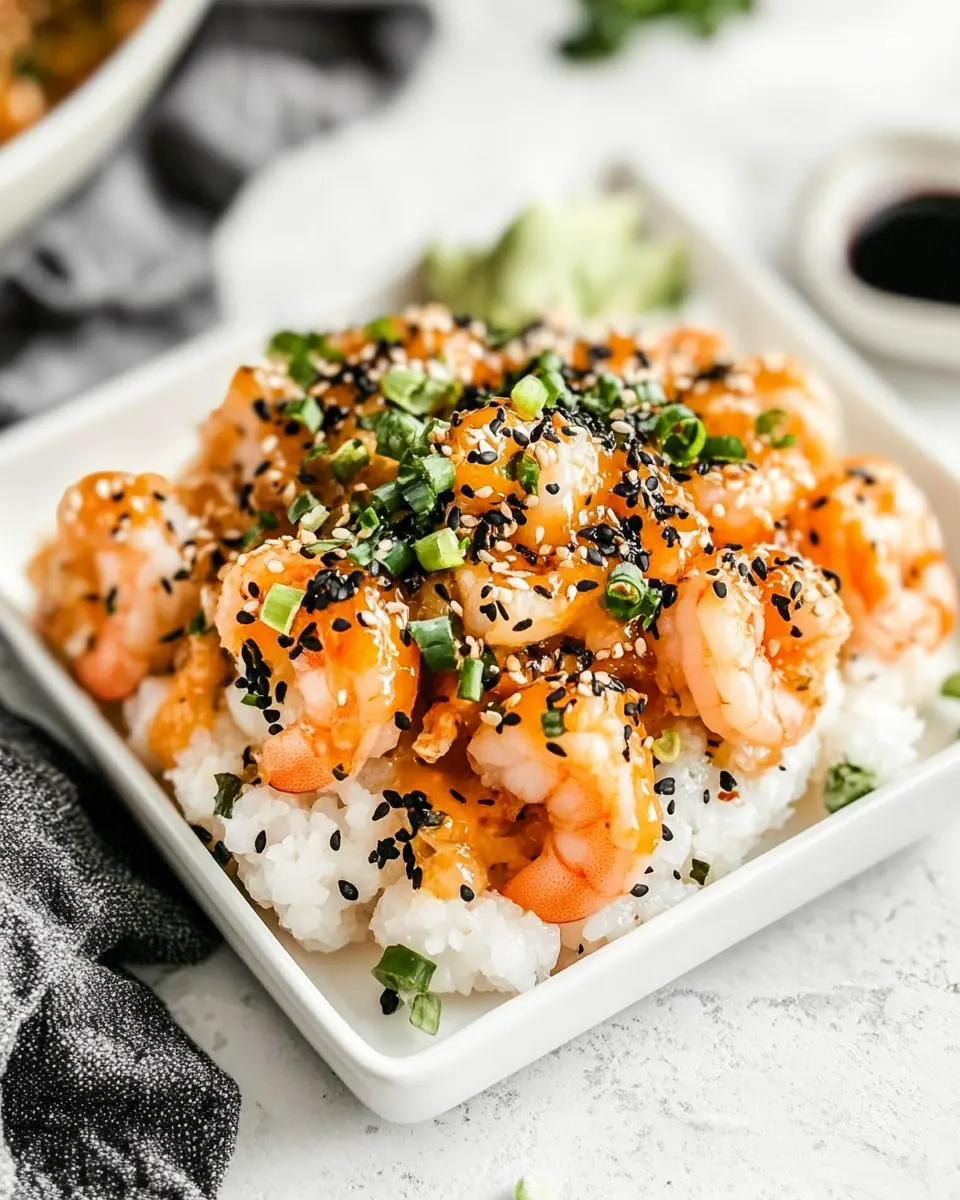
Assemble: Press the cooked rice evenly into the bottom of the prepared baking dish. Spread the shrimp mixture on top.: Press the cooked rice evenly into the bottom of the prepared baking dish. Spread the shrimp mixture on top. : As you press the warm rice into the dish, the surface will feel slightly tacky and warm under your fingertips, which helps the layer set up and hold the topping. Spreading the shrimp mixture across creates an even, shallow layer that bakes uniformly and allows the heat to circulate properly. Press gently so the rice forms a stable base without compacting into a dense block. A frequent mistake is piling the shrimp too thickly, which can prevent even cooking, so aim for a single uniform layer. Visually, the contrast between white rice and the saucy shrimp should look appealing and balanced.
Bake for 15 minutes, or until the shrimp is fully cooked.: The oven will reward you with a warm, nutty aroma from the sesame oil as the edges begin to sizzle, and you may see light bubbling at the margins where the sauce meets the pan. The shrimp should be opaque and firm to the touch, not rubbery, which indicates they are cooked through. Baking melds the flavors and gives the top a slight set, which improves scoopability. Avoid overbaking, which dries the shrimp and makes the texture tough; check a center piece with a fork to ensure tenderness. If the top is browning unevenly, rotate the dish halfway through for even color.
Garnish with your desired toppings and serve warm. For the crispy shallots: heat avocado oil in a skillet. Add your sliced shallots. Cook over low heat, mixing often, until crispy but not burnt.: heat avocado oil in a skillet. Add your sliced shallots. Cook over low heat, mixing often, until crispy but not burnt. : When you add toppings like sliced Avocado , extra green onion , and toasted Sesame seeds , the dish brightens and develops layers of texture. Crispy shallots bring a golden, brittle crunch and a sweet onion aroma when cooked slowly in Avocado oil ; they should sizzle gently and turn a deep golden without charring. Drain them on paper towel to keep them crisp. Serve the bake warm so the contrast between hot topping and cool avocado is pronounced. Common mistakes include frying shallots too hot too fast, which leads to burning; keep the heat low and stir often for even color and crunch.