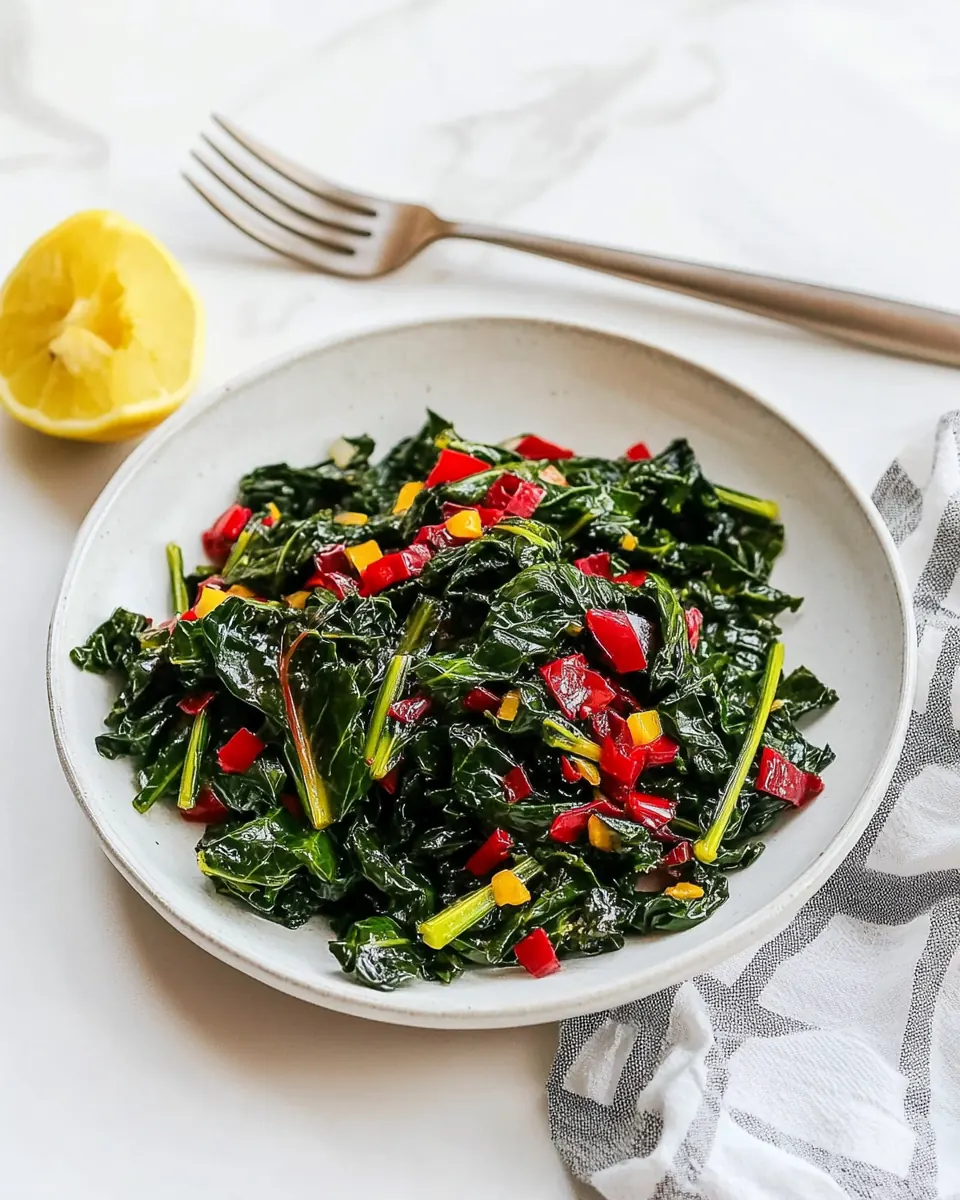
Slice the stems off the chard leaves and chop the stems into 1/4-inch slices. Coarsely chop the leaves.: The board will smell faintly green and vegetal as you work, and you will notice the stems have a firmer, almost celery like snap. Work with a sharp knife so you get clean cuts without bruising the leaves, which preserves their color and texture. Keep the stem pieces uniform in size so they cook evenly. A common mistake is chopping unevenly, which leads to some stems remaining tough while others overcook. Use steady, confident strokes, and separate stems from leaves into two piles to maintain control of timing while sautéing.
Heat the oil in a large skillet over medium heat. Add the chard stems and cook for 1 to 2 minutes, or until they begin to soften. Add the chard leaves, garlic, salt, and several grinds of pepper and sauté for 1 to 2 minutes, or until the leaves are wilted.: When the extra-virgin olive oil warms it will shimmer and release a soft perfume, not a harsh smoke, that signals the pan is ready. Add the stems and you will hear a gentle sizzling, a comforting sound that means moisture is leaving the vegetables and flavors are concentrating. Keep the heat steady, and stir occasionally so the stems blister slightly and take on a touch of color. If the pan is too hot the exterior will burn before the interior softens, and if it is too cool the stems will steam and remain limp. The aim is a tender bite with a touch of caramelization.
Turn off the heat, squeeze a little lemon juice over the chard, and toss. Season to taste and serve.: As you add the leaves they will immediately begin to collapse, releasing a bright earthy aroma that mingles with the toasted scent of the garlic . Use tongs to toss the leaves so they contact the hot surface quickly, encouraging even wilting. The sound shifts from a vigorous sizzle to a softer whisper as water evaporates and leaves soften. Watch the garlic carefully, because it can go from golden to bitter in an instant; if you see darkening, reduce the heat. A typical error is overcooking the leaves until they become mushy, so remove them from heat when they are still glossy and tender.
Turn off the heat, squeeze a little lemon juice over the chard, and toss. Season to taste and serve.: With the heat off you will notice a bright citrus lift when the lemon hits the warm greens, and the aroma will open like a window. Tossing coats every ribbon of leaf with the flavored oil and citrus, giving layers of texture and zing. Taste carefully and adjust the seasoning, adding a pinch more salt or a few more grinds of black pepper as needed. A common misstep is adding too much acid upfront; start with a small squeeze and build. Serve promptly so the contrast between tender stems and silky leaves is at its best.