Prep: Add the onion, corn, beans, quinoa, garlic, cilantro stems, spices, salt, crushed tomatoes, tomato paste, and vegetable broth to a slow cooker. Mix well, until everything is evenly distributed.: Add the onion, corn, beans, quinoa, garlic, cilantro stems, spices, salt, crushed tomatoes, tomato paste, and vegetable broth to a slow cooker. Mix well, until everything is evenly distributed. : You will notice a vibrant array of colors and aromas as you add each ingredient to the pot, from pale diced red onion to the bright red of the crushed tomatoes . As you stir, listen for the soft rustle of ingredients settling together, and enjoy the way the spices scent the air, giving an early indication of the chili's character. Proper distribution is crucial so every serving has a balance of beans, grains, and broth; if quinoa or tomato paste clumps, break them up with the spoon until the mixture looks homogeneous. One reason this technique matters is that even distribution prevents concentrated pockets of salt or spice later. A common mistake at this stage is adding large unmixed spoonfuls of paste or dry spices, which can lead to uneven flavor. If the mixture seems dry, check that you measured the broth accurately, because too little liquid will prevent the quinoa from hydrating properly. Take a moment to scrape the sides and bottom so nothing sticks, and make sure the cilantro stems are chopped small so they will release their flavor during the long cook.
Cook: Cover the slow cooker and cook on low for 4 to 5 hours, or on high for 3 hours.: Cover the slow cooker and cook on low for 4 to 5 hours, or on high for 3 hours. : During cooking the pot will move from a raw, bright tomato scent to a rounded, melded aroma as acids soften and spices bloom. On low you will hear occasional soft bubbling, and the surface will show gentle steam; on high the simmer will be more active, faster, and louder. Slow even heat allows the quinoa to expand slowly, absorbing flavor while maintaining a pleasant texture, and it gives canned beans time to relax into the sauce without disintegrating. One useful clue that the chili is done is when the quinoa looks plump and translucent and the broth has thickened slightly around the edges. A common error is lifting the lid frequently to check, which releases heat and extends cooking time, so limit lid lifts to preserve steady temperature. If you find the chili is too thin at the end, remove the lid and cook for a short time to concentrate the sauce, stirring occasionally to avoid sticking. Conversely, if it looks too dry, fold in a bit more warm broth or water and stir thoroughly.
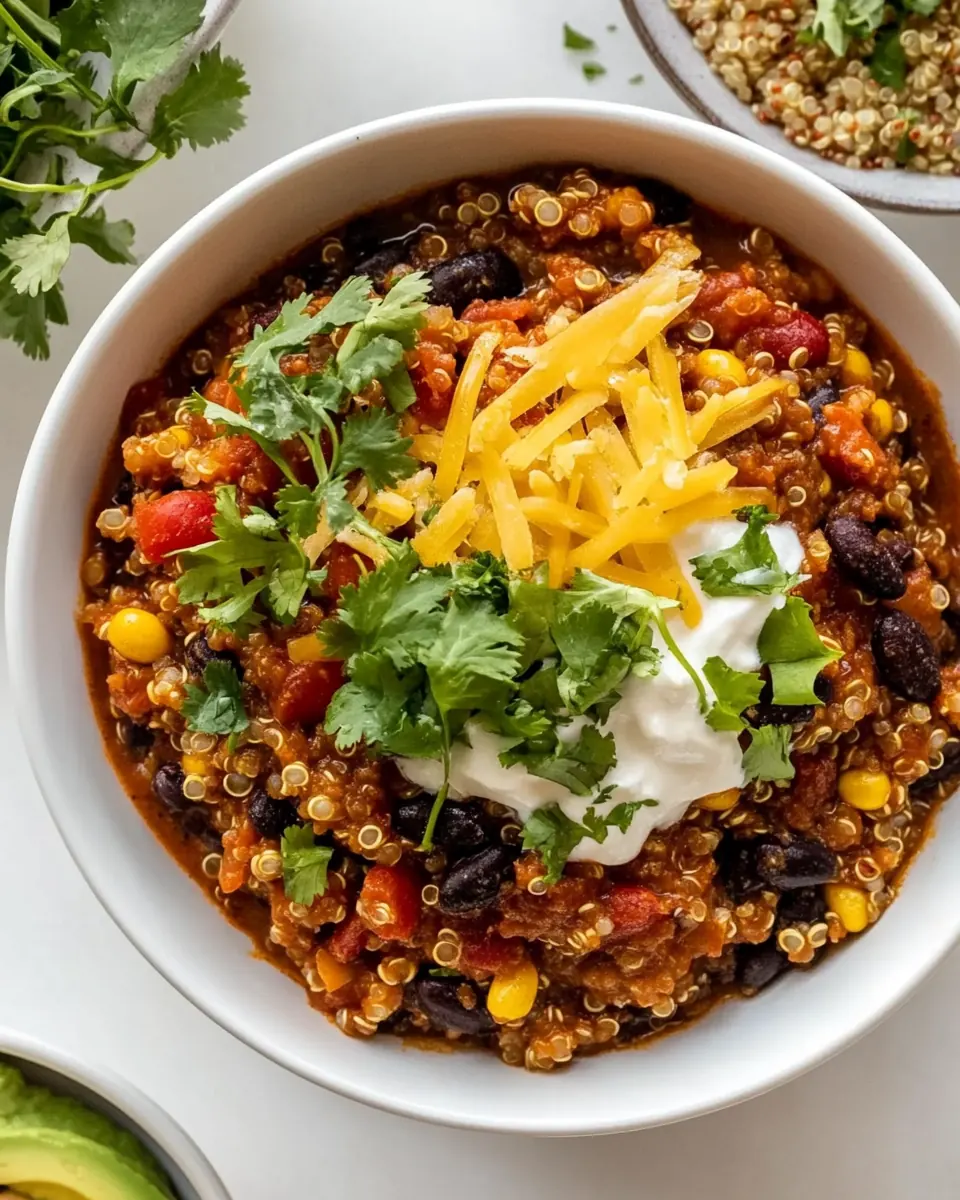
Season & Serve: Stir well and add additional salt to taste, if necessary. Serve warm; top with the remaining cilantro leaves and any additional toppings, as desired. Leftovers will keep in the fridge for up to 5 days, or in the freezer for up to 2 months.: Stir well and add additional salt to taste, if necessary. Serve warm; top with the remaining cilantro leaves and any additional toppings, as desired. : After cooking, the first sensory cue is a deep, rounded aroma with the sweetness of corn and the warmth of ancho chili powder and cumin . Stirring releases steam and reveals the finished texture, allowing you to taste and adjust seasoning. Adding salt at the end matters because liquids concentrate as they cook, and salt added too early can lead to an overly seasoned pot. When serving, the contrast of warm chili and cool toppings like diced avocado or a spoonful of sour cream is delightful, and a final scatter of cilantro leaves adds a bright herbal finish. One pitfall is serving directly from a cooker that was over salted; always taste before plating. For leftovers, store in airtight containers once cooled and refrigerate for up to five days, or freeze portions for longer storage; frozen chili often benefits from a brief simmer when reheating to restore texture and meld flavors again.