In the bottom of the slow cooker, layer the onions, carrot, celery and garlic cloves. Place the chicken breasts on top of the vegetables and pour the broth over the chicken. Sprinkle the chicken with thyme, salt and pepper. Place the lid on the slow cooker and cook for 3 hours on high (or 6 hours on low).: When the pot begins to warm you will notice the aroma of softened onion and garlic rising, a savory scent that signals the foundation is building. The vegetables will begin to lose their raw edge, turning translucent and fragrant, while the chicken locks in juices under the lid. This slow, moist heat extracts collagen and flavor from the meat and melds aromatics into the broth, creating a flavorful base rather than just seasoned water. A telltale cue is the broth taking on a slightly golden hue and the vegetables slipping a bit when stirred. Avoid rushing this step by switching to higher heat for too long, which can make the chicken tough instead of shreddable; patience yields tender results. If your slow cooker runs hot, check for bubbling that is too vigorous and lower the setting to preserve gentle cooking.
Remove the chicken from the slow cooker and shred into bite-sized pieces with a fork. Return to the slow cooker.: After removing the chicken , you should feel the meat easily give way under a fork, shredding into moist strands that soak up broth. The texture should be tender and slightly fibrous, not stringy or dry. Shredding while the meat is warm helps it pull apart cleanly and releases pockets that will capture sauce. Return the shredded chicken to the pot so it can rehydrate and marry with the seasoned broth, continuing to infuse with thyme and vegetable flavor. Avoid overworking the meat with knives, which creates inconsistent shred sizes. If the chicken seems dry, stir in a bit of extra broth to reintroduce moisture.
In a medium bowl, whisk the half and half together with the cornstarch. Pour the mixture into the slow cooker and stir to combine.: The first sensory cue is the mixture thickening slightly as the cornstarch hydrates, creating a silky slurry that will marry with the hot liquid. Once added to the pot, you will see the broth take on a creamier sheen and feel a smoother mouthfeel on the spoon. This step matters because the cornstarch creates a glossy, clingy sauce that helps the dumplings sit in a cohesive stew rather than a thin broth. Whisking beforehand prevents lumps that can lead to grainy pockets. A common mistake is adding cornstarch directly without mixing, which can cause clumps; always precombine in a cold liquid for even thickening.
In a small bowl, combine the flour, baking powder, garlic powder and salt. Work in the butter using your fingers until coarse crumbs begin to form.: As you rub the cold cubes of butter into the dry mix, you will feel the texture transform into coarse, sandy crumbs with small pea sized bits of fat scattered through. That tactile change is essential because the pockets of butter will steam during cooking, creating tender layers and a slight flakiness inside the dumplings. The dough should not be smooth at this stage, instead it should show visible crumbs that signal lightness will follow. Avoid letting the butter warm too much in your hands, which can make the dough greasy and dense. If the kitchen is warm, work quickly or chill the bowl briefly.
Stir in the milk and combine well until a sticky dough begins to form.: Once the milk is added, the mixture will come together into a tacky, slightly sticky dough that holds a shape when scooped. The moisture activates the baking powder and creates cohesion without overdeveloping gluten, which keeps dumplings tender. You should be able to drop the dough with a spoon, and it should cling together without flattening. If it feels too dry, add a teaspoon of milk at a time, but resist adding too much which yields loose, spreading dumplings. Overmixing at this point tightens gluten and leads to chewy results, so combine just until uniform.
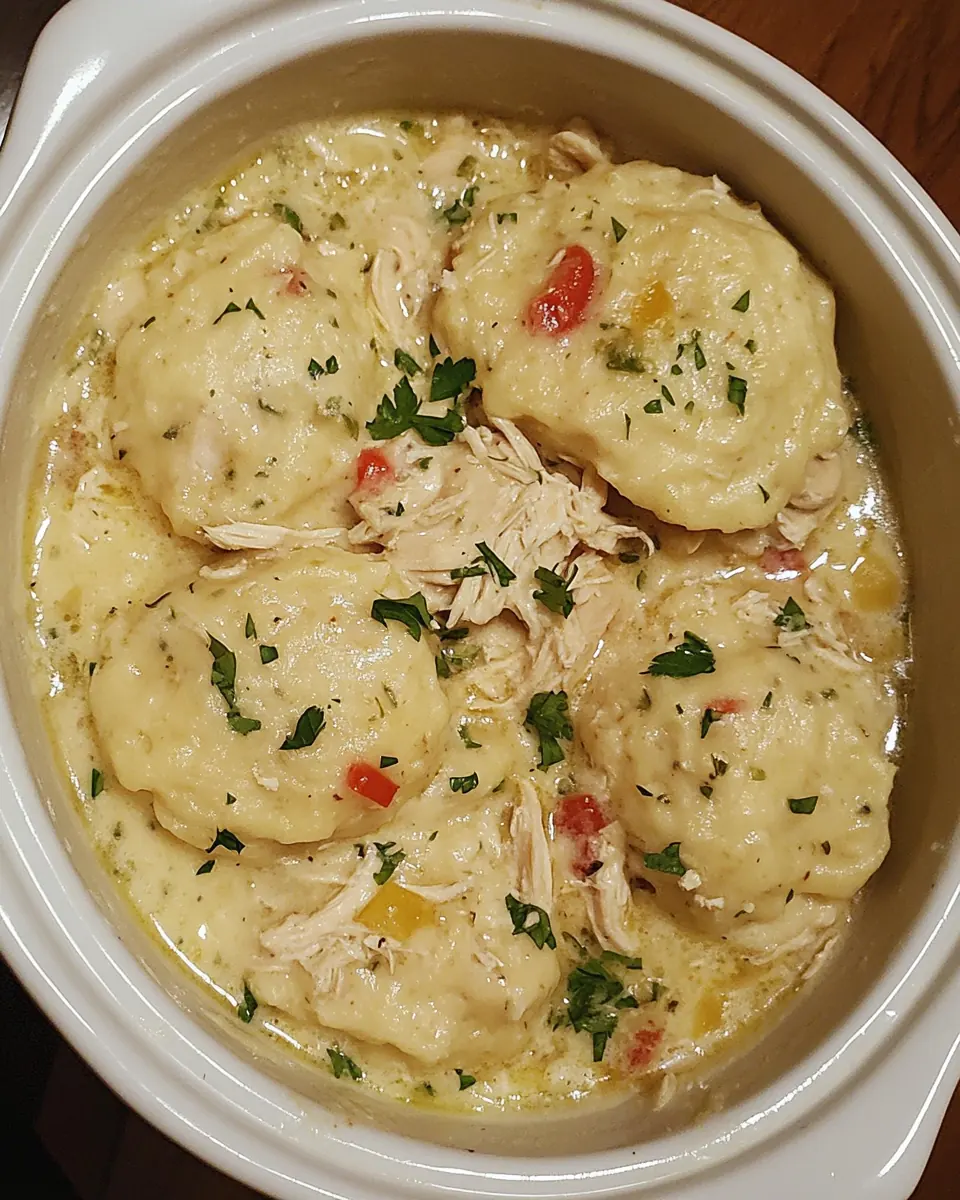
Drop tablespoon-sized dollops of dough over the stew in an even layer. Place the lid on the slow cooker and cook for 1 additional hour or until the dumplings are cooked through.: As the dumplings steam, you will notice the tops set and the edges become slightly drier while the undersides absorb steam from the braising liquid. The aroma will turn homier and thicker, with a creamy scent from the half and half . Properly cooked dumplings are springy to the touch and a toothpick comes out clean from the center. This technique matters because even spacing ensures uniform steaming, preventing some dumplings from remaining doughy. A typical slip up is dropping too large portions, which leads to raw centers; keep them tablespoon sized and leave room between each so steam circulates.
Sprinkle with parsley and serve immediately.: The final flourish of chopped parsley adds a bright, herbaceous note and a visual pop that contrasts the creamy bowl. You will hear soft spoons and forks as people dig in, and the steam will carry the blended aromas of chicken , thyme and butter enriched dumplings. Serving right away preserves the dumplings’ tender texture; letting the stew sit too long can cause them to absorb more liquid and become soggier. If you need to hold the dish briefly, keep the lid off to prevent over steaming, and reheat gently before serving to restore warmth.