Whisk flour, brown sugar, and salt in a large bowl. Stir baking powder, baking soda, and cinnamon into the flour mixture with a wooden spoon or spatula.: You will smell the warm molasses notes from the brown sugar as you whisk, and the dry mix should look uniform, pale, and slightly sandy. Combining these dry ingredients first ensures the all purpose flour and ground cinnamon are evenly distributed so pockets of spice or leavener do not form later. A wooden spoon will glide through this mixture easily, and you should not feel large clumps. If you do, break them up with your fingers. A common mistake is adding liquids too soon, which leads to uneven mixing and possible pockets of dry flour in the finished cake.
Place milk, oil, eggs, and vinegar in a measuring cup and whisk until the eggs are beaten, then add to the flour mixture and stir until combined (mixture may be slightly lumpy).: The aroma of ground cinnamon will lift as you stir, and the dry mixture should now have tiny specks of spice throughout. This step ensures the chemical leaveners are well distributed so the cake rises evenly in the slow cooker. Use a gentle folding motion to avoid compressing the mix, and check that the baking powder and baking soda are not clumped; break any clumps with the back of a spoon. A frequent oversight is uneven distribution which leads to uneven rising and texture.
Spray a 5-7 Qt slow cooker with nonstick cooking spray, or line with a slow cooker liner (sprayed with cooking spray). Pour batter into crock pot.: When you whisk the milk , vegetable oil , eggs , and white vinegar , the liquid will look homogenous and slightly glossy. Pouring these liquids into the dry mix creates pockets of moisture that disappear as you stir; the batter should be cohesive and slightly lumpy, not thin or watery. The vinegar reacting with the baking soda starts the lift process, so work efficiently. Overmixing can develop gluten and produce a tougher crumb; stop once you no longer see dry streaks. If the batter seems too stiff, a splash more milk will help, while overly wet batter leads to underbaked centers.
Sprinkle nuts over the top of the cake batter.: As you transfer batter the slow cooker should be warm but not hot, and the surface will glisten slightly where the batter settles. The liner makes cleanup and serving easier, and the nonstick spray prevents sticking around the edges. Smooth the top gently with a spatula so the batter is even; this helps the cake bake uniformly. A typical mishap is under greasing which can cause the cake to cling to the insert, tearing when removed.
Place a large paper towel over the top of the crock pot insert, then place the lid on top. Cook on HIGH for 1 1/2 to 2 1/2 hours (mine took 2), or until a toothpick comes out clean around the edges. The center might be a little under done on top (but it’ll be done underneath).: The chopped nuts create an immediate contrast in texture and release a toasty aroma when warmed. Scatter them evenly so each slice gets a bit of crunch. If you pre toast them, the nut oil will become fragrant, adding another layer of aroma. Avoid burying them deep in the batter which can interfere with even rising; topping is best. Forgetting this step means missing out on the crunchy highlight that elevates each bite.
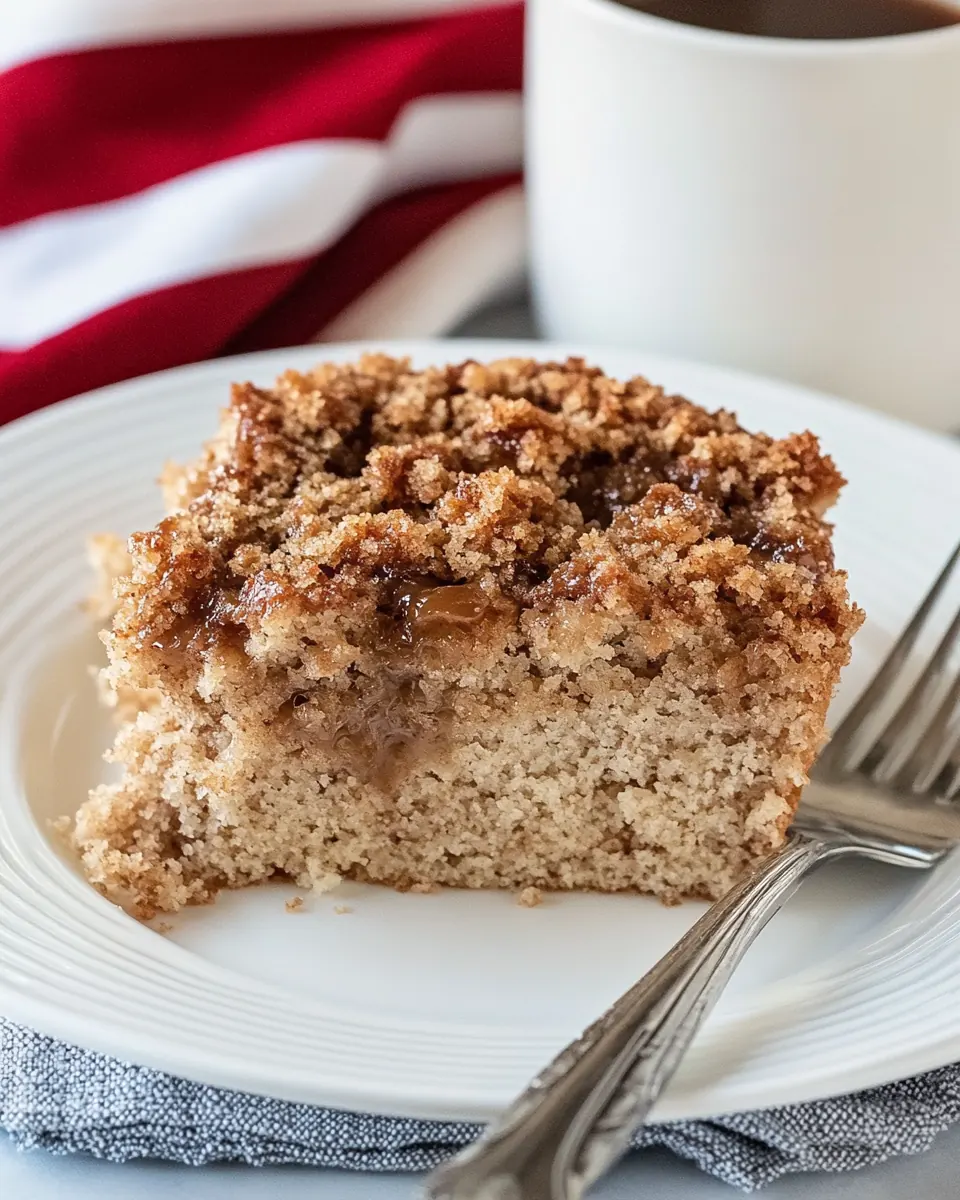
Serve warm straight from the crockpot or store in an airtight container for up to 3 days. For easy serving, use the slow cooker liner. That way you can just pick the whole liner out, peel it off, and serve the cake.: As the cake cooks you will notice a gentle steam escaping and the kitchen filling with the scent of brown sugar and cinnamon . The slow cooker produces humid heat, so the edges will set first and become slightly golden while the center finishes through conduction from the insert. The paper towel helps absorb excess condensation, preventing a soggy top. Check for doneness by inserting a toothpick near the edge; it should come out clean while the very center on top might seem slightly underdone, which is normal because the bottom cooks a bit faster. A common error is opening the lid frequently, causing heat loss and longer cook times.
To bake in a traditional oven: use a 9 x 13” pan sprayed with nonstick cooking spray and bake at 350° for approximately 35-45 minutes.: The warm cake will give off steam and feel slightly springy to the touch. Using the liner allows you to lift the whole cake out, peel away the liner, and slice cleanly. Store leftovers in an airtight container at room temperature for up to three days to keep the crumb tender. Reheating a slice gently in the microwave for a few seconds revives softness. Leaving it uncovered will dry the cake out quickly, so always seal it.
To bake in a traditional oven use a 9 x 13” pan sprayed with nonstick cooking spray and bake at 350° for approximately 35 to 45 minutes: In the oven the cake will brown more on top and set more uniformly across the surface; you will hear no steam hiss, but you should see a light golden color and a toothpick inserted in the center should come out clean. This method gives a slightly firmer crust on top, and the middle texture will be comparable if you monitor bake time closely. A common pitfall is leaving it too long which dries the crumb; start testing at the lower end of the time range to prevent this.