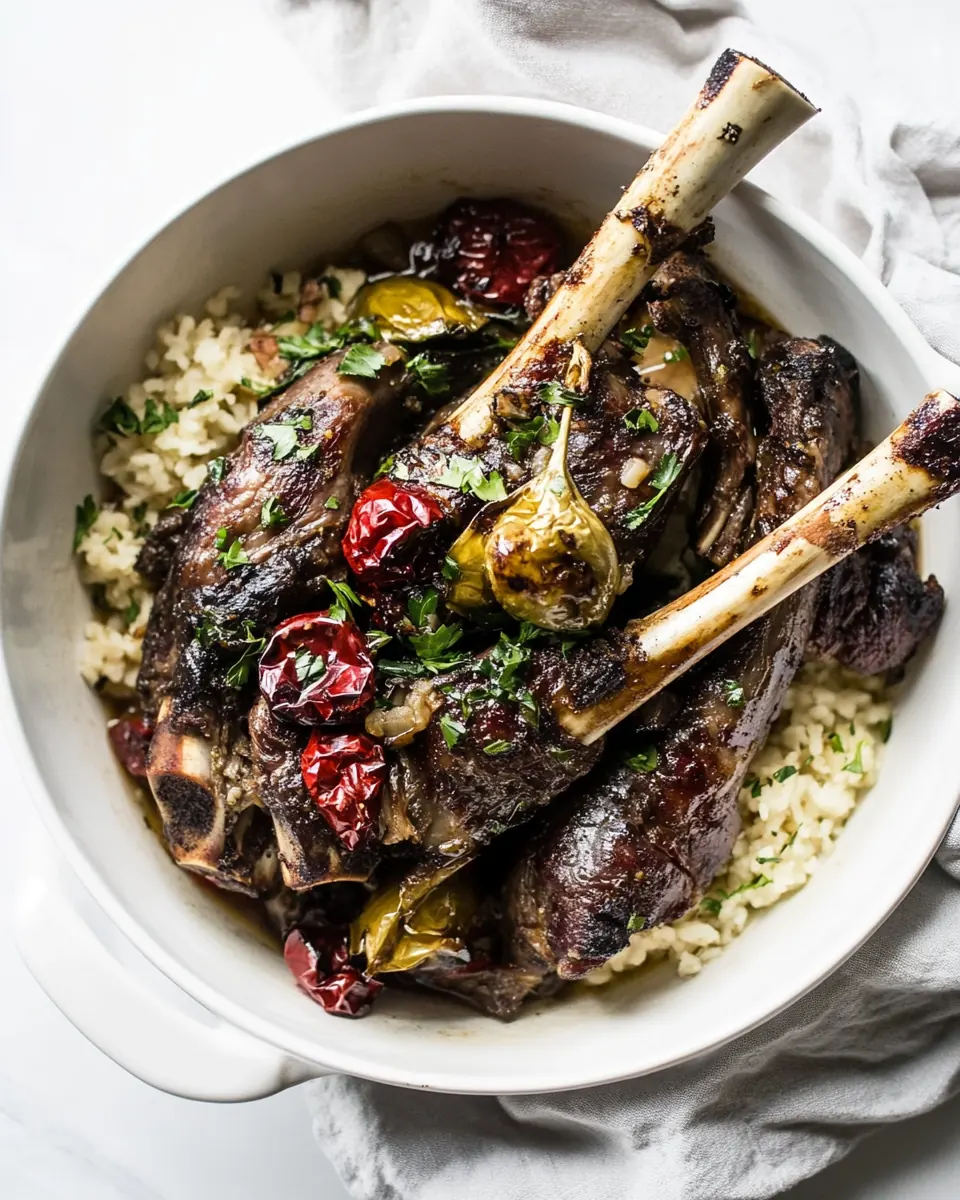
Heat a large heavy skillet with the 1 tablespoon olive oil. Season 4 lamb shanks with salt and pepper. Brown the shanks on each side 3-4 minutes.: The first sensory cue you will notice is the gentle shimmer of the olive oil across the pan surface, and shortly after a warm, toasty aroma as the oil heats. This step matters because a properly heated pan yields quick, even browning on the outside of the lamb , forming a flavorful crust that the slow cooker cannot create on its own. When the meat hits the pan you want to hear a confident sizzle, signaling the Maillard reaction at work; if you hear only a muted sound the pan may not be hot enough, so raise the heat slightly and wait for the oil to ripple again. Browning also adds texture contrast, helping the finished shank present beautifully. A common mistake is crowding the pan which traps steam and prevents browning, so work in batches or use a larger skillet if needed. Watch for small browned bits in the pan, they are flavor gold and can be deglazed later into the braising liquid.
Add 1 pound halved baby potatoes, 1 cup Kalamata olives, 1 jar sundried tomatoes, and salt and pepper. Add 1 cup chicken broth and 3 tablespoons lemon juice to the bottom of your 6 quart slow cooker. Add the lamb on top and rub the greek spice rub on the lamb shanks.: As you season, run your fingers along the surface so the salt and pepper adhere, releasing a faint mineral scent and peppery warmth that lifts the raw meat. Seasoning early gives the salt time to start penetrating the surface, enhancing internal flavor during the long cook. The visual cue is a light speckling of seasoning on the meat; if it looks pale, it may need a touch more salt , but be cautious because the later additions of Kalamata olives and chicken broth will also contribute sodium. Avoid oversalting at this stage to prevent a harsh finished taste.
In a small bowl combine 2 1/2 teaspoons dried oregano, 1 teaspoon dried basil, 1 teaspoon dried rosemary and 1 teaspoon onion powder. Rub on top of the lamb shanks.: When you place the lamb into the hot skillet you should hear a steady sizzle and observe the edges taking on a deep mahogany hue within a few minutes. This caramelization produces nutty, savory aromas and a crisp exterior that contrasts the eventual fall apart texture. Browning for about three to four minutes per side develops a robust flavor foundation; pushing beyond that risks burning the surface, which yields bitter notes. If you notice excessive smoke or scorching, lower the heat and add a touch more oil. A common misstep is flipping too often which interrupts crust formation, so be patient and only turn when the meat releases easily from the pan.
Cook on low for 8 hours or until tender.: As you layer these ingredients into the slow cooker you will notice the contrast of textures and aromas, from the earthy, starchy scent of halved baby potatoes to the briny perfume of Kalamata olives and the concentrated sweet tang of jarred sundried tomatoes . These components build complexity in the braising liquid and create complementary textures; the potatoes release starch which slightly thickens the sauce, while the olives and tomatoes provide bursts of salinity and acidity. Adjust seasoning carefully here because the olives add salt naturally. Avoid overfilling the cooker so steam can circulate, and place the potatoes on the bottom to cook evenly.
Add 1 cup chicken broth and 3 tablespoons lemon juice to the bottom of your 6 quart slow cooker: Pouring the warm or room temperature chicken broth and fresh lemon juice into the base creates the cooking bath that will slowly tenderize the meat and fuse flavors. The broth offers gentle savory support while the citrus brightens the whole pot, cutting through richness for balance. You should notice a clean, slightly acidic tang on the breath when you lift the lid during early simmering, which is desirable because it prevents the finished dish from feeling heavy. Common errors include using overly salty broth; if so, dilute with water to control sodium. Ensure that the liquid level comes partway up the sides of the shanks so they braise evenly without needing to be fully submerged.
Add the lamb on top and rub the greek spice rub on the lamb shanks: Positioning the browned lamb on top keeps the crust intact while allowing steam and braising liquid to circulate and mingle with the meat. When you rub the Greek spice mix onto the shanks, inhale the herbal bouquet of dried oregano and rosemary and feel the spices cling to the surface; this technique ensures the aromatics infuse the meat throughout the long cook. Rubbing also helps the herbs to toast lightly in the residual heat, unlocking their essential oils. Avoid overhandling which can tear the exterior crust and let the spices sit for a few minutes before closing the lid so flavors begin to marry.
In a small bowl combine 2 1/2 teaspoons dried oregano, 1 teaspoon dried basil, 1 teaspoon dried rosemary and 1 teaspoon onion powder: Mixing these dried herbs releases their scents and produces a cohesive seasoning profile for the lamb . The immediate sensory cue is a herbaceous, slightly piney aroma from the rosemary with warm, peppery notes from the oregano and a subtle sweetness from the onion powder. This blend is important because it layers into the meat and the sauce as it cooks, creating a unified Mediterranean flavor. If the blend smells muted, gently crush the herbs in your palms to awaken the oils. A mistake to avoid is using fresh herbs in the same proportions which can overpower the dish; dried herbs are more concentrated here.
Rub on top of the lamb shanks: As you press the herb mixture into the lamb surfaces you will notice the spices adhere and the meat takes on a fragrant coat, visible as a textured crust. This tactile step helps the flavors penetrate during the slow braise, and as the meat cooks those aromatics mellow into the sauce for depth. Press evenly so each shank gets the same seasoning coverage. One common oversight is applying the rub unevenly, resulting in inconsistent flavor; take a moment to distribute it thoroughly with your hands.
Cook on low for 8 hours or until tender: During the long, low cook you will observe the pot gradually filling with savory steam and the broth reducing into a concentrated, glossy sauce. The lamb becomes fork tender, the connective tissues breaking down into silky mouthfeel, and the aromas shift from raw meat to complex, savory comfort. This patient approach matters because it transforms tough cuts into luxurious bites, and it allows the flavors to meld gently without becoming sharp. A troubleshooting tip is to check for tenderness after seven hours, since slow cooker temperatures vary; if the meat resists, continue cooking and test every 30 minutes. Avoid switching to high heat late in the process, which can dry or overcook the exterior before the interior is ready.