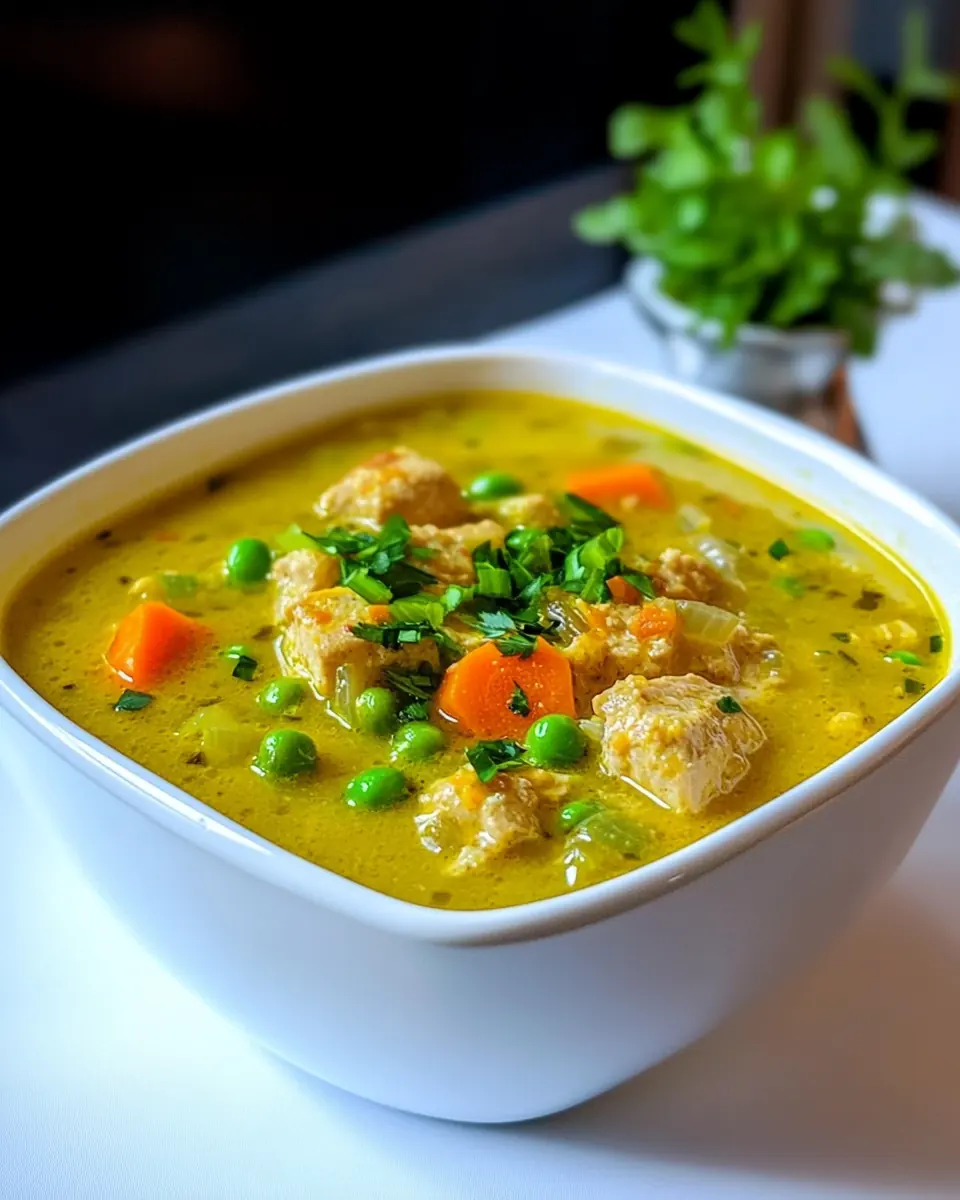
Place everything in the slow cooker except the rice. Cook on low for 5 to 6 hours, or low for 2 to 3 hours.: The aroma evolves gradually as the pot warms, releasing the sweet perfume of garam masala and the faint, earthy scent of turmeric . You will notice a fragrant steam rise when you lift the lid after an hour, with the softened onions and garlic blending into the broth. The reason we add all items except the rice is because the rice would overcook and become mushy during long simmering, so it is saved for the end. One common mistake is crowding the cooker with oversized chicken pieces, which can cause uneven cooking, so make sure pieces are similar in size. As the soup simmers, the lentils will begin to swell, siphoning starch into the liquid and thickening it; this natural thickening is a big part of the soup's texture. If the pot seems too full, transfer to a larger slow cooker or omit a cup of broth to prevent spillage. Keep an eye on seasoning now, but wait until the end for final salt adjustments, because flavors concentrate as the liquid reduces.
Remove bay leaf, add jasmine rice and serve!: The long, gentle simmer mellows the spices and allows the chicken to tenderize while the red lentils break down, creating a silky mouthfeel. You will hear the occasional soft burble as the cooker maintains temperature, and when you lift the lid after a few hours the steam will smell richly spiced and slightly sweet from the green apple . This slow timeline helps collagen in the chicken relax, making meat tender without drying out. A common error is switching to high heat prematurely; sudden high heat can make lentils fall apart too fast or leave chicken fibers tough in places. If your slow cooker runs hot, check at the earlier end of the window; every machine behaves a little differently. Also avoid opening the lid repeatedly, as that drops heat and extends cooking time. The visual cue you're aiming for is soft vegetables, fully broken down lentils, and chicken that flakes easily with a fork.
Remove bay leaf, add jasmine rice and serve: When you take out the bay leaf, you will notice the bouquet of the soup clarified slightly, the herbal note no longer bulky but integrated. As you stir in the cooked brown jasmine rice , steam will rise and the broth will look a touch thicker as the grains absorb liquid, providing body and chew. Adding the rice last preserves its texture so it does not disintegrate into the soup, and it helps portion control as each bowl gets a pleasant rice-to-broth ratio. A typical slip is adding uncooked rice, which will expand unpredictably and can turn the soup gluey; always use fully cooked rice as called for. Taste for seasoning now, because the rice will slightly mute the spices and you may need to lift the salt or a squeeze of lemon if you want more brightness. Serve immediately so the rice remains distinct, and watch for a final aroma of warming spices with a whisper of coconut in the finish.