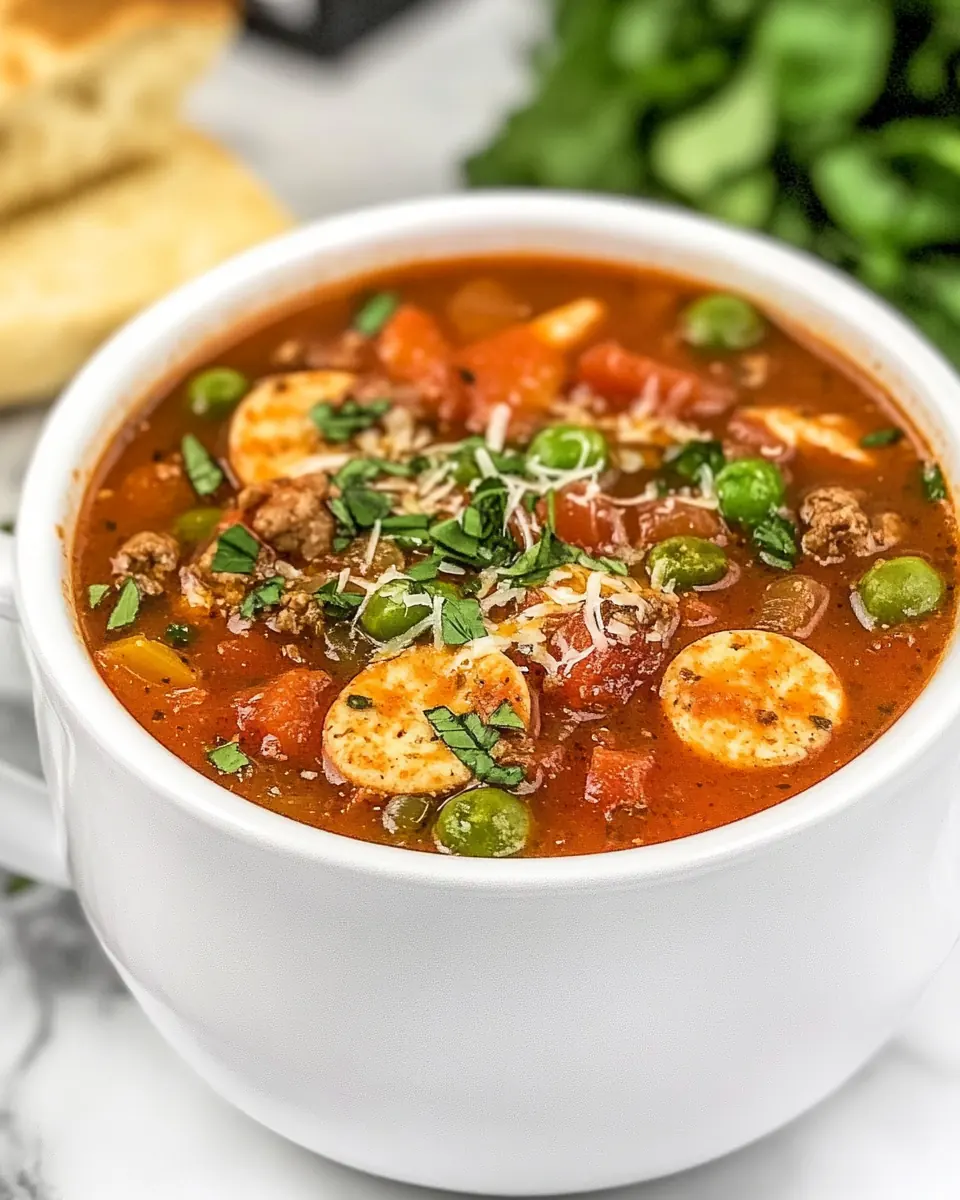
In a skillet, cook Italian sausage until browned and no longer pink. Transfer cooked sausage to slow cooker.: The first sign you want is deep browning on the Italian sausage , that sizzling and caramelization produce nutty, roasted aromas that deepen the soup. As the meat browns, use a wooden spoon to break it into small crumbles so it distributes evenly in the pot, and scrape up browned bits from the pan, which hold concentrated flavor. A common mistake is to crowd the skillet, causing steaming instead of browning, so cook in batches if needed. If you see pink in the center, cook a little longer; undercooked sausage will give an uneven texture and raise safety concerns. Transfer all flavorful juices and bits to the slow cooker, they amplify the final broth.
Add pepperoni, garlic, onion, Italian seasoning, sugar, tomato paste, tomato sauce, diced tomatoes, broth, and spaghetti sauce. Stir to combine.: Once the browned meat is in the cooker, the moment the other components join is aromatic harmony. When you add the mini pepperonis and canned tomatoes, the room fills with a cured meat tang and fresh tomato perfume. Stirring distributes starches and spices so flavors meld evenly during the long simmer. Texture wise, the tomato paste will thicken the liquid, while diced tomatoes offer intermittent bursts. A typical pitfall is under stirring at this stage, leading to pockets of concentrated paste, so scrape the sides and base to incorporate everything. Taste the mixture before cooking if you want to adjust sweetness or seasoning.
Cover and cook on LOW 6 to 8 hours.: Slow, gentle heat allows collagen and tomato acids to soften and marry, producing a deeply flavored broth with melded herb notes. Over these hours you will notice aromas deepen and the soup's color settle into a rich, inviting hue. Resist the urge to lift the lid frequently, as heat loss extends cooking time and slows flavor development. If you need it sooner, cooking on HIGH for a shorter period works, but the flavor will be less integrated. Keep an eye on liquid level; if it seems too thin near the end, you can uncover and cook briefly to concentrate it.
Add cream cheese and stir until combined.: The final fold of softened onion and chive cream cheese transforms texture, adding a silky sheen and gentle tang that harmonizes the tomato acidity. As you stir, focus on smoothing out any lumps; the soup should look glossy and cohesive. If the cream cheese struggles to blend, use a whisk to emulsify and avoid leaving clumps that can create pockets of overly rich dairy. A common mistake is adding cold cream cheese straight from the fridge, which makes incorporation difficult, so ensure it is softened. After blending, simmer a few minutes to make the flavor cohesive before serving.