Trim excess fat off of the short ribs and cut them into small 1 1/2 inch bite-size cubes. Season generously with salt and pepper.: As you trim and cube the short ribs , notice the texture of the meat, the marbling, and the small bands of connective tissue that will dissolve into gelatin during long cooking, giving a silky mouthfeel. Seasoning early helps the salt start to penetrate, enhancing internal flavor, while pepper adds top notes. A common mistake is leaving large hunks of fat that cause the finished stew to feel greasy, so trim modestly. Visually, you want evenly sized pieces so they brown at the same rate, and to hear a clean, firm sound when cutting through properly chilled meat.
In a skillet, heat oil or butter and brown short ribs on all sides.: When the oil or butter is shimmering or foaming just slightly, add the meat in a single layer to develop a caramelized crust that will give the stew deep savory notes, and listen for the satisfying sizzle as juices meet hot fat. Browning creates Maillard flavors that cannot be achieved in the slow cooker alone, it is the flavor backbone, and you should aim for rich brown patches without burning. Avoid overcrowding the skillet which causes steaming instead of browning, a common pitfall, so brown in batches if necessary. The aroma should shift from raw to roasted, and the pan should show browned fond that you can deglaze later with a bit of broth if desired.
Place garlic, onion, potatoes, carrots, and the parsnips and mushrooms if adding, in the bottom of your slow cooker.: Layering the hearty vegetables at the base means they cook directly in the liquid and heat source, which encourages even tenderness and flavor absorption. As you add the onion and garlic , you may notice a sharp, fresh scent that will mellow into sweetness as it cooks. A frequent mistake is chopping vegetables too small which causes them to disintegrate, so keep the cubes substantial. The visual of the colorful veg bed should look abundant and balanced, creating a visual platform for the browned meat.
Place meat on top, then add in the diced tomatoes, beef broth, arrowroot flour, teaspoon of salt, pepper, thyme, bay leaf, and red pepper flakes.: Nestling the browned short ribs over the vegetables helps the juices to drip down and flavor everything below, while the diced tomatoes and beef broth form the cooking liquid. Stir the arrowroot into a little broth first to avoid clumping, it will disperse more evenly and create a glossy texture as it heats. Combine the herbs and spices so their aromas disperse gradually; the thyme and bay leaf release subtle floral and earthy notes over long cooking. A common error is adding arrowroot dry, which yields lumps; watching the liquid turn from clear to warmly hued is your cue that flavors are marrying.
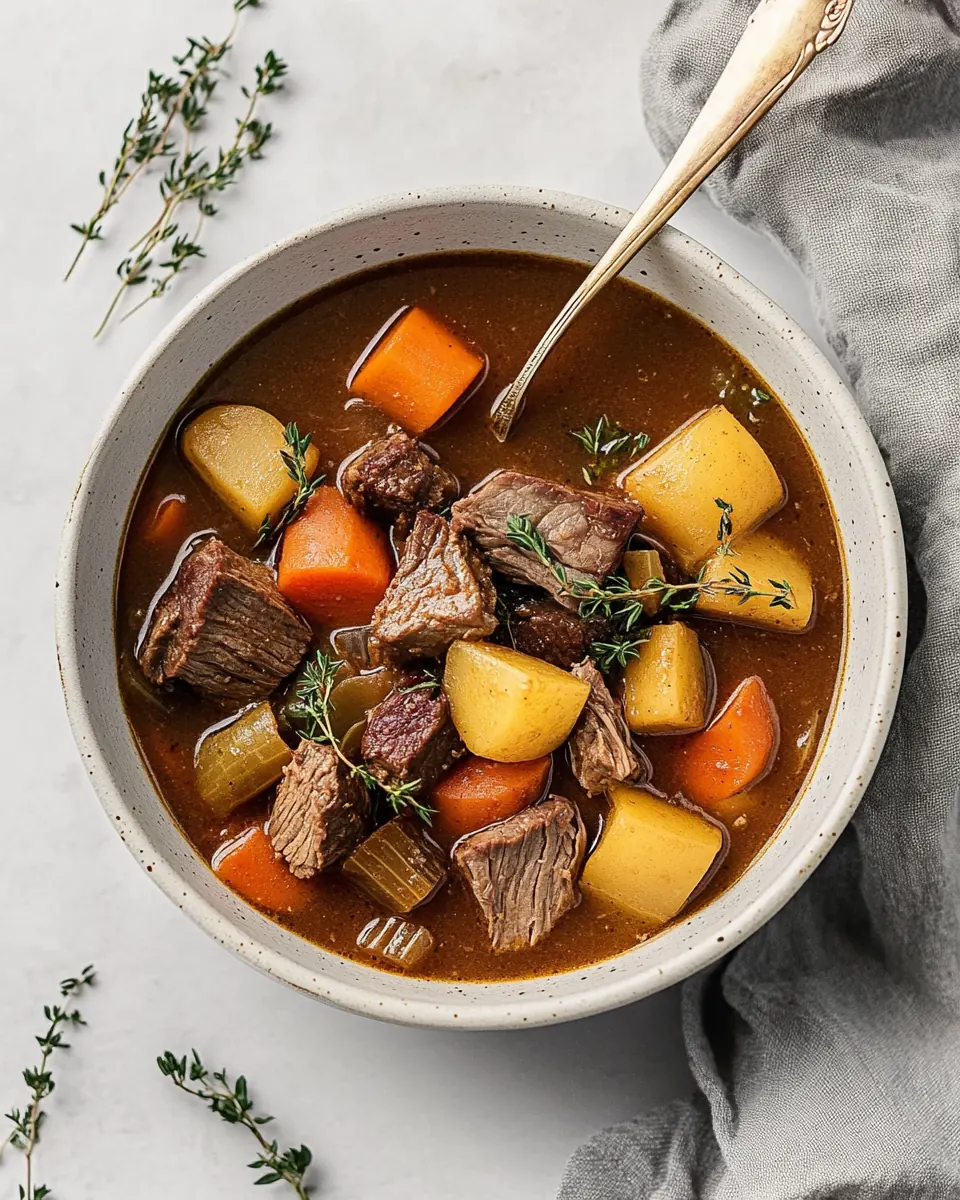
Set slow cooker to low for 8 hours. Once done, remove thyme sprigs and bay leaf, and add additional salt, pepper, paprika, and red pepper flakes as desired.: Over the next several hours the kitchen will fill with a slow, savory perfume as the collagen in the short ribs melts into the broth, giving the stew body and mouthcoating richness. On arrival, the meat should flake gently with a fork and the vegetables be tender but intact, while the surface may show a shimmering glaze from the arrowroot. Removing the thyme and bay leaf prevents bitter overextraction of woody notes, and finishing with seasoning lets you balance salt and heat to taste. A slip to avoid is undercooking; if the meat is not falling apart, give it more time rather than upping the temperature, which can dry the meat out. The final plate should look glossy, the aromas layered, and the texture satisfyingly silky.