In a large skillet over medium high heat, add some oil and once hot, brown the chicken breasts on both sides for a few minutes.: The first sensory cue you will notice is the sizzle when the chicken hits the pan, and you want a light golden crust to form, not a deep char. Browning creates Maillard flavor, which deepens the overall taste of the finished dish and helps lock in juices. Listen for a steady sizzle and watch for color changes on the edges, about two to three minutes per side depending on thickness. A common mistake is moving the chicken too quickly, which prevents a proper sear, so be patient and let it develop color before flipping. If the pan smokes heavily, lower the heat slightly to avoid burning the oil.
Place the browned chicken breasts in the slow cooker.: You will feel the contrast as the warm, seared pieces settle into the cool crock. Layering the chicken in the slow cooker gives the sauce access to all surfaces, and the residual heat starts the gentle braising process. Make sure pieces are arranged evenly so they cook consistently, and avoid stacking them too tightly which can inhibit even heat circulation. If you find crowded pieces, separate them slightly and rotate midway through cooking for uniform tenderness.
In a small bowl, whisk together all the SAUCE ingredients.: As you whisk, you will notice the sauce come together into a glossy, well blended mixture, the honey dissolving into the soy and the minced garlic and ginger dispersing. Whisking incorporates the oil and vinegar so the flavors marry during slow cooking. Use a fork or small whisk to ensure the brown sugar dissolves and there are no pockets of undissolved sugar. A typical error is not mixing thoroughly which can leave clumps of sugar or uneven seasoning.
Pour the SAUCE mixture over the chicken.: When the sauce hits the warm chicken , you will hear a light hiss and see the liquid begin to coat the meat, seeping into seams and crevices. This is where flavors infuse; the aromatics start to perfume the slow cooker and build depth. Ensure the sauce covers the pieces as much as possible so all meat benefits from the braising liquid. If the sauce pools only in one spot, gently spoon some over the exposed areas to promote even flavoring.
Cover and cook on HIGH for 4-5 hours or on LOW for 8 hours.: Over the long simmer you will notice a comforting, savory fragrance filling the kitchen as the chicken breaks down and the aromatics mellow. Cooking times here allow collagen to soften, yielding tender, shreddable meat. Choose HIGH when you want dinner sooner, or LOW for a hands off all day cook. A pitfall is opening the lid frequently, which releases steam and lengthens cooking time, so resist peeking unless necessary.
Remove the chicken from the slow cooker place it in a large bowl and shred with two forks.: The tactile pleasure here is obvious as the chicken yields easily to the forks, shredding into delicate strands. Shredding increases surface area so the sauce clings better when you reintroduce it. Check for any unshredded thicker pieces and break them down; if meat seems dry, reserve a few spoonfuls of the cooking liquid to add back when tossing. Avoid shredding while very hot without protection, because steam can burn your hands.
Pour the teriyaki sauce from the slow cooker through a strainer into a saucepan and place on the stove over medium-high heat. Bring to a simmer.: Straining removes solids for a clear, glossy sauce, and the first sound is a gentle simmer as bubbles rise steadily. Simmering concentrates flavors and reduces raw edges from the aromatics. Watch for a gentle rolling simmer, not a vigorous boil, to avoid over reducing or caramelizing too aggressively. A common oversight is overheating, which can make the sauce taste bitter if it scorches.
In a small bowl, mix the cornstarch with the water until dissolved and add the slurry to the saucepan. Bring it to a boil and cook for 1-2 minutes or until the sauce has thickened.: Adding the cold slurry gives a satisfying visual transition as the sauce thickens and turns glossy, coating the back of a spoon. Boiling briefly cooks out any starchy taste and stabilizes the thickened texture. Stir continuously as you add the slurry to prevent lumps and watch closely because it can thicken quickly. If the sauce becomes too thick, whisk in a splash of reserved chicken broth to loosen it.
Pour the sauce over the shredded chicken and toss to coat.: You will hear a soft sloshing as the glossy sauce floods the bowl, and see the chicken transform as each strand becomes lacquered. Tossing ensures even distribution so every bite is saucy and balanced. Use tongs or forks to lift and fold the meat rather than stirring aggressively, to preserve texture. Avoid adding the full amount at once if you prefer a lighter coating; you can always add more.
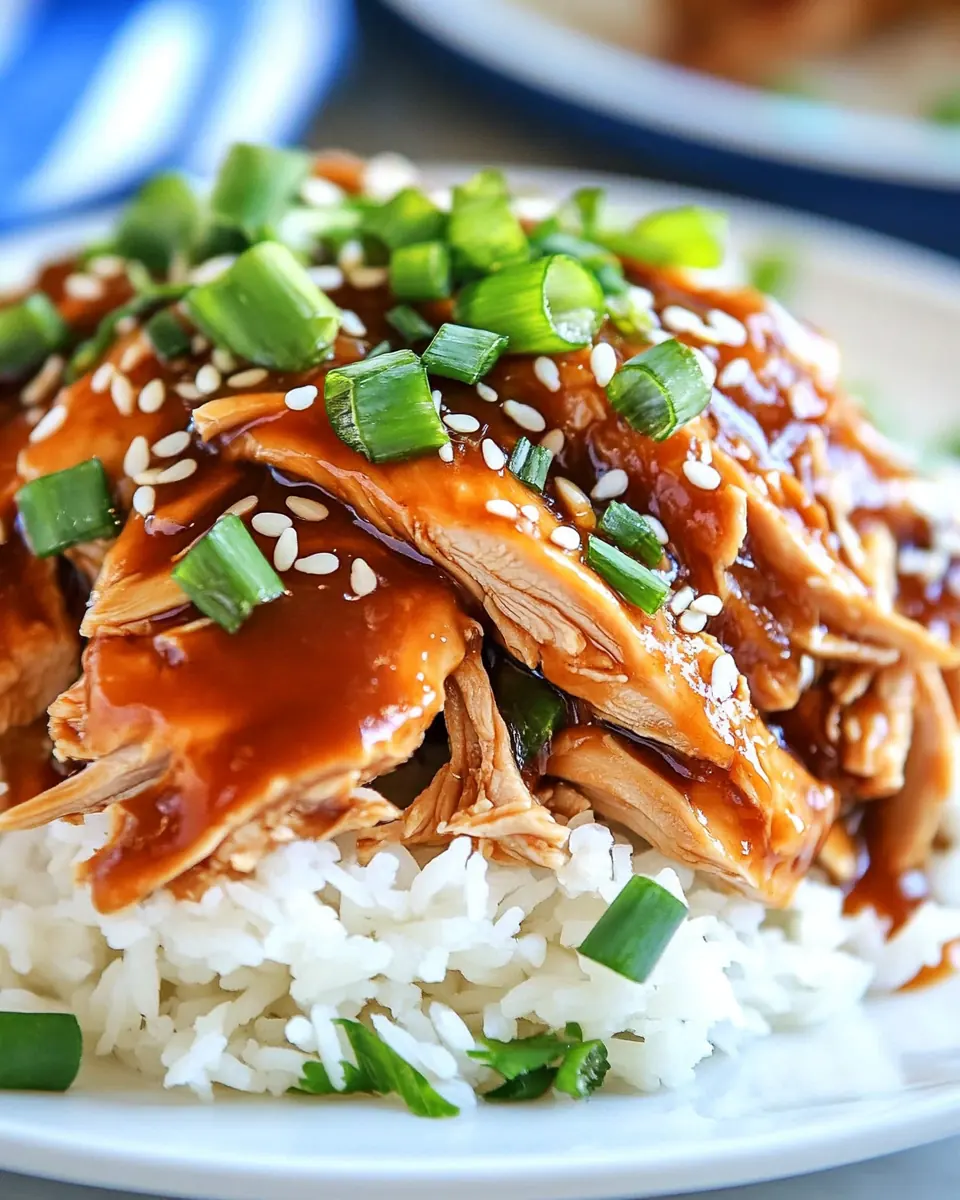
Serve with rice, sprinkle with sesame seeds and green onions.: The final sensory joy is the contrast of steamy rice and warm, glossy chicken , punctuated by the crunch of toasted sesame seeds and the bright snap of sliced green onions . These garnishes add texture and freshness and make the dish visually inviting. Plate immediately so the sauce remains warm and glossy. A mistake to avoid is letting the chicken sit too long before serving, which can dull the shine of the sauce and reduce the contrast of textures.