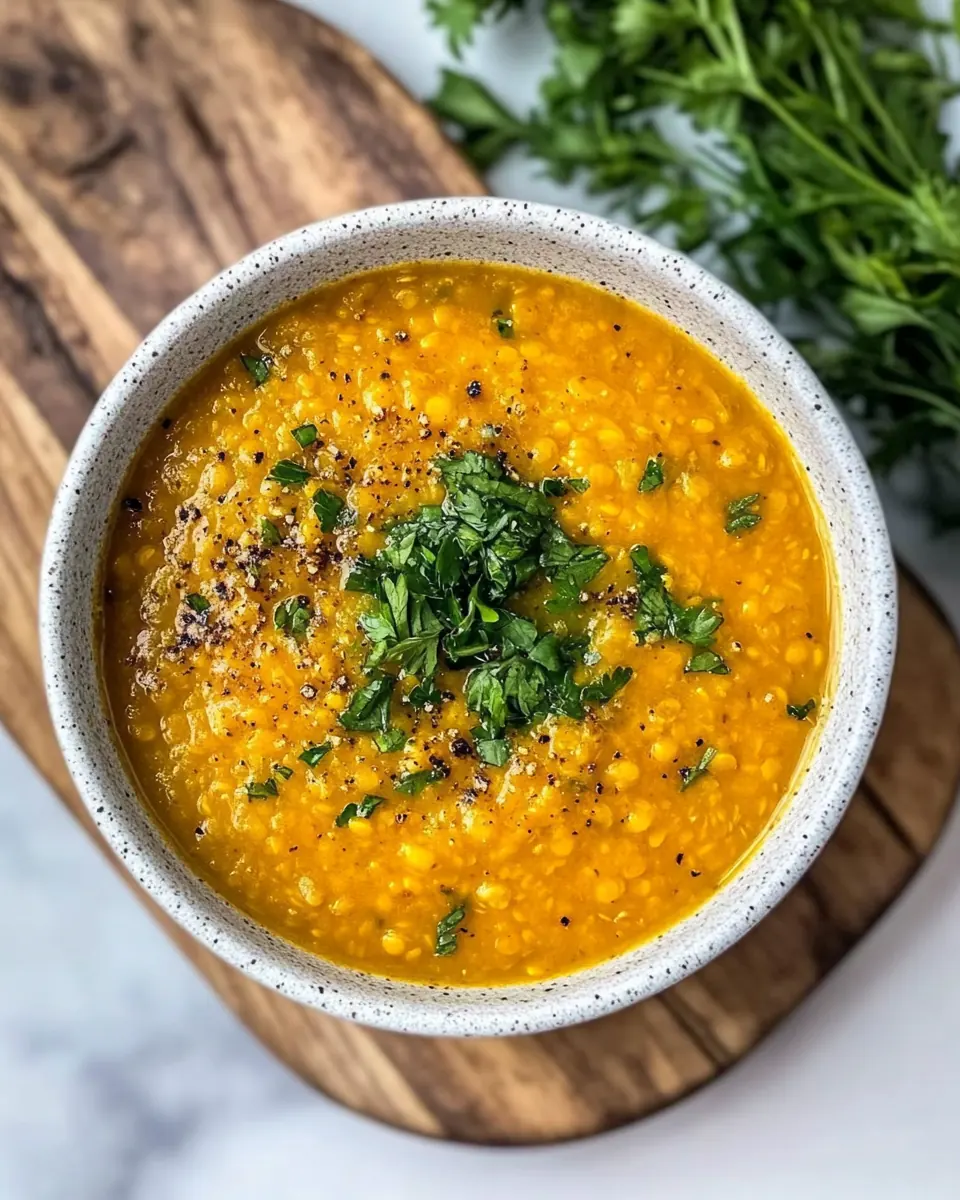
Combine all ingredients in the slow cooker except for the lemon, parsley, and mint. Cook on high for 4 hours or low for 6 hours, until the lentils are tender.: The moment you stir everything together the air fills with a warm, savory scent of tomato paste and spices , a sign the flavors are marrying. This layering matters because when the red lentils hit the warm vegetable broth , they begin to swell and absorb flavor evenly, producing a consistent texture through the pot. A common mistake here is adding the herbs and lemon too early, which causes them to lose their fresh brightness, so wait and add them at the end. Make sure your onion and carrot are evenly diced so they cook at the same rate; uneven pieces lead to some bites being underdone while others are soft. Stir the pot gently to distribute the tomato paste and spices so you avoid clumps of concentrated flavor.
Once cooked, remove about 1/3 of the soup and blend it until smooth in a blender or food processor. Return the blended soup to the slow cooker and stir. Ladle into serving bowls, squeeze a lemon wedge over the serving and sprinkle with parsley and mint.: As the soup simmers slowly the kitchen will fill with a mellow, nutty scent as the red lentils soften and begin to break down. Cooking on high gives you a shorter window, while low produces a slightly deeper meld of flavors due to the gentler heat. The reason timing matters is that overcooking can cause the lentils to disintegrate completely and become gluey, while undercooking leaves them grainy and chalky. One thing to watch for is moisture level; if your slow cooker runs hot and the liquid reduces too much, add a splash of additional vegetable broth to keep the texture spoonable. Also avoid frequently lifting the lid, because each lift releases heat and slows the cook time. You will know the lentils are done when they are soft and break easily against the side of a spoon.
Once cooked, remove about 1/3 of the soup and blend it until smooth in a blender or food processor: When you blend part of the pot the sound changes to a gentle whirl and the aroma becomes creamier and rounder, a signal that starches are emulsifying. This technique adds body without pureeing the whole batch, preserving some texture for interest. The why is simple, partial blending creates silkiness while maintaining a pleasant bite from the whole lentils. A common error is blending hot liquid in a sealed blender without venting, which can create pressure and cause splatter; allow steam to escape and blend in short bursts. Check the consistency visually, you want smoothness but not thinness, so blend to a creamy texture that will thicken the whole pot when returned.
Return the blended soup to the slow cooker and stir: When you pour the velvety portion back the surface ripples and the aromas mingle into a richer whole, a sensory cue that the soup has gained depth. Stirring ensures the textures and flavors equalize throughout the pot, which helps every spoonful taste balanced. This step matters because it creates a harmonious mouthfeel, marrying the silky base with the intact lentils and vegetables. A typical mistake is not stirring thoroughly, which can leave pockets of concentrated paste or spice; stir gently until uniform. Taste for seasoning now, and if it lacks brightness add a squeeze of lemon or a touch more salt .
Ladle into serving bowls, squeeze a lemon wedge over the serving and sprinkle with parsley and mint: The final act is sensory fireworks, the cold citrus juice hitting the warm soup with a pleasing hiss, and the herbs scattering green flecks across the surface. The fresh parsley and mint introduce aromatic lift and a contrast in texture, making each spoonful more dynamic. This finishing step matters because acidity and herbs awaken the other flavors and prevent the bowl from feeling heavy. A common slip is over squeezing the lemon and making the soup too tart; add less at first and let diners adjust. Serve hot, and enjoy the balance of warm, tangy, and fresh notes in every spoonful.