Trim the roast from fat on the top, bottom, and sides. All sinew, silver skin, and stringy-like fat should be removed. However, I like keeping a 1/2" fat cap on the top.: When you first approach the roast, you will notice both smooth and stringy pieces of fat, and removing sinew and silver skin makes slicing easier and prevents chewy bits. The slight fat cap you leave will slowly render and baste the meat while smoking, giving silkiness to each bite. As you trim, listen for the soft tearing of membranes and feel for stubborn sinew with your fingertips, cutting carefully to preserve the roast shape. A common mistake is over trimming and removing too much fat, which can lead to drier meat during the long smoke, so aim to preserve that half inch when possible.
Using your knife, score the fat cap on the top, going about an eighth to a max of one-quarter inch deep in both directions.: Scoring helps heat and smoke penetrate more evenly and allows the fat to render faster into the muscle beneath. You should hear a slight scraping sound as the blade cuts shallow grooves, and visually you will see a grid that will crisp up during the final sear. The scoring also creates edges that develop more bark and texture, which enhances the eating experience. Avoid cutting too deep, which can create channels where juices run away, leaving the interior less moist.
Next, truss the beef roast using butcher’s twine.: Trussing ensures the roast holds a uniform shape, which promotes even cooking and nicer slices when you serve. As you tie, feel the roast compress slightly, and keep turns snug but not constrictive, allowing the roast to expand a little as it heats. The visual cue is a neatly bundled roast that cooks predictably and slices into consistent thickness. A frequent oversight is tying too loosely, which can let the roast spread and cook unevenly, so double check tension while tying.
Place the roast on a rack over a sheet tray and generously season all sides with coarse salt and ground pepper.: When seasoning, sprinkle from above so the salt and pepper distribute evenly; you will see a textured crust forming on the surface as the seasonings cling. The coarse salt will draw moisture to the surface in the fridge rest, and the ground pepper will become embedded in the scoring grooves adding aromatic pockets. A common error is under seasoning, which can result in bland edges, so be generous and consistent on every side.
Put the roast on the rack in the fridge uncovered for 12 to 48 hours.: This dry brine period is when salt works its magic, pulling moisture out then reabsorbing it with concentrated flavor, which also firms the surface for a better crust. You will notice the roast surface dries slightly and becomes tacky, which is a good sign for eventual browning. Leave it uncovered so air can circulate and dry the outer layer; wrapping too early will trap moisture and prevent crust development.
Remove the roast from the fridge and let it sit at room temperature for 25-30 minutes to take the chill off it.: Bringing the roast closer to ambient temperature helps it cook more evenly in the smoker, reducing the time the interior spends cold which can cause uneven doneness. As it rests, you may feel the roast relax and the surface lose its chill, and that small change affects how gently the internal temperature climbs during the initial smoke. Do not leave it out much longer than recommended, as extended room time risks bacterial growth, so 25 to 30 minutes is the safe sweet spot.
In the meantime, preheat the smoker to 225°.: Preheating stabilizes the airflow and smoke generation, creating a consistent environment for that low and slow phase. You should smell the faint wood smoke and see a steady thin stream of smoke before the roast goes in. Achieving and maintaining 225° is key for the smoke ring and gentle cooking; fluctuating temps can lead to uneven bark and variable internal doneness, so adjust vents or controls early to lock the heat.
Place a thermometer from the top into the center of the roast and reverse sear it on the top rack in the smoker at 225° until it reaches 100° internally, which takes about 2 1/2 hours.: Inserting the probe from the top into the roast center gives you an accurate internal read, and during the low heat phase you will observe a slow, steady rise in temperature and a deepening mahogany color on the exterior. The smoker will impart subtle wood notes while the meat remains juicy, and you may hear occasional gentle pops from fat rendering. A typical misstep is removing the roast too early or relying on time alone; always use the internal temperature as your guide.
Once it hits that temperature turn the smoker heat up to 500°.: Cranking the heat creates the intense surface browning needed for a crust, and you will see the exterior sizzle and darken quickly, which adds crunchy textural contrast. The smell will shift from smoky sweetness to a toasty, roasted aroma as the Maillard reaction accelerates. Be alert during this stage, because high heat can go from perfect to overdone in minutes; monitor closely and avoid leaving it unattended.
Cook it until it reaches 118° to 120° for rare to medium-rare, which takes about 25 minutes.: As the roast approaches these final temps, you will notice juices bead near the surface and the crust deepen to a rich brown. The precise moment you remove it will determine the final doneness, so rely on the thermometer rather than time alone. If you aim for this range, carryover cooking will bring the roast a few degrees higher as it rests. A common error is waiting for visual cues only, which can lead to overcooking; trust the thermometer.
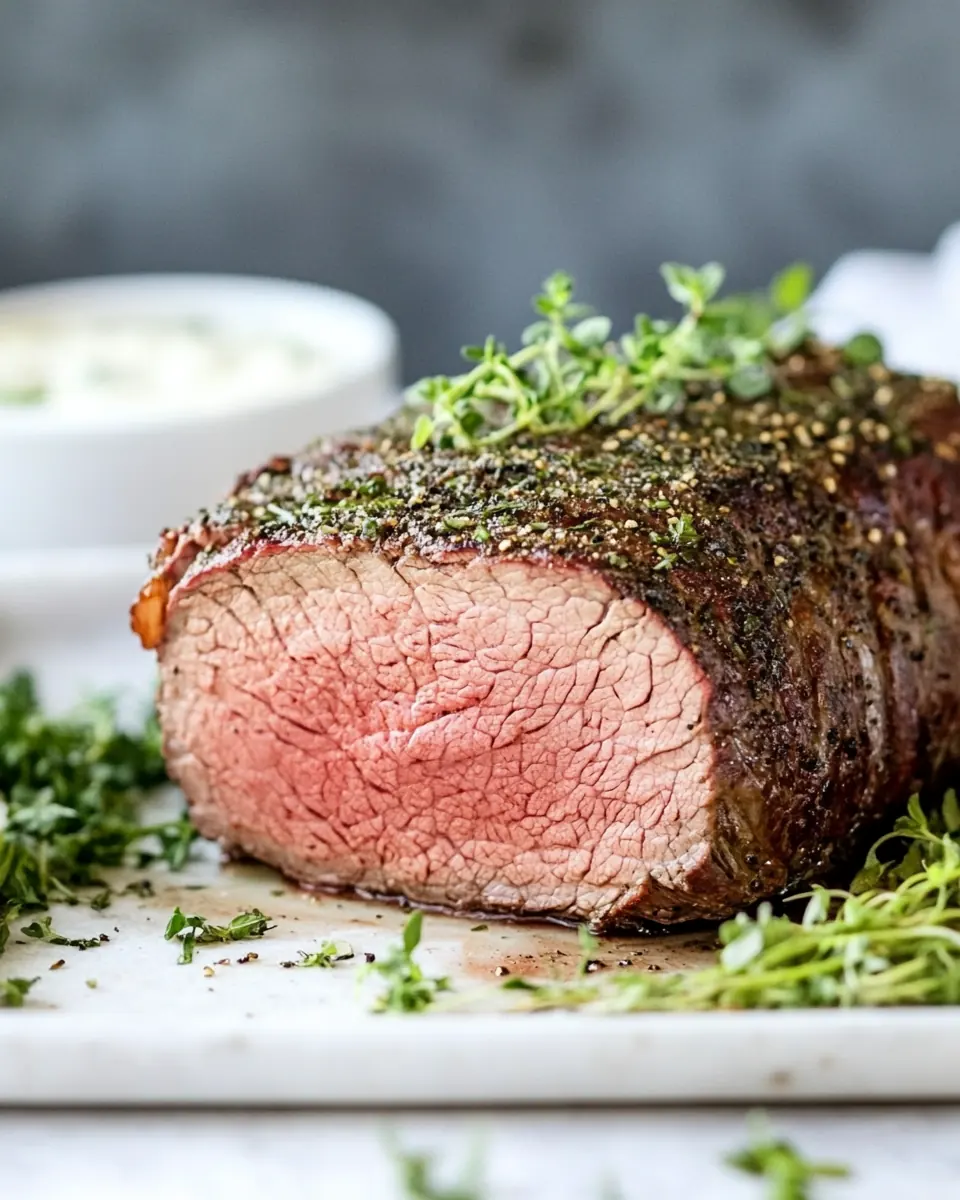
Remove the roast and let it rest for 30 to 45 minutes. Cut off the butcher's twine. Slice and serve the roast.: Resting lets the juices redistribute, and when you tent or cover briefly you will feel the roast become firmer to the touch, a welcome sign. After resting, cutting the twine frees the roast and reveals an evenly pink interior with a crisp crust, and slicing across the grain yields tender bites. Resist the urge to slice immediately, as doing so too soon will spill precious juices and dry the slices, so patience here rewards you with juicier servings.