Place the tempeh cubes in a mixing bowl or container.: The moment you handle the tempeh you'll notice its firm, slightly grainy texture, which is perfect for absorbing flavors. Put the cubes in a bowl that leaves room for stirring, because you want them to be evenly exposed to the marinade. If you crowd them into a small container, the liquid will pool and not coat each cube evenly, so use a shallow dish when possible. Visually the cubes should be distinct and not mashed together, and you should be able to stir them without resistance.
In a small mixing bowl stir together the liquid ingredients, and pour over the tempeh.: When you whisk the soy sauce , balsamic vinegar , maple syrup , and liquid smoke you will see the syrup lighten the dark liquids and create a glossy sheen. Pour this over the tempeh slowly, making sure every cube gets a coating. The aroma will pop with sweet, smoky, salty notes, and that smell is a good indicator the balance is right. A common pitfall is overdoing the liquid smoke , which can make the mix taste artificial, so add it cautiously and taste if unsure.
Let marinate for at least one hour, or even overnight for more flavor.: During the resting period the tempeh soaks up the marinade, softening slightly and gaining depth. If you can leave it overnight the flavors deepen and the surface develops a lovely glaze when cooked. You'll notice the liquid reduces on top of the cubes and the scent becomes more rounded. Avoid leaving it at room temperature too long; store it in the fridge if marinating for many hours to keep it safe and fresh.
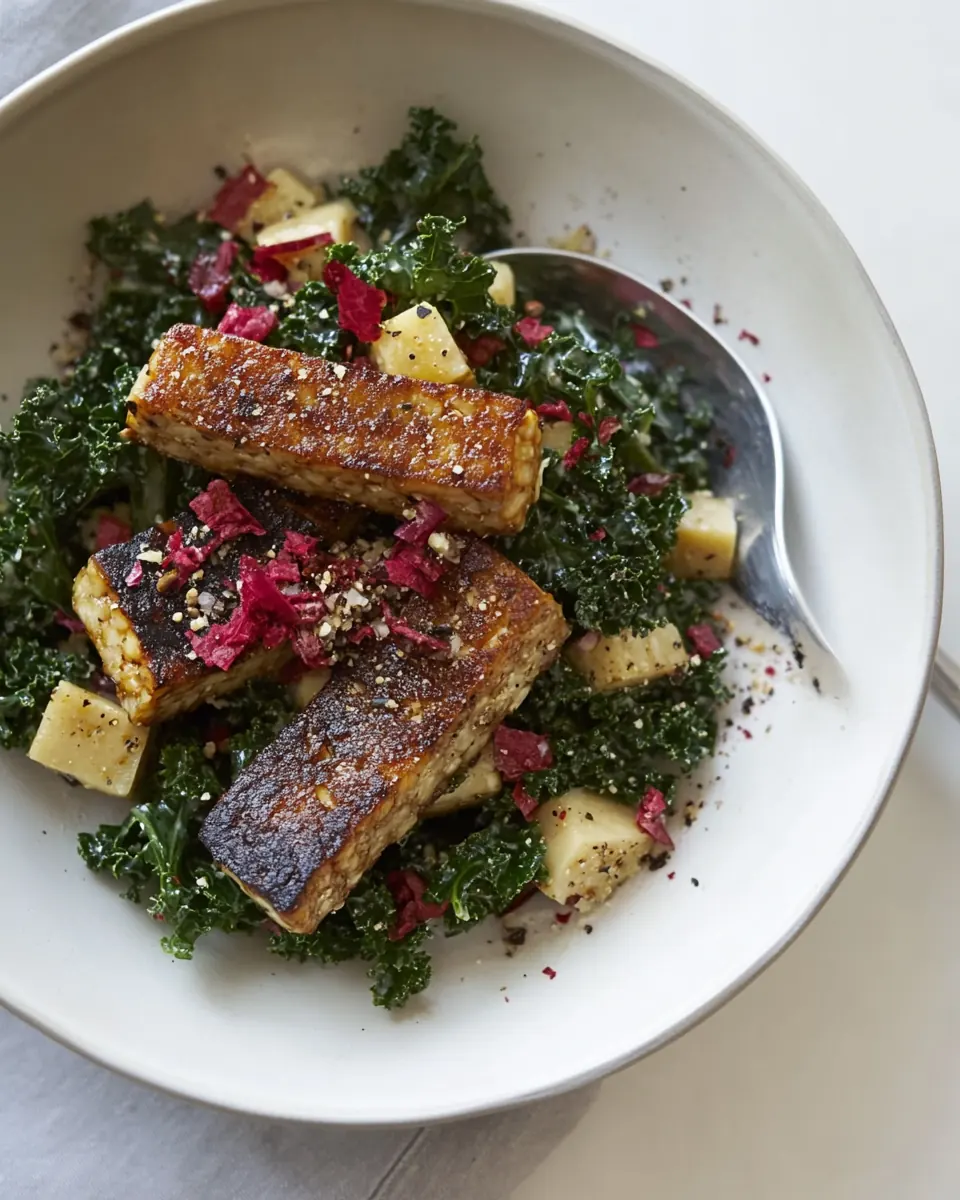
Once marinated pan fry the tempeh cubes in a skillet. Serve in salad...: As you heat the skillet, a faint sweet aroma from the maple syrup will shift toward nutty caramel notes. Place the marinated tempeh pieces in an oiled pan in a single layer so each cube gets contact with the hot surface and can brown. Listen for a steady sizzle, and watch for edges to turn deep golden brown, that's the Maillard reaction creating savory complexity. Flip carefully to brown all sides. Resist the urge to overcrowd the pan, because steaming will prevent a crisp exterior. Once golden, transfer to a paper towel to rest briefly so excess oil drains; this keeps the cubes from making the salad soggy.
Place the chopped kale into a large mixing bowl, and add the lemon juice, olive oil, and a dash of sea salt.: When you first dress the kale with lemon juice and olive oil the leaves will glisten and the bright citrus scent will awaken their green, slightly bitter personality. The acid begins to break down the fibrous structure immediately, which is why we massage it next. Use a bowl large enough to toss comfortably, because you will be pressing and folding the leaves to change their texture. If you skip this stage the kale can taste tough and overly assertive.
Massage the kale with your hands until it is tender, about 4 minutes.: With clean hands press, squeeze, and rub the kale firmly; you will feel it soften under your fingers and hear the leaves give slightly as cell walls break down. The color deepens to a darker, glossy green and the bitterness mellows. This tactile moment is crucial for making the salad pleasantly tender rather than stiff. If you find the leaves still coarse after four minutes, continue for another minute or two, but be gentle to avoid bruising them into mush.
Add the marinated tempeh, pomegranate seeds, and pear to the kale.: As you fold these components together you will notice contrasts in color and scent: warm, smoky tempeh , jewel like pomegranate seeds, and crisp, floral slices of Asian pear . Fold gently so the pear and seeds keep their texture and do not get crushed. A common error is stirring too vigorously, which can bruise the fruit and turn the salad into a wet mess, so use a gentle turning motion to combine.
Toss well, then season with the tempeh marinade to taste.: Give the salad a final toss so every leaf gets a touch of dressing and flavor from the reserved marinade. Taste and adjust, adding a tiny extra splash of the marinade if it needs more savoriness, or a squeeze of lemon juice for brightness. The finished bowl should present a balance of smoky, salty, tangy, and sweet. Avoid oversalting, since the soy sauce already contributes sodium; a careful, modest approach ensures the fruit remains prominent.