In the bowl of a stand mixer add butter and granulated sugar.: The moment you start creaming unsalted butter with granulated sugar you will hear a soft scraping as the paddle works, and the aroma becomes lightly sweet and buttery. I like to let the butter warm until it is cool to the touch but still firm, so it creams into a pale, airy mix that traps tiny air bubbles. These bubbles help the cookies feel delicate after baking. A common mistake is using butter that is too warm, which yields greasy, flat cookies. If that happens, chill the bowl briefly before continuing.
Beat on medium speed until creamed and light and fluffy in texture.: As you beat, watch the color shift to a lighter shade and the texture become pillowy. This step can take four to six minutes depending on your mixer and butter temperature. The sound changes from heavy thumps to a steady hum when the mixture is right. Overbeating can lead to a dry crumb, so stop once you see a consistent, fluffy texture.
Add the flour, chopped nuts, vanilla extract, and kosher salt.: When these dry and aromatic ingredients join the butter mixture, the scent becomes rounded and nutty, and the dough will start to thicken immediately. Sprinkle the all purpose flour in increments to avoid clumping, then fold in the chopped walnuts or pecans so you get even distribution of crunchy pieces. Adding everything at once without mixing gently can create pockets of flour or uneven nut clusters, so take your time here.
Mix until combined. Making sure to scrape the sides occasionally to get all the ingredients incorporated.: You'll notice the dough change from glossy to slightly matte as the flour hydrates, and the nuts will punctuate the dough with textured flecks. Use a spatula to scrape the bowl often, ensuring no streaks of flour remain. If you ignore the sides, some cookies will bake with dry bits. The right moment to stop is when the dough holds together without visible streaks of flour.
Roll the dough and cover with plastic wrap and place it in the refrigerator for 30 minutes.: Chilling firms the dough so the cookies hold their shape and develop a finer crumb. After you form the dough into a log or disk, cover it tightly; you will feel the difference as it cools, going from sticky to more manageable. Refrigeration also lets the butter solidify, which reduces spreading in the oven. Skipping this step often results in flat, misshapen cookies, so resist the urge to bake immediately.
When ready to bake, remove the cookie dough from the refrigerator.: The chilled dough will be noticeably firmer and cooler, emitting a subtle nutty scent. Let it sit for just a minute so it is scoopable but still cold enough to hold shape. If it warms too much, the dough becomes sticky and hard to form, so work in batches or re chill briefly if needed.
Preheat your oven to 350 degrees F and line two baking trays with parchment paper.: Preheating ensures even oven spring and consistent browning. As the oven warms, you might smell a faint metallic scent which signals readiness. Lining trays with parchment prevents sticking and promotes even bottoms. A common error is not allowing the oven to fully reach temperature, which can cause uneven bake times and texture inconsistencies.
Scoop the mixture and roll it firmly into a ball of dough. Place on the baking tray.: As you scoop, the dough should feel cool and slightly tacky, and rolling it firmly compresses the crumb so the cookies hold together. Arrange them with even spacing so heat circulates and they bake uniformly. If you roll too loosely the cookies can crack or fall apart, so apply gentle, consistent pressure to form compact spheres.
Bake for 25 – 30 minutes until slightly golden.: In the oven you will hear a soft quiet as moisture escapes, and the tops will shift from pale to a faint golden hue around the base. The smell becomes warm and nutty. These cookies do not brown heavily on top, so use the base color and a gentle spring back to judge doneness. Overbaking dries them out, while underbaking makes them fragile, so aim for a just set center with a hint of color at the edges.
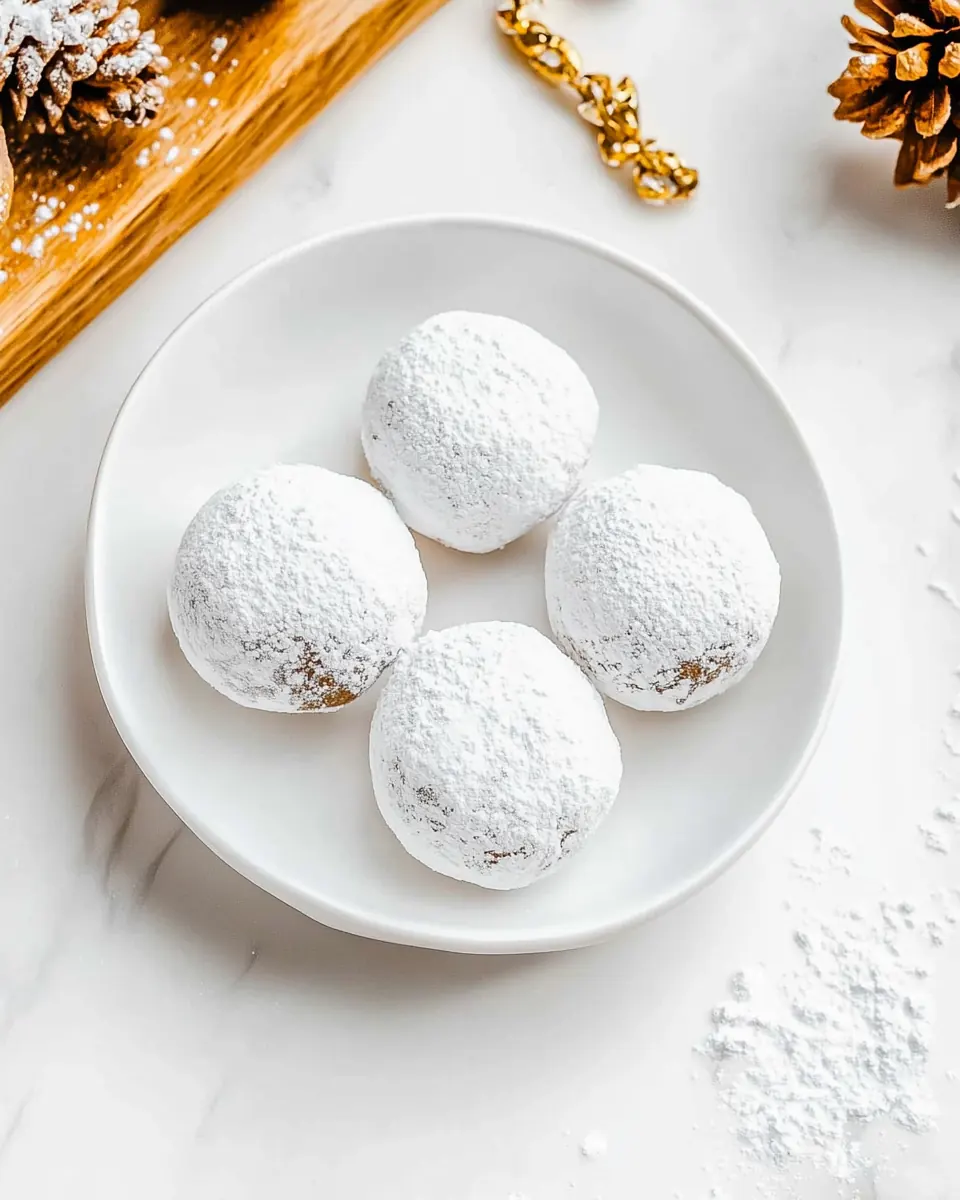
Remove from the oven and let them cool for a minute or two. Roll them in the powdered sugar until completely covered and set them on a rack to cool completely.: The first warm roll seizes some of the sugar into the surface, creating a base coat. You will notice a soft crackle as the sugar adheres. Once the cookies are cool to the touch, a second roll will create that classic bright white finish. A mistake is rolling them too vigorously while piping hot, which can cause breakage, so let them rest briefly before the initial roll.
If you want them really white, roll them in the sugar for a second coating once they are completely cool.: The second coat gives a pristine, snow covered look and mellows the powdered sugar into the surface for a smoother finish. When you handle cooled cookies, they will feel firmer and the sugar will dust lightly without clumping. Rushing this step or applying wet hands can smear the sugar, so always use dry hands or a small sifter for the second pass.