Line 2 baking sheets with parchment paper.: The aroma of lined sheets is not dramatic, but you will appreciate how easily the baked cookies release when the parchment is used. This prevents sticking and makes cleanup smoother, which is handy when you are baking multiple trays. A common mistake is skipping the parchment and then struggling to lift cookies while they are still warm, which can flatten them or break their shape.
Spray another baking sheet with nonstick spray. Divide the Nutella into 1/2-teaspoon-sized balls and place the balls on the sprayed baking sheet. Be sure they aren’t touching. Freeze for at least 30 minutes.: Cold Nutella balls are essential because they stay intact when wrapped in dough, giving you that hidden, gooey center after baking. You will notice the chocolate scent intensify slightly as they chill; a little condensation can form if your kitchen is humid, so keep them spaced. Avoid making the balls too large or they may melt during handling and leak out of the cookie.
Chop the pecans in a food processor until fine. Don’t process too much or the nuts will turn oily. Set aside. (If a food processor isn’t available, place the pecans in a resealable bag and roll or pound until the nuts are finely chopped.): The sound of nuts hitting the processor is a cue you are close, and the visual change to a finer grain tells you when to stop. Over-processing liberates oils and can result in a greasy dough, so pulse and check frequently. If you do not have a processor, use a rolling pin method, and be mindful to keep the pieces uniform to avoid uneven texture.
In the bowl of a stand mixer, beat the butter and 1/2 cup powdered sugar on medium-high speed until the mixture is light. Add in the vanilla extract, salt, and ground pecans.: As you beat, watch the mixture transform from dense to airy and notice the pale color forming, which indicates that air has been incorporated. This aeration helps the cookies have a tender crumb. When you add the vanilla extract , its scent should bloom. Avoid overbeating after adding the nuts, as their oils can deflate the mixture and make the dough greasy.
Add the flour and mix on low speed until the flour has been incorporated. Roll the dough onto a clean work surface and knead gently for 30 seconds. Form the dough into a ball, cover loosely with plastic wrap, press gently to flatten into a disc, and place in the refrigerator for 30 minutes to firm up.: The dough will look slightly shaggy at first, then come together; mixing on low avoids developing gluten which would toughen the cookie. The brief gentle knead smooths the texture without overworking, and chilling firms the dough making it easier to shape. A common error is skipping the chill, which can lead to spreading and loss of the stuffed center.
Preheat oven to 375°F.: Preheating ensures consistent heat from the start so the cookies set properly and color evenly, leading to a light golden edge rather than a pale, underbaked center. You should feel a warm shift in the kitchen and hear the oven fan cycle; that steady heat is what gives the cookies their proper rise. Avoid putting cookies into a cold oven because they will spread unpredictably and the texture will suffer.
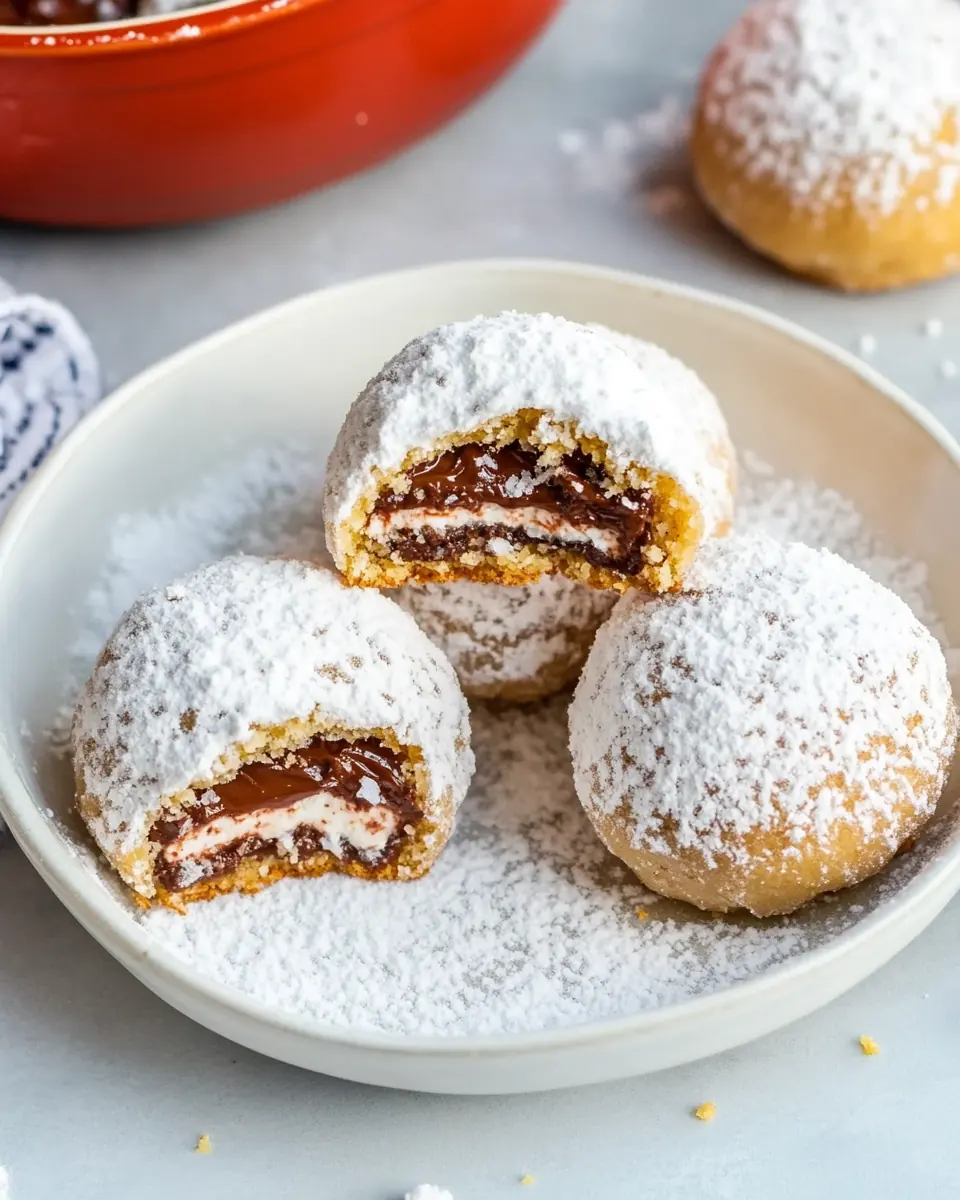
Remove the Nutella balls and cookie dough from the fridge. (If the Nutella balls start to soften, place them in the freezer for a few minutes.) Pinch off a 2-inch piece of the dough and divide it in half. Slightly flatten one half in the palm of your hand and place a Nutella ball in the middle of the dough. Top it with the other dough half and wrap the 2 sides together around the Nutella ball. Gently roll the cookie in your hands to seal the edges and to form a ball. Place the cookie ball on a parchment-lined cookie sheet, 2 inches apart, and repeat until all cookies are made.: When shaping, note the cool, slightly tacky texture of the dough; it should not be sticky. Sealing the edges well is critical so the Nutella remains inside while baking. If edges are not sealed, filling can leak and make a mess or flatten the cookie. Work quickly if your hands are warm; keep the dough chilled to maintain structure.
Place the trays of cookies in the refrigerator for 30 minutes.: This step firms the assembled cookies so they hold their round shape and prevents excessive spreading. You will notice the dough becoming firmer to the touch, which is the signal that the cookies are ready for the oven. Omitting this rest can cause the cookies to spread too thin and compromise the hidden center.
After 30 minutes, place the cookies in the hot oven and bake 14-16 minutes or until they are light golden brown and firm to the touch. Remove from the oven and let rest 3 minutes on the baking sheet.: Watch for a delicate color change at the edges, and a slight set in the middle when you gently press with a fingertip. The gentle golden hue is the cue that they are done; baking longer will dry them out. A common slip is overbaking which results in a crumbly cookie rather than a tender one.
Place 1/2 cup powdered sugar in a bowl and roll the warm cookies, one-at-a-time, in the sugar. Return them to the still-hot baking sheet to cool another 5 minutes. Roll the cookies with a second coating of powdered sugar. Allow to completely dry.: Rolling warm cookies in powdered sugar creates a base layer that adheres nicely, and the second roll after cooling sets the signature snowy look. The tactile contrast of warm cookie to cool sugar is satisfying, and letting them dry fully prevents smudging when packed. If you roll them while too hot or too cold you may not get an even coating.
If a third coat of powdered sugar is desired, place powdered sugar in a small wire sieve and sprinkle it over the cookies.: Sifting a light dusting gives a refined, even finish and helps fill any tiny gaps left by handling. The fine falling sugar looks like fresh snow and adds a professional touch. Avoid clumping in the sieve by tapping gently; clumps can ruin the delicate dusting and create uneven patches.