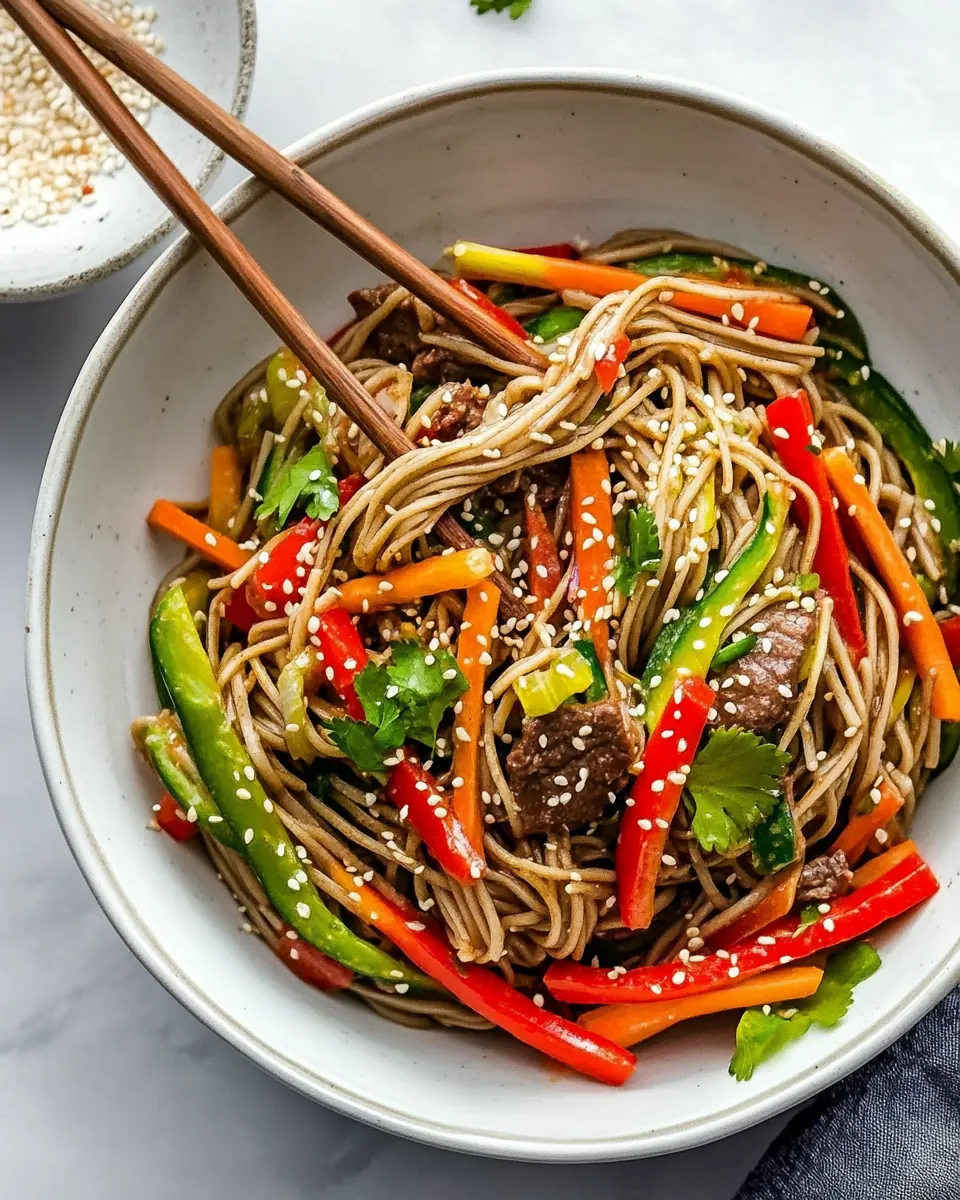
Cook 8 ounces soba noodles according to the package directions. Once the noodles are cooked, strain and rinse under cold water and place them in a large bowl. Pour 2 teaspoons sesame oil on the noodles and stir to coat evenly. Place covered in the fridge. The oil will keep the noodles from sticking together while you assemble the rest of the salad.: The kitchen will fill with a faint nutty steam as the soba noodles near doneness, look for tender strands that still have slight resistance when bitten. After draining, rinse under cold water until the noodles feel cool to the touch, this stops cooking and firms their texture. If you do not rinse you risk carryover cooking and a mushy result, so don’t skip this. Stir in a light coating of sesame oil to keep individual strands separate, you should see the noodles become slightly glossy. A common error is overcooking, which causes a limp, gluey texture that cannot be reversed.
In a medium bowl, place the sliced 3 green onions, sliced 1 red bell pepper, sliced 1 large carrot, 1 cup edamame, and 3 tablespoons sesame seeds. Toss to mix.: When you transfer the rinsed soba noodles to the bowl, they should be cool and slightly springy. Use your hands or tongs to fluff them gently so they do not clump, you want each strand to move freely. The visual cue is a shiny, uniform pile of noodles that are cool, not steaming. If the noodles are still warm they will absorb more dressing and may become too soft, so ensure they are thoroughly cooled.
To make the dressing, whisk together 1 tablespoon grated ginger, 2 tablespoons fresh lime juice, 1 tablespoon soy sauce, 1 tablespoon rice vinegar, 2 teaspoons sesame oil, 2 teaspoons honey, minced 1 clove garlic, and 2 teaspoons Sriracha, in a small bowl.: As the sesame oil hits the noodles you will notice a glossy sheen and a subtle toasted aroma rising, which is delightful. Toss until the oil is distributed, the noodles should not feel greasy, just lightly slicked. This thin oil layer acts as a barrier against sticking and also primes the noodles to accept the dressing. A common mistake is adding too much oil, which makes the salad feel heavy, so keep it minimal.
Take the cooled noodles out of the fridge. Put all the fillings on top of the noodles and toss to mix. Pour the dressing on top of the salad and toss to coat everything evenly.: Chilling the noodle base calms their starches and firms texture, and it feels refreshing to assemble cold components on a warm day. Covered, the noodles will also hold their coated finish and remain ready while you prepare the vegetables and dressing. Avoid leaving them unprotected in the fridge where they can dry out, use a lid or plastic wrap to keep moisture even.
Serve fresh, or cover and place back in the fridge to marinate a bit before serving.: The first sounds you will notice are the crisp snaps as you thinly slice the red bell pepper and large carrot . Tossing these with shelled edamame and toasted sesame seeds creates a lively textural contrast, the seeds offering toasty crunch. Mix until the colors are evenly distributed, the salad should look cheerful and varied. Avoid leaving large uneven pieces, which can make bites inconsistent; evenness in size leads to a harmonious mouthfeel.
Toss to mix: As you toss, the scents of toasted sesame seeds and fresh green onions lift, and you should feel the mixture come together visually with bright green, orange, and red pops. The toss ensures every bite contains multiple elements, not just a single ingredient. A mistake here is overworking delicate slices so they bruise, so toss gently with a wide utensil.
To make the dressing, whisk together 1 tablespoon grated ginger, 2 tablespoons fresh lime juice, 1 tablespoon soy sauce, 1 tablespoon rice vinegar, 2 teaspoons sesame oil, 2 teaspoons honey, minced 1 clove garlic, and 2 teaspoons Sriracha, in a small bowl: As you whisk the dressing, the aroma will change from sharp citrus to a layered fragrance with sweet, salty, and toasty notes. The lime should smell bright, the ginger will add warm spice, and the honey will smooth sharp edges. Whisk until slightly emulsified so the oil and acid hang together on the soba noodles . If the dressing separates, whisk briefly just before tossing to recombine. A common pitfall is using bottled lime or overdoing the soy sauce which flattens the lively flavors, always taste and adjust gently.
Take the cooled noodles out of the fridge: The chilled soba noodles should feel firm and springy when you lift a small portion, not limp. Transfer them into a large serving bowl, giving them a quick fluff to separate any strands that clung together. This is the moment the chilled noodles meet the room temperature vegetables and dressing, creating balance. If the noodles feel sticky at this point you can add a touch more sesame oil and gently toss to revive separation.
Put all the fillings on top of the noodles and toss to mix: When the colorful vegetable mix lands on the noodles there is a satisfying rustle and fresh aroma. Toss until the vegetables are distributed evenly among the strands, aim for harmony so each forkful contains a bit of everything. The visual cue is a uniformly dressed bowl where no ingredient dominates the surface. One mistake is piling on the fillings without mixing, which leads to uneven flavor across servings.
Pour the dressing on top of the salad and toss to coat everything evenly: Pour the dressing in a steady ribbon, then fold gently until every strand and vegetable glistens. You should hear soft rustling and see the dressing cling, leaving a glossy finish on the noodles and vegetables. The flavor should register as balanced sweet, salty, tangy, and nutty on the first bite. If you oversaturate the salad it can become soggy, so add the dressing gradually and stop once you reach the sheen you like.
Serve fresh, or cover and place back in the fridge to marinate a bit before serving: Served immediately, the textures are crisp and vibrant; after an hour in the fridge the flavors meld and deepen, giving a more unified profile. If chilling, let it rest at least 20 minutes so the dressing softens the noodles slightly without losing crunch. A common oversight is leaving it too long uncovered where edges can dry; always cover if refrigerating.