To the bowl of a stand mixer fitted with the paddle attachment (or large mixing bowl and electric mixer) add the butter, Nutella, sugars, egg, vanilla, and beat on medium-high speed until creamed and well combined, about 4 minutes.: The bowl will smell rich and sweet as the butter and Nutella emulsify with the sugars, producing a pale, slightly fluffy batter. You should hear a steady, even whir from the mixer, and when you stop to check, the batter will ribbon slightly off the paddle. This creaming step is critical because it traps air, which contributes to gentle rise and a tender interior. If your butter is too warm, the mixture will look greasy rather than creamy, causing the dough to be loose and the cookies to spread excessively during baking. To fix over softened butter , briefly chill the bowl for 10 minutes before continuing.
Stop, scrape down the sides of the bowl, and add the flour, cornstarch, baking soda, optional salt, and beat on low speed until just combined, about 1 minute.: After adding dry ingredients, the mixture's sound will change to a quieter thump as the dough tightens. You will see streaks of flour disappear and the dough pull away slightly from the bowl sides. This low speed mixing preserves tenderness by avoiding overdevelopment of gluten in the all purpose flour . Overmixing at this stage creates a tougher cookie with a denser crumb, so stop as soon as the white streaks vanish. If you notice a dry flour pocket, gently fold with a spatula rather than continuing to beat.
Stop, scrape down the sides of the bowl, and add the chocolate chips, and beat on low speed until just combined, about 30 seconds.: When the semi sweet chocolate chips are folded in, the dough becomes dotted with glossy dark pockets. The smell shifts to a richer chocolate aroma, and the visual contrast makes it tempting to sample. Mixing only briefly ensures the chips stay intact and prevents them from breaking down into the dough, which would change texture and distribution. A common mistake is overmixing here, which can create streaks of melted chocolate or clumps that alter baking behavior.
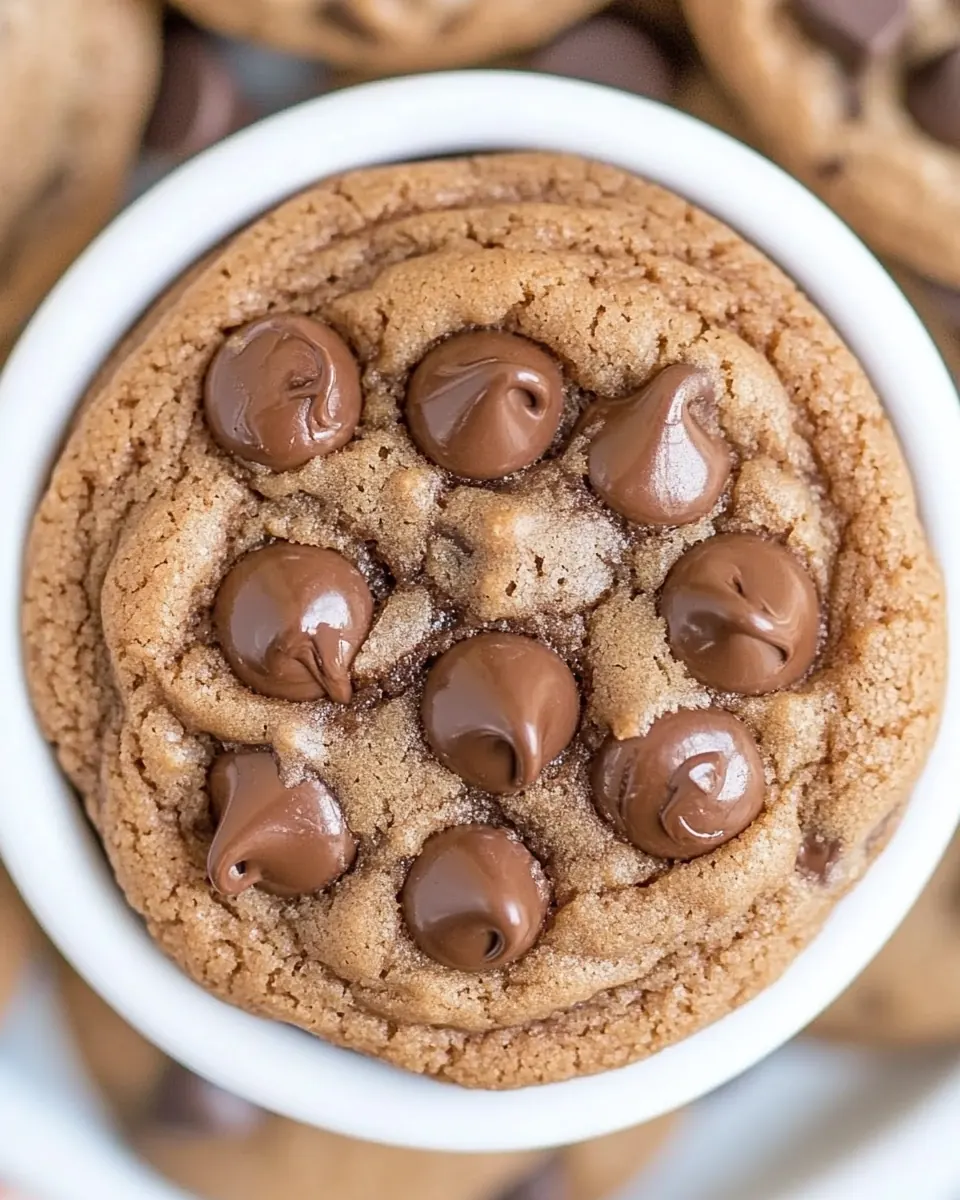
Using a large cookie scoop, 1/4-cup measure, or your hands, form approximately 16 equal-sized mounds of dough, roll into balls, and flatten slightly. Tip – Strategically place a few chocolate chips on top of each mound of dough by taking chips from the underside and adding them on top.: As you shape each mound, you'll feel the dough's pliability and slight tackiness. Rolling into uniform balls ensures even baking and consistent texture across the batch. Flattening slightly helps the center set while keeping a chewy interior. If the dough is sticky and unmanageable, chill it briefly to firm up; too warm dough leads to misshapen cookies and uneven baking.
Place mounds on a large plate or tray, cover with plastic wrap, and refrigerate for at least 3 hours, up to 5 days. Do not bake with unchilled dough because cookies will bake thinner, flatter, and be more prone to spreading.: Chilling solidifies the fats and hydrates the flour, which controls spread and deepens flavor as ingredients meld. During refrigeration you might notice the dough firms and the texture becomes less sticky, which is what you want before baking. A key reason to chill is to avoid thin, flat cookies that bake too quickly at the edges. Baking unchilled dough often results in a disappointing, overly spread cookie.
Preheat oven to 350 F, line a baking sheet with a Silpat or spray with cooking spray. Place dough mounds on baking sheet, spaced at least 2 inches apart (I bake 8 cookies per sheet).: When the oven reaches temperature you will notice a warm, dry air and a predictable rise in kitchen temperature. Lining the sheet prevents sticking and promotes even browning. I space dough mounds at least 2 inches apart to allow proper airflow around each cookie. Placing them too close will cause cookies to merge into each other, so give them breathing room on the tray.
Bake for about 9 to 10 minutes, or until edges have set and tops are just set, even if slightly undercooked and glossy in the center; don’t overbake. Cookies firm up as they cool.: On the sheet the dough will warm slightly and the surface may get a touch glossy. This spacing yields even heat distribution so edges set while centers remain soft. Arranging cookies in a single layer allows consistent baking; overcrowding changes heat dynamics and can make the batch uneven. If your oven runs hot in spots, rotate the sheet halfway through the bake to ensure uniform color.
Allow cookies to cool on baking sheet for about 10 minutes before serving. I let them cool on the baking sheet and don’t use a rack.: You will see the edges take on a light golden tone while the centers remain shiny and slightly jiggly. The aroma intensifies, filling the kitchen with chocolate and toasted notes. The cookies will feel soft when touched gently, and they firm as they cool, so resist the urge to bake until fully dry. Overbaking robs them of chew and makes them crisp rather than soft. If you err on the side of underbaking, the texture will still be excellent once cooled.
Allow cookies to cool on baking sheet for about 10 minutes before serving: As they rest, the interior sets and the surface loses its glossy sheen, producing the perfect tender bite. The sound of a quiet settling is followed by a wonderful aroma waft as steam escapes. If you transfer them too early, they may fall apart; letting them rest ensures they hold shape. I often leave them on the sheet until plates are ready, since this step completes the texture transformation.