To quickly cook the spaghetti squash pierce it all over with a knife and microwave 5 minutes. Then continue to cook in 2 minute increments until the skin gives when pressed.: When you pierce and partially microwave the spaghetti squash , you should hear a faint hiss as the steam builds, and the skin will begin to yield slightly when pressed, which tells you it is softening. The microwave approach shortens the overall time, but you must watch carefully because microwaves vary. A common mistake is undercooking, which makes the inner strands hard to separate; if that happens, return it to the microwave in short increments until it gives under pressure. The reason this step matters is that the squash must be fully cooked so the strands can be scraped out easily and will compress when squeezed, forming a cohesive crust component.
Cut it open, remove the seeds and scrape the squash out with a fork.: As you open the warm spaghetti squash , the aroma will be slightly nutty and vegetal, and scraping with a fork should produce tender strands that separate easily. Remove the seeds and membrane like you would with a pumpkin, then run the fork along the flesh to collect the strands; they should slide out in bundles. Avoid leaving large chunks of flesh, because uneven bits can create pockets of moisture that prevent crisping. This step is essential because well separated strands allow you to measure and pack the squash consistently for the crust formation.
Place the cooked spaghetti squash in a clean cheesecloth or dish cloth and squeeze all the water out REALLY well.: When you squeeze the cooked spaghetti squash in a cloth, you will feel warm, damp strands and a surprising amount of liquid will collect; this is the key moisture to remove. Squeeze until the strands feel only slightly damp, then unwrap and check for puddles. If you skip this vigorous drying, the crust will be soggy and may not hold together. I always recommend pressing firmly and rotating the bundle so you expel as much liquid as possible, because dryness at this stage sets up the texture for a crisp, sturdy crust.
Preheat the oven to 375 F. Line 2 sheet pans with parchment paper and spray with oil.: As the oven comes up to 375 F , you will notice a warm, dry heat filling the kitchen, and preheating is critical so the crust starts browning immediately. Line 2 sheet pans with parchment paper and spray with oil so the crusts release easily when you flip them later. A common error is to put the crusts in before the oven reaches temperature, which leads to longer cook times and less crisping. The correct oven temperature ensures even browning and the right Maillard reactions that produce toasty notes.
In a medium bowl, mix the spaghetti squash with the egg, mozzarella, Parmesan, oregano and garlic powder.: As you fold the egg , cheeses, oregano , and garlic into the squeezed spaghetti squash , you will see the mixture become cohesive and slightly glossy from the egg and melted cheese binding. Stir until the ingredients are evenly distributed, so pockets of egg or cheese do not form. A mistake here is under-mixing, which causes uneven browning or weak spots; over-mixing is less common but can make the strands too compact. Achieving an even mixture helps the crust set uniformly and develop a consistent texture during baking.
Make 4 7-inch rounds on the prepared pan patting down so they are very thin, the thinner the crisper they will be.: When forming the rounds, press the mixture thin so the edges can brown and crisp; you should see a flat disk about 7-inch across and feel the surface compact but not rock hard. As they bake, the outer rim should turn golden and the center should set. A typical mistake is making them too thick, which produces a soft, undercooked middle; too thin and they can over-crisp or break. Aim for an even thickness so heat distributes uniformly and you get that pleasing contrast between tender center and crisp edge.
Spray the crust lightly with olive oil spray and bake for 15 minutes, until golden then carefully flip with a spatula. Bake 5 to 7 minutes more, until crisp.: As the crusts bake, you will smell a toasty, cheesy aroma and see the edges take on a warm golden color, which signals it is ready to be flipped; the surface should look set and slightly firm. Use a thin spatula to slide underneath and flip gently to avoid breaking. A common pitfall is trying to flip before the bottom holds together enough, which causes tearing; if you notice it is still loose, give it a few more minutes. This step promotes even browning on both sides so the crust becomes crisp all over rather than just on one face.
Spread about 1 1/2 tablespoons sauce on top of each baked crust, leaving a 1/2-inch border around the edge.: After flipping, the sizzling should quiet a bit, and you will see the second side take on a deeper golden hue and feel firm when nudged with a spatula. Listen for a faint crackle as moisture leaves and the exterior crisps. Avoid letting them bake too long, which can make the crust brittle; if that happens, it will crumble when picked up. Timing here ensures a durable crust that supports toppings while retaining a pleasant bite.
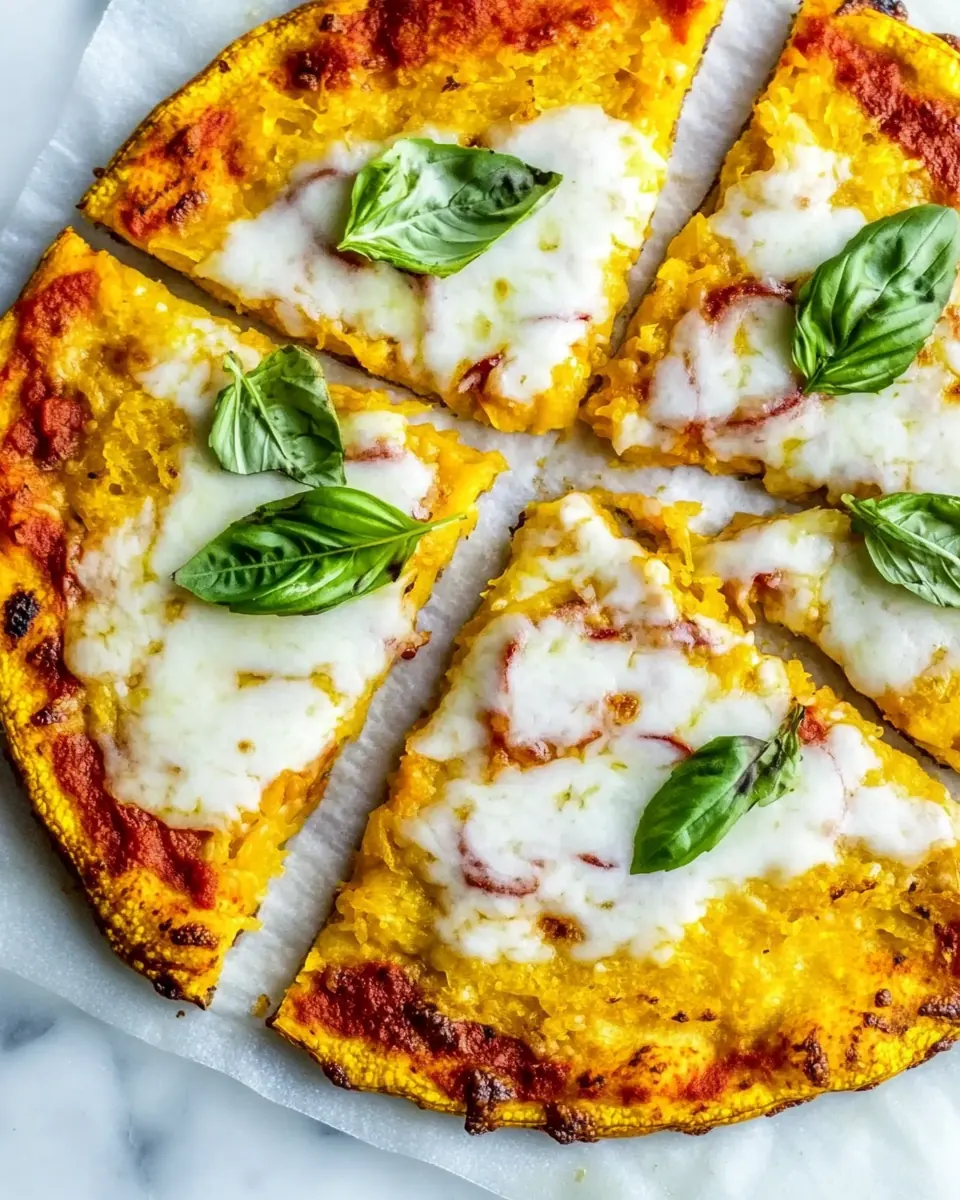
Sprinkle remaining cheese on top.: When you spoon on the marinara sauce , its bright tomato scent should contrast with the warm, toasty crust, and the 1/2-inch border helps prevent sauce from seeping over the edge and making the crust soggy. Spread gently so you do not saturate the center. A common error is piling on too much sauce, which overwhelms the crust; moderate sauce keeps each slice balanced and lets the squash flavor peek through.
Bake the pizza 3 to 4 minutes, or until the toppings are hot and the cheese is melted.: As you add the final 1/2 cup of mozzarella , watch it settle and begin to glisten; it will melt quickly and form a bubbly, golden layer. Distribute evenly so each pizza heats uniformly. Too much cheese can create a heavy topping that cools poorly, while too little leaves the pizza less satisfying. This layer is what gives you the classic pizza pull and a familiar melty finish.
Bake the pizza 3 to 4 minutes, or until the toppings are hot and the cheese is melted: In these final minutes, the kitchen fills with the comforting smell of melted cheese and warmed marinara sauce , and you will see the cheese become glossy and slightly golden at the edges. Watch closely because this step happens fast; overbaking can dry the crust and make the cheese lose its creaminess. Proper timing results in hot toppings and a delightful contrast between the bubbling cheese and the crisp crust beneath.