Go Back
Spaghetti with Cauliflower Peas

Spaghetti with Cauliflower Peas

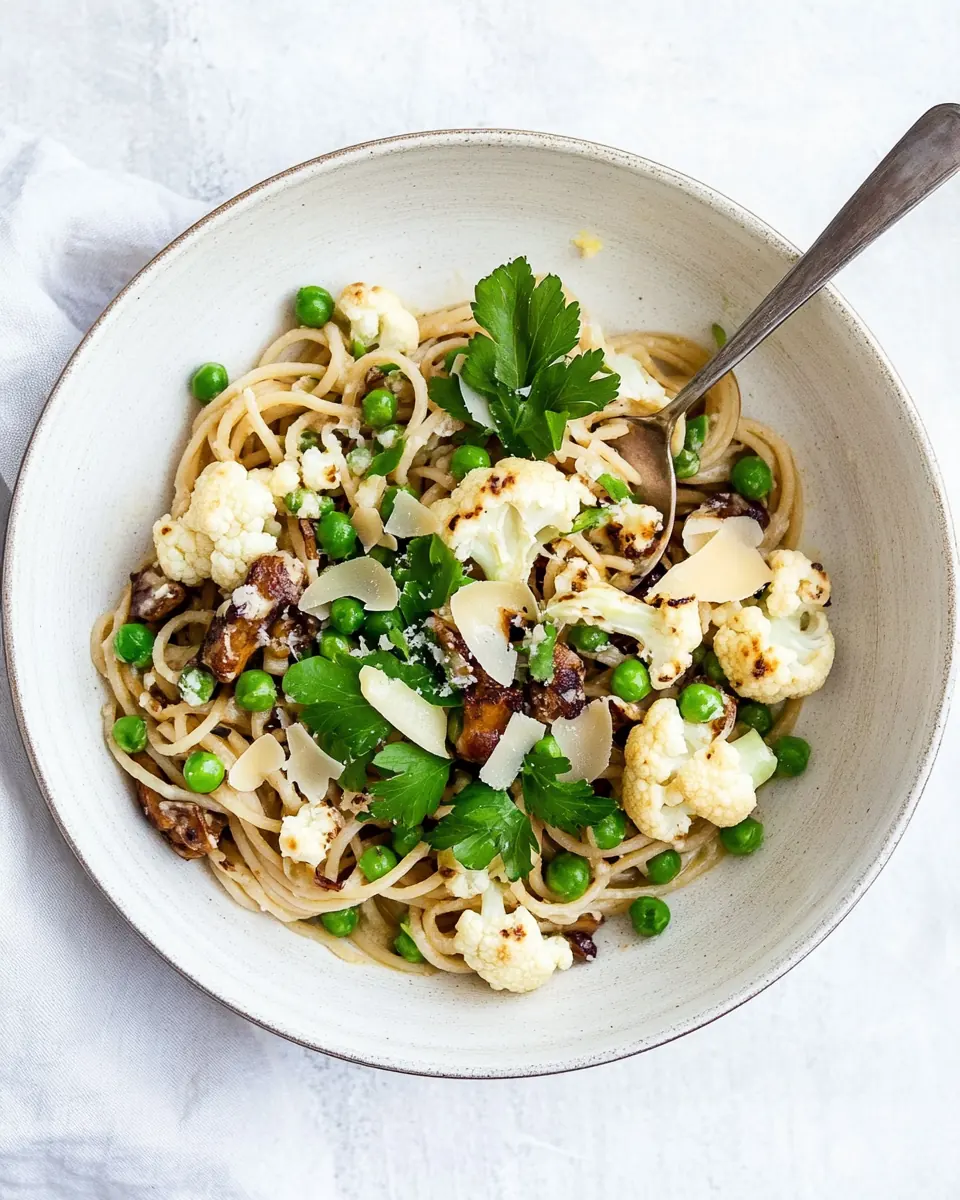
Spaghetti with Cauliflower Peas is a light, textural pasta dish featuring roasted hazelnuts, tender cauliflower, and sweet peas. Bright lemon zest and a sprinkle of parmesan create a creamy, savory finish that makes for an easy weeknight dinner. Nutty crunch and fresh herb notes make it a recipe worth repeating, perfect when you want satisfying flavor without heaviness.
Prep Time 10 minutes
Cook Time 20 minutes
Total Time 30 minutes
Servings: 6 people
Course: Dinner
Cuisine: Italian
Calories: 350

Ingredients
  

  • 3/4 cup hazelnuts Toast gently to deepen flavor and provide a crunchy, nutty contrast when chopped and sprinkled over the finished pasta; can be roughly chopped after toasting for texture and visual appeal.
  • 2 cups whole-grain spaghetti cooked according to package directions Cook fully according to package directions to provide the pasta base and absorb flavors from the sauce; drain but reserve a small amount of cooking water to adjust sauce consistency.
  • 2 tablespoons reserved pasta water Reserve to loosen and emulsify the sauce, helping it bind to the pasta and vegetables; add gradually to reach a silky, cohesive texture without thinning too much.
  • 2 tablespoons extra virgin olive oil Heat briefly to form the sauce base and coat the pasta and vegetables; adds richness and carries aromatic flavors from garlic and herbs throughout the dish.
  • 1 cup baby peas frozen, thawed Thaw and heat through to contribute bursts of sweetness, color, and tender bite; stir into the pasta near the end of cooking to avoid overcooking and preserve texture.
  • 3 cups cauliflower florets Cook until tender and lightly browned if desired to add a mild, slightly sweet, and earthy element that complements the pasta; chop into florets small enough to mix evenly with spaghetti.
  • 2 garlic cloves minced Sauté briefly to release pungent, aromatic flavors that infuse the oil and whole dish; mince finely so garlic distributes evenly and avoids large, overpowering pieces.
  • 1 lemon zested Zest to add bright, citrusy aroma and a fresh, tangy note that lifts the richness of the oil and cheese; use finely to avoid bitter pith and maximize fragrant oils.
  • 1/4 cup basil fresh, chopped Chop and fold in to introduce fresh herbal fragrance and a hint of peppery sweetness; add at the end to preserve color and vibrant flavor.
  • 1/2 teaspoon kosher or sea salt Season sparingly to enhance overall flavor and balance the sweetness of peas and mildness of cauliflower; adjust to taste taking into account the saltiness of parmesan.
  • 1/4 teaspoon black pepper Grind or sprinkle to add a mild heat and peppery background that contrasts with the creaminess of the sauce; adjust amount to personal preference to avoid overpowering subtle flavors.
  • 1/4 cup parmesan cheese Grate finely to provide savory, umami-rich finishing flavor and slight creaminess; toss with hot pasta so cheese melts and helps bind the sauce.

Equipment

  • Baking Sheet
  • Clean dish towel
  • Large Skillet
  • Pot for pasta
  • Cutting Board

Method
 

  1. Preheat oven to 350 degrees.: The kitchen fills with a warm, toasty anticipation that primes the hazelnuts for deep flavor development. The dry heat encourages even browning, creating nutty aromas that will perfume the whole dish. If you skip warming the oven, the nuts may toast unevenly, leaving pockets of raw flavor. A common mistake is setting the rack too high, which can burn the nuts; place the tray in the center for steady heat.
  2. Spread hazelnuts in an even layer on a baking sheet and roast for about 10 minutes. Pour hot hazelnuts onto a clean dish towel and cover. After about 5 minutes, rub hazelnuts in dish towel between both hands so the papery skins come off. Separate nuts from skins and discard skins.: The roasting releases fragrant oils and a deep, sweet nuttiness you can smell as soon as you open the oven. Covering them steamed the skins, making them easy to remove by abrasion, and the clean towel action reveals smooth, toasted flesh. Watch the color closely, as nuts darken quickly; a light golden brown is the target. If you under-roast them, they will taste bland; over-roasting produces bitterness.
  3. Coarsely chop hazelnuts and set aside.: Chopping creates bite sized pieces that provide contrasting texture throughout the dish, so you get crunchy notes in every forkful. The rough chop preserves some larger pieces for a satisfying crunch and smaller crumbs that integrate with the pasta . Avoid pulverizing them into dust, which would lose the pleasurable textural contrast. Use a quick pulse on a cutting board, not a blender, to maintain control.
  4. Add pasta to water and cook until al dente, drain.: When the spaghetti is cooked al dente, it maintains a firm chew that pairs perfectly with roasted cauliflower . The tactile sensation of bite gives the dish structure. Save a small amount of starchy cooking water before draining to help the sauce bind. Overcooking the pasta will yield a limp texture that cannot stand up to the crunchy elements.
  5. In a large skillet, add olive oil and turn to medium heat. Add cauliflower florets and peas, toss in oil, and cook just until cauliflower is slightly tender, about 5-10 minutes. Add garlic and sauté for one minute.: The sizzle as the cauliflower hits the oil signals caramelization is beginning, with edges turning golden and sweet aromas developing. The peas will warm and retain their bright color. Adding minced garlic late protects it from burning and allows it to soften into fragrant, mellow sweetness. Avoid cramming the pan, which causes steaming instead of browning, producing limp vegetables.
  6. Add spaghetti, reserved pasta water, lemon zest, salt, pepper, and basil, toss to combine.: The sound of pasta sliding into the pan is reassuring as the starchy water emulsifies with the olive oil , creating a silky coating that clings to strands. The lemon zest releases volatile oils that lift the aroma, while fresh basil adds herbaceous perfume. Tasting at this stage helps you balance salt and pepper. Be careful not to add too much water at once, which can dilute flavors and create a runny texture.
  7. Remove from heat and toss in hazelnuts. Sprinkle with grated parmesan.: Off the heat, the residual warmth melds flavors without wilting the bright elements, and tossing in chopped hazelnuts preserves their crunch. The grated parmesan cheese melts gently into the pasta, adding savory depth. If you add nuts too early while still cooking, they can soften and lose their texture, so finish with them for maximum contrast.
  8. Enjoy!: Serve immediately so the spaghetti retains its texture and the contrasts stay vivid. Eating right away preserves the temperature balance between warm pasta and aromatic finishes. A pitfall is letting the dish sit too long, which causes the pasta to absorb moisture and the nuts to soften, dulling those lively contrasts.
Notes

  • Make it heartier: Add extra chopped hazelnuts and increase the cooked spaghetti portion for a more filling meal that still retains the crunchy contrast.
  • Boost the brightness: Stir in additional lemon zest or a small squeeze of lemon juice just before serving to sharpen the flavors and lift the palate.
  • Herb swap: Replace or combine basil with other delicate herbs like parsley for a different herbal profile while keeping the dish fresh.
  • Make ahead: Roast the hazelnuts and cook the cauliflower in advance, then reheat gently and toss with freshly cooked spaghetti for quick assembly.
  • Cheese finish: Use freshly grated parmesan cheese at the end to preserve its umami lift, adding a small extra sprinkle at the table for those who want more.