Mix all ingredients together into a bowl and stir shrimp to coat evenly. Cover with plastic wrap and refrigerate until ready to grill. To cook, place shrimp onto preheated hot grill. Cook shrimp about 2 minutes per side or until they turn pink and opaque. Remove from grill.: The first sensory cue is the aroma of the spice blend awakening as you combine the dry spices with the touch of sugar; it smells warm and inviting. I like to use a shallow bowl so each shrimp gets an even coating, pressing the mix gently so spices adhere. This technique ensures every bite is seasoned, not patchy. A common mistake is piling everything into a deep bowl and not tossing thoroughly, which leaves unseasoned pockets. Visually you want the shrimp glossy with spices, with flecks of paprika and parsley clearly visible. If the mixture seems dry, a teaspoon of neutral oil helps the rub cling, but do not add too much or the grill will flare. Cover the bowl and chill briefly to let flavors meld, but do not marinate so long that the acid in some marinades would change the texture of the shrimp .
Cut pineapple into large chunks. Grill to your liking. Remove from the grill.: As you chill the shrimp , the aromas settle into the protein and you will notice the scent of cumin and smoked paprika deepen, which signals flavor integration. Refrigeration tightens the surface proteins, helping the shrimp sear better on the grill. I usually refrigerate between 15 to 30 minutes for balance, any longer and you risk the texture changing. The typical pitfall is leaving them out at room temperature for too long, so keep them chilled until the grill is fully hot. When you remove them, pat lightly if excess moisture collected, as a drier surface equals a better sear.
Melt butter in medium sized pot over medium-high heat. Stir in rice, bay leaf, salt and pepper until every grain is coated in butter. Stir and cook about 1 minute. Pour in chicken broth and sugar. Stir and cover. Bring to boil and then reduce to simmer until liquid has been completely absorbed. Remove from heat and stir in coconut and almonds. Serve warm.: The moment the shrimp hits a screaming hot grill, you should hear a lively sizzle that signifies proper Maillard reaction; that sound is rewarding and useful as a cue. The exterior will begin to firm and show charred flecks within seconds. A grill at too low a temperature yields a gray, steamed look rather than a crisp sear. I recommend oiling the grates lightly to prevent sticking, and use tongs to set each shrimp so they do not curl awkwardly. Expect the air to carry a savory, spiced aroma mixed with the hint of smoke.
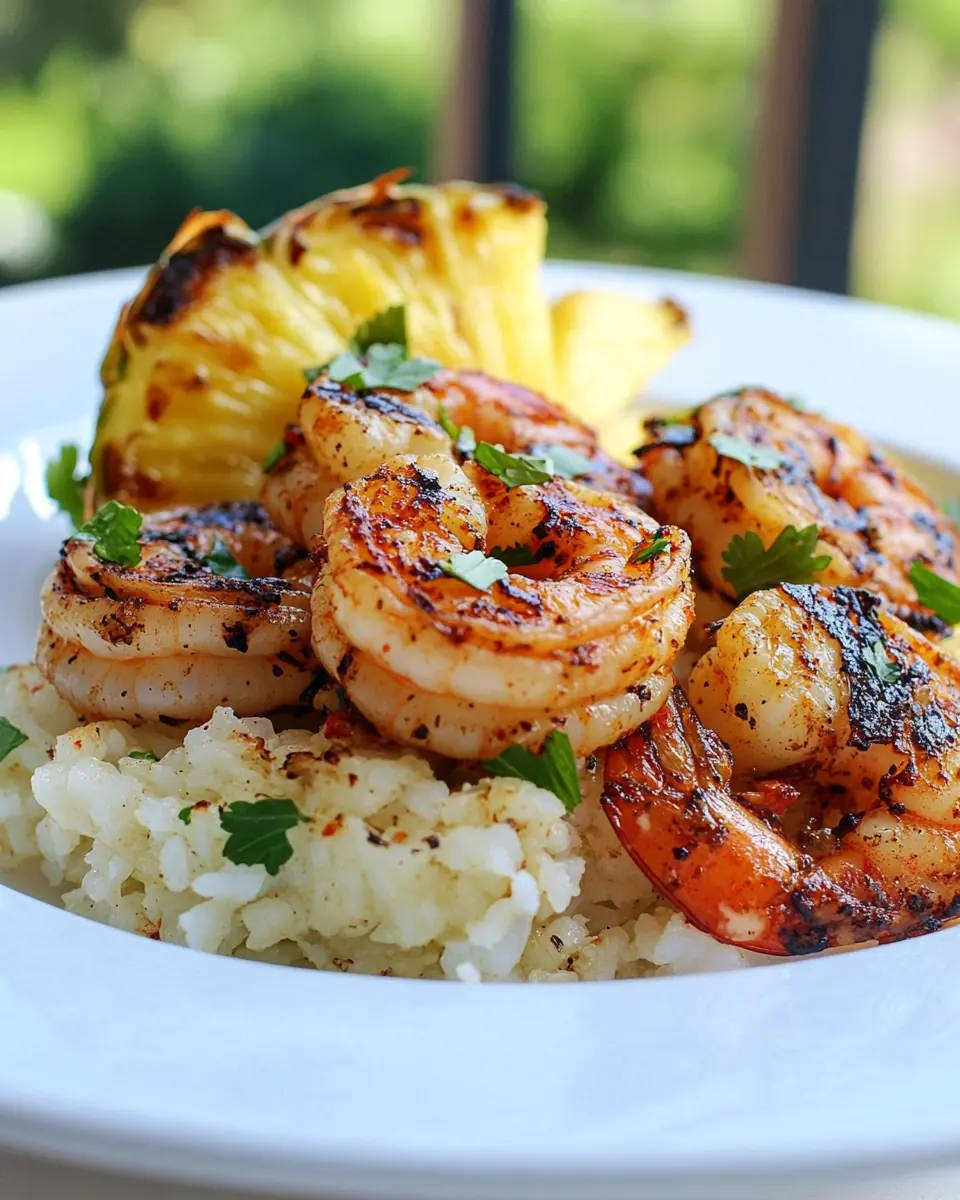
To assemble, place rice on your plate and top with shrimp, pineapple and chopped cilantro.: Listen for the change in sizzle intensity, and watch for the shrimp to transition from translucent to a bright pink with opaque centers; that visual cue is the clearest doneness indicator. The texture should be springy and juicy, not chewy, which is why timing matters. Avoid the common mistake of overcooking because even a single extra minute makes a noticeable difference in tenderness. If your grill runs hot, reduce time slightly, checking one piece midcook to confirm doneness.
Remove from grill: When you pull the shrimp off, carry them to a warm plate to rest for a minute, which lets juices redistribute and keeps them tender. The residual heat finishes the cooking gently while the exterior stays crisp. Leaving them on the grill too long while you tend to other tasks is a frequent error, so have a resting vessel ready. The aroma here is concentrated, and the surface will glisten with the spice mix.
Cut pineapple into large chunks: As you prep the pineapple , its fresh scent should be bright and fruity; larger chunks hold up better on the grill and caramelize without collapsing. Use a sharp knife to remove the core if needed, and aim for uniform sizes so they cook evenly. Warning, uneven pieces will yield burnt edges on smaller bits while larger ones remain underdone. The visual cue is when the fruit's surface begins to bead with juice before it hits the grill.
Grill to your liking: Place the pineapple directly on the hot grates, and watch as sugars caramelize into amber streaks, producing a sweet smoke that pairs beautifully with the spice on the shrimp . Turn once to get crosshatch marks if you like them, the aroma becomes deeper and almost dessert like. A common misstep is overcooking until it collapses, so remove once you see pronounced caramelization but the fruit still retains structure. The sound is quieter than with protein, more of a gentle hiss as juices evaporate.
Remove from the grill: Transfer the grilled pineapple to a platter and let it cool slightly, which concentrates flavor and prevents burning the mouth when served. The exterior will be glossy with caramel and the scent heady and tropical. If you expect it to be sweeter, give it a few minutes, the sugars continue to develop off heat. Avoid stacking hot pieces, which traps steam and softens the charred surface.
Melt butter in medium sized pot over medium-high heat: The butter should foam and develop a nutty scent at the edge of browning, which I watch closely to get a toasty base for the white rice . This step adds richness and helps each grain separate. A typical mistake is using too high heat and burning the butter before the rice goes in, which gives a bitter note. Swirling the pot ensures even melting and temperature control.
Stir in rice, bay leaf, salt and pepper until every grain is coated in butter: Coating the white rice in butter gives each grain a silky sheen and toasty aroma, which improves mouthfeel. I stir for about a minute to toast the rice lightly, until it sounds a little more hollow as it moves in the pot. The why here is that toasting clarifies starch and yields a fluffier final texture. A problem to avoid is not stirring enough, which leads to uneven toasting and clumped rice.
Stir and cook about 1 minute: This short step deepens that toasted note and releases a warm, nutty fragrance; listen for a change in sound as the rice slides more freely. It primes the grains to better absorb the cooking liquid. Rushing this stage means the rice may cook with a raw center later, so give it the minute it needs. Keep an eye on the pot so the bottom does not brown prematurely.
Pour in chicken broth and sugar: Adding warm chicken broth right after toasting preserves the heat and reduces the shock to the rice, which helps even absorption. The sugar subtly enhances the tropical theme without tasting sweet, and you should hear a lively simmer begin as steam rises. A common oversight is adding cold liquid which can lengthen cooking and affect texture. Stir once to combine, then set to cover.
Stir and cover: Covering traps steam and allows the grains to cook evenly; you should see a gentle wobble of steam where the lid meets the pot. I set the heat to maintain a steady simmer rather than a rolling boil, which prevents aggressive movement that can break grains. Avoid lifting the lid frequently, each peek releases heat and extends cooking time.
Bring to boil and then reduce to simmer until liquid has been completely absorbed: The initial boil wakes the starches, then reducing to a simmer lets the rice absorb the liquid slowly for tender, separate grains. The visual cue is when the surface becomes matte and little holes appear; that indicates the liquid is nearly gone. A common mistake is keeping too high a heat, which leads to scorching on the bottom while the top remains undercooked.
Remove from heat and stir in coconut and almonds: Off the heat, stirring in toasted sweetened coconut and toasted slivered almonds infuses the rice with texture and a tropical aroma that is warm and nutty. The residual steam softens the coconut slightly while keeping the almonds pleasantly crunchy. Adding them while the rice is still too wet can make the mix mushy, so ensure most liquid is absorbed first. The finished rice should smell fragrant and look speckled with coconut and nuts.
Serve warm: Serving while everything is hot allows the flavors to meld and the textures to contrast at their best. Plate the rice first, then add the shrimp and grilled pineapple , finishing with chopped cilantro for freshness. A mistake I often see is plating too early so parts cool before serving, losing that just-cooked brightness. The final aroma should be a layered chorus of spice, smoke, sweet fruit, and buttery rice.
To assemble, place rice on your plate and top with shrimp, pineapple and chopped cilantro: The sensory payoff is immediate, the heat of the rice rising into the charred pineapple , the bright herb smell of cilantro, and the flecked crust on the shrimp inviting the first bite. Arrange components so each forkful gets a little of everything, making the experience balanced. Watch for overly sauced plates, which can drown the toasted coconut and almonds; keep them visible on top for contrast.