Go Back
Spinach Basil Pesto

Spinach Basil Pesto

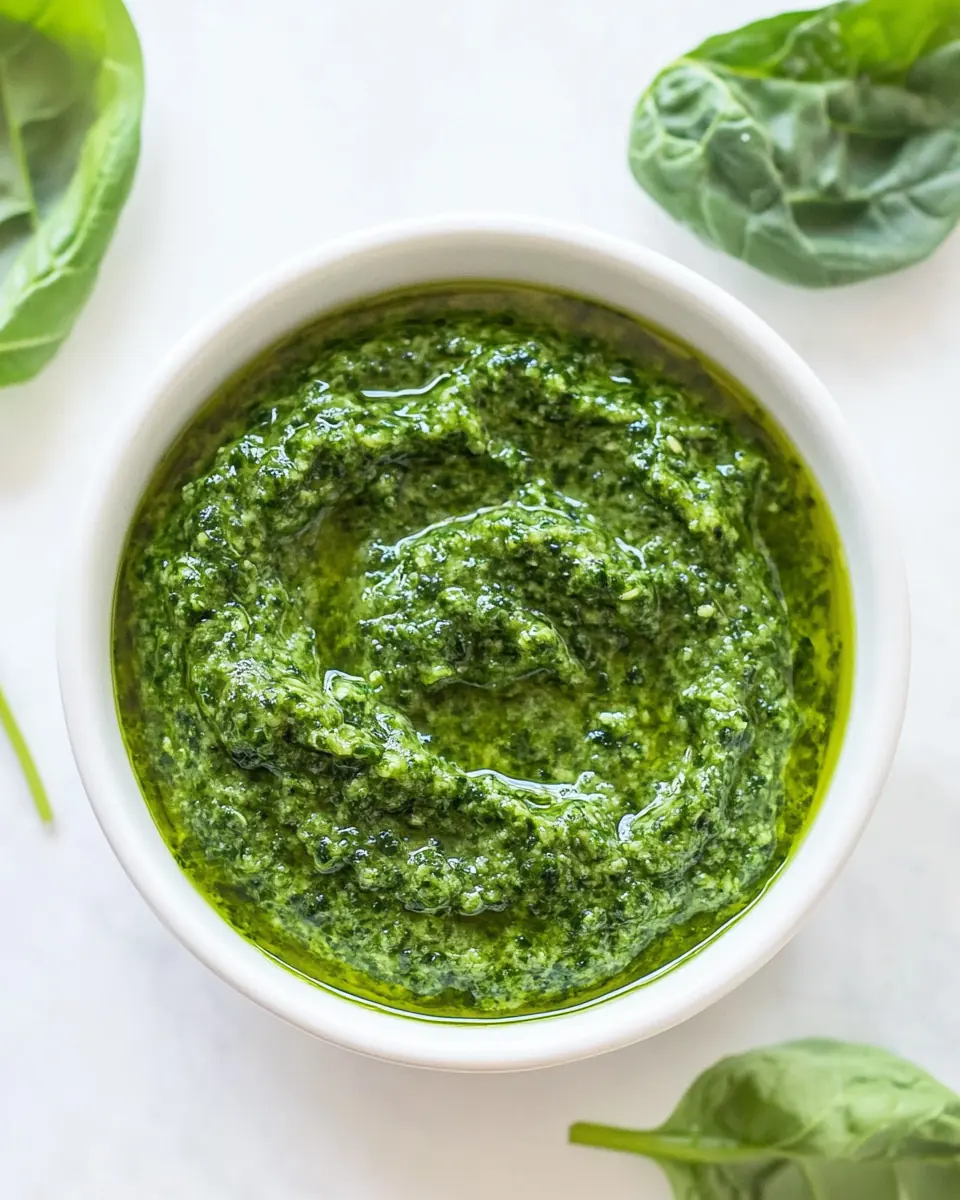
Spinach Basil Pesto is a creamy, herbaceous sauce that blends bright basil and mild spinach with nuts, garlic, and extra virgin olive oil for an easy weeknight favorite. This quick, versatile pesto is perfect for pasta, sandwiches, and roasted vegetables, delivering fresh, vibrant flavor in minutes. Make it to elevate simple meals and enjoy a fridge staple that adds instant personality to dishes.
Prep Time 5 minutes
Total Time 5 minutes
Servings: 1 about 1 cup
Course: Appetizers
Cuisine: Italian
Calories: 200

Ingredients
  

  • 1 cup fresh basil Provide bright, aromatic notes and form the primary herb base that defines classic pesto flavor; finely packed leaves blend smoothly with oil to create a vivid green sauce and balance richer components.
  • 1 1/2 cups spinach Contribute mild, leafy bulk and a subtle earthy sweetness that stretches the herb component while keeping the pesto light; wilted or raw leaves both work to add body and nutrients without overpowering basil.
  • 1/2 cup pine nuts see note Offer rich, buttery texture and a toasty, nutty depth when lightly toasted; pulse with herbs and oil to create a creamy emulsion and add subtle richness to the sauce (see note for alternatives).
  • 2 garlic cloves Deliver pungent, savory bite and aromatic intensity that brightens the pesto; mince or press cloves for even distribution and adjust quantity to taste for desired garlic presence.
  • 1/4 cup extra-virgin olive oil more as needed Provide smooth mouthfeel and act as the emulsifying fat that carries flavors and gives the pesto its characteristic silky consistency; add more as needed to adjust texture.
  • 1 -2 tablespoons warm water as needed for dryness Moisten the mixture gently to prevent dryness and loosen the pesto without diluting flavor; add warm water sparingly until the desired spreadable consistency is reached.
  • Big pinch of salt and pepper Season the sauce with concentrated savory lift and balance; a big pinch of salt and pepper enhances flavors and ties the herb, nut, and cheese elements together.
  • Red pepper flakes to taste Introduce optional heat and a subtle smoky background that can be adjusted to taste; sprinkle sparingly to add warmth without overwhelming the pesto's herbal profile.
  • 2 tablespoons parmesan cheese optional Bring umami richness and salty, savory complexity when included; grate in to deepen flavor and help thicken the pesto, using optionally for dairy-free diets if omitted.
  • A squeeze of fresh lemon juice for bright flavor! Add bright acidity and freshness that lifts the overall flavor, cutting through richness and enhancing herbaceous notes; squeeze to taste for lively balance.

Equipment

  • Food Processor
  • High speed blender

Method
 

  1. Add all of the ingredients, except the olive oil and warm water, to a food processor or a high-speed blender. Pulse until you have a smooth consistency. Note: You can absolutely use either a food processor or a high-speed blender here!: You can absolutely use either a food processor or a high speed blender here! : The moment you pulse the basil , spinach , pine nuts , garlic , salt, pepper and optional parmesan cheese , you will first notice a coarse, leaf flecked mash that soon turns more cohesive. Listen for the change from loud chopping to a more even, lower hum, and watch the color shift from a dull green to a bright, glossy emerald; that visual cue tells you the leaves are being properly broken down and oils are being released. Smell the mixture as it comes together; the aroma should be herb forward with a warm garlic note and a hint of toasted nut if you pre toasted. If the processor stalls, give it brief pauses to avoid overheating the motor and to push down ingredients with a spatula. A common mistake is over processing into a completely watery puree, which destroys texture. Stop when the paste is smooth but still has body, so you retain pleasant mouthfeel and aromatic intensity.
  2. With the motor running, drizzle in the olive oil. If needed you can add in a tablespoon of hot water as needed to make a smooth pesto.: As you drizzle the extra-virgin olive oil slowly into the running machine, the mixture will emulsify and become glossy, like a dressing coming together. You should see the paste lighten slightly and hear the motor shift to a steady tone as the oil blends in; this is when the pesto gains silk and shine. If the mixture stays stubbornly thick, add a small amount of warm water to loosen it; warm water helps the emulsion integrate more readily than cold will. Pay attention to texture, aiming for a spreadable, spoonable consistency that clings rather than pours off a spoon. One frequent error is pouring oil too fast, which prevents emulsification and can leave the oil separated on top. Slow and steady results in a smooth, cohesive pesto that carries flavor evenly through your dishes.
  3. Taste and adjust seasoning.: Right after the emulsion forms, give the pesto a careful taste for salt, pepper and acidity. You should sense bright herbaceous notes up front, a warm garlic mid palate, and a rounded oiliness from the olive oil . If it feels flat, add a pinch more salt; if it needs lift, add a dash of fresh lemon juice. If the garlic is too assertive, a little extra spinach or a touch more oil can mellow it. Texture wise, if it is too loose, a few extra pulses with a spoonful of nuts can thicken it. A classic misstep is to skip tasting until the pesto is already plated; seasoning at this stage ensures balanced flavor and prevents an overly salty or underseasoned finish.
  4. Use immediately or store for up to 1 week in a tightly sealed container.: Fresh pesto has the brightest aroma and flavor when used right away, and it will look vibrantly green straight out of the blender. If storing, press a thin film of olive oil on the surface to slow oxidation and keep air out, then seal the container tightly. Refrigerated pesto will mellow and the flavor will integrate over a day, which some people prefer, but prolonged storage can darken the color. For longer preservation, freeze in ice cube trays and then transfer the cubes to a bag. A common mistake is leaving pesto loosely covered, which allows air to brown the surface and degrade aromatic quality.
Notes

  • Use fresh, tender basil leaves: Select bright green, fragrant leaves without brown spots. Fresh leaves yield stronger aroma and better color. If leaves are slightly wilted, trim stems and use them quickly, but avoid woody stalks which can be bitter.
  • Wash and dry your greens thoroughly: Excess water will thin your pesto and can make it bland. Spin the spinach and basil in a salad spinner or pat dry with a clean towel before pulsing, and if any moisture remains, squeeze the spinach gently to remove it.
  • Pulse rather than run continuously: Short pulses help control texture so you do not end up with a completely liquefied sauce. Pulse to break down leaves, then blend briefly to combine; this preserves body and prevents overheating which can dull the fresh flavors.
  • Drizzle oil slowly for a stable emulsion: Adding the olive oil gradually while the motor runs creates a silkier texture. If you pour too fast, the oil may separate and the pesto will not bind properly.
  • Adjust with warm water if needed: If your pesto becomes too thick or the machine struggles, add one tablespoon of warm water at a time until it loosens. Warm water blends more seamlessly than cold, producing a smoother final texture without cooling the oils too quickly.
  • Freeze in portions: Freeze pesto in ice cube trays for easy single serving portions. Once frozen, transfer cubes to a labeled bag. This method keeps flavor and color much better than refrigerating for long periods.
  • Omit cheese for dairy free: If you need a dairy free version, skip the parmesan cheese and consider adding a tablespoon of nutritional yeast for savory depth, or simply increase nuts slightly to compensate for texture.