Preheat oven to 375°F.: You should notice the warm hum of the oven coming to life as it approaches temperature, which ensures even baking. Preheating is essential because cold ovens can cause the phyllo to absorb more butter and become limp rather than crisp. A common mistake is putting the tart into an oven that is still heating, leading to a longer bake and an unevenly browned crust. If your oven runs hot, use an oven thermometer and aim for a steady 375°F.
In a large heavy skillet cook the onion in oil over moderately low heat, stirring, until softened.: As the onion hits the olive oil , you will hear a gentle sizzle and smell a sweetening aroma as it softens. Cook slowly to coax out the sugars without browning, stirring occasionally so it softens uniformly. The purpose is to develop a mellow base flavor that blends with the spinach . Rushing this step by turning up the heat risks burning and a bitter note, so keep the flame moderate and patient.
Squeeze the spinach to remove as much liquid as possible and stir with salt into the onion. Cook the spinach mixture over moderate heat, stirring occasionally, until any liquid is evaporated, 1 to 2 minutes, and cool slightly.: When you squeeze the spinach , you should feel it compress and a small pool of dark green liquid release; removing that prevents a soggy filling. Stirring it into the warm onion allows flavors to meld and any remaining moisture to steam off. Keep stirring until you sense that the mixture looks drier and the aroma is concentrated. If the mixture remains wet, continue cooking briefly, because excess moisture will prevent the filling from setting. A common error is not squeezing enough liquid from the spinach , so press thoroughly with your hands or a towel.
In a large bowl whisk the eggs until combined and stir in the spinach mixture, pine nuts, feta, and bread crumbs until combined well. (the filling may be made 1 day ahead and chilled, covered. Bring the filling to room temperature before proceeding.): Once the eggs are whisked to a smooth, glossy texture, folding in the slightly warm spinach allows the proteins to start integrating, building a cohesive filling. The toasted pine nuts will add immediate fragrance, and the crumbled feta cheese will contrast with creamy pockets. The breadcrumbs absorb excess moisture and help the filling hold shape. If the filling feels overly loose, add a touch more breadcrumbs, but avoid overdrying. One pitfall is adding hot filling to eggs and scrambling them; let the spinach cool slightly before combining.
Stack the phyllo sheets and cover with 2 overlapping sheets of plastic wrap and then a lightly dampened kitchen towel. In a small saucepan melt the butter and then let it cool slightly. Lightly brush a 10 1/2 x 7 1/2 x 1-inch rectangular tart pan with a removable fluted rim with butter.: Keeping the phyllo covered prevents it from drying into brittle layers that tear. The sound of butter melting is faint and warm, and once cooled slightly it will brush smoothly without cooking the dough. Buttering the pan ensures the finished tart releases cleanly and helps the bottom layers brown. A common oversight is leaving phyllo exposed and letting it dry, which makes it hard to work with. Handle gently and keep surfaces moist but not wet.
On a work surface lightly brush 1 phyllo sheet with butter. Sprinkle 1 tablespoon of Parmesan evenly over the buttered phyllo and repeat the layering with 5 more phyllo sheets, butter, and 5 tablespoons of Parmesan. Arrange the last phyllo sheet on the stack and lightly brush with butter.: As you layer, you will see the sheets go from pale to glossy and hear a whisper of butter being absorbed. The Parmesan cheese melts slightly against the warm butter and creates pockets of nuttiness. Building these layers gives the tart a sturdy, multi dimensional crust. Avoid overbrushing with butter which can pool and make the dough soggy. If a sheet tears, lay another on top to reinforce it rather than discarding it.
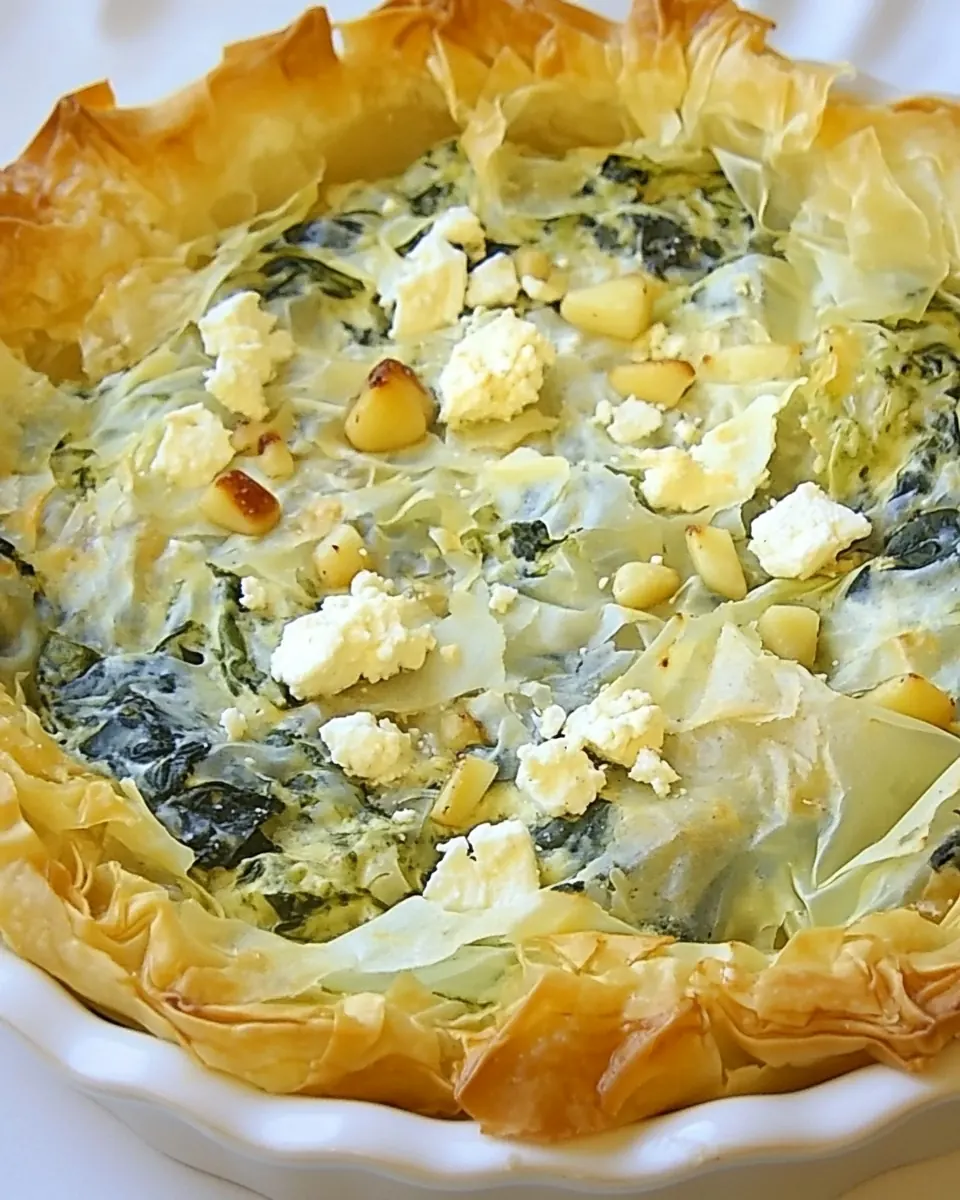
Transfer the phyllo to the tart pan, letting the excess hang over the edge. Spoon the filling onto the phyllo, spreading evenly. Fold the edges of the pastry over the filling, leaving the center uncovered. Lightly brush the top of the phyllo with butter. Sprinkle the remaining Parmesan over the exposed filling and bake the tart in the middle of the oven until golden, 25 to 30 minutes. Serve the tart warm or at room temperature.: When you move the layered phyllo into the pan, the dough will feel delicate but supportive. As you spoon in the filling, the sound is muted, and spreading should leave a smooth surface with no large air pockets. Folding the edges creates a framed crust that browns and crisps faster. Brushing the top with butter yields a glossy, golden finish, and the final sprinkle of Parmesan cheese encourages attractive browning. Bake until you see an even, deep golden color and the center feels set when gently shaken. A typical mistake is underbaking which leaves the phyllo pale and chewy; if the center seems wobbly, give it a few extra minutes, watching closely to avoid overbrowning.