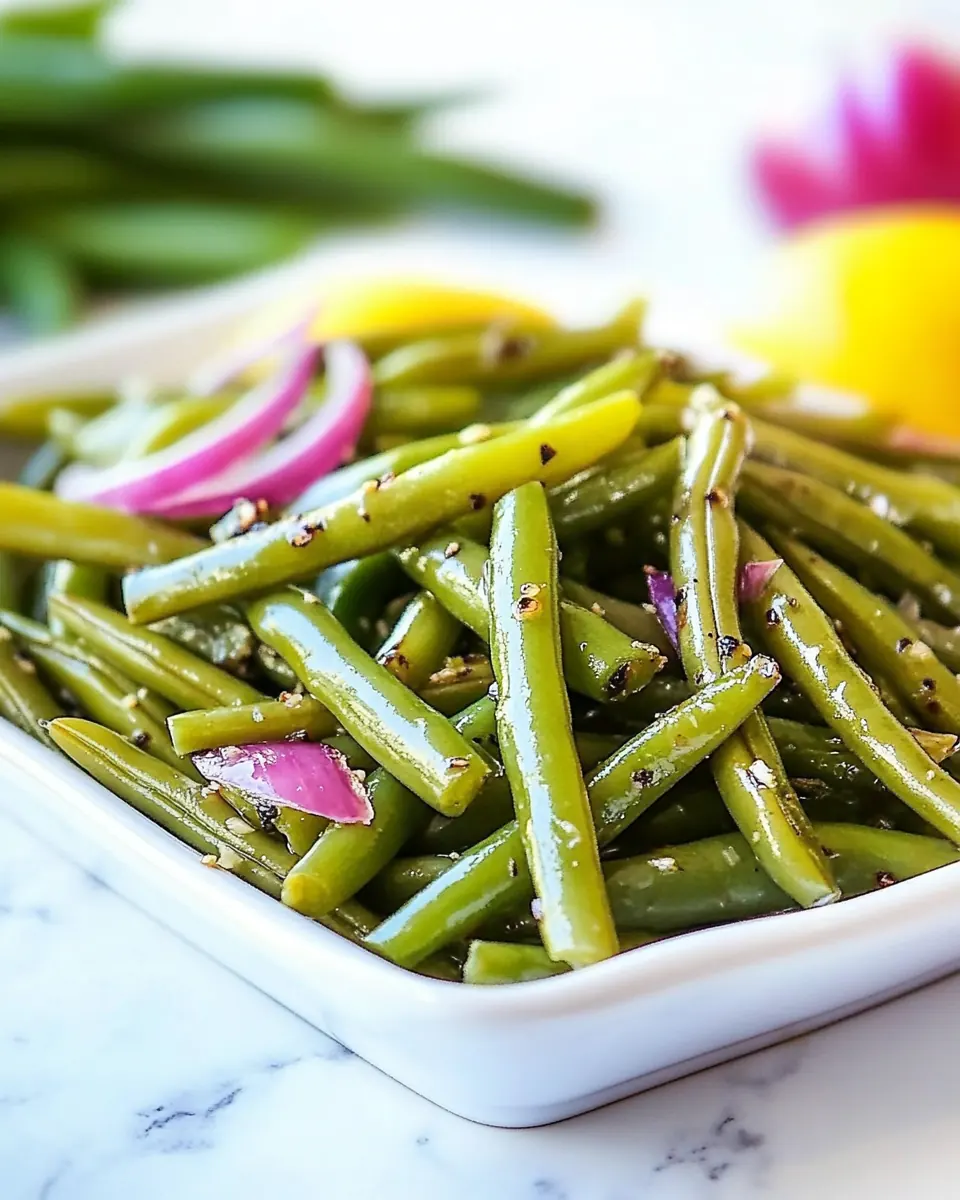
Heat skillet over medium-low heat. Add green beans and drizzle with olive oil. Quickly saute green beans, about 3 minutes. Add in rings from slices of red onion. Remove from heat and squeeze juice from one half of lemon. Cut remaining half of lemon into thin slices and add to the green beans. Sprinkle with red pepper flakes and serve.: When the skillet is warming, notice a gentle shimmer across the surface of the olive oil when you add it, not a hard ripple that indicates smoking. This moderate temperature ensures the green beans warm through and pick up subtle browning without charring. You should hear a faint sizzle, a soft whisper rather than an angry crackle. The aroma will shift from neutral to slightly nutty as the pan warms, signaling readiness. Why this matters, I find, is because medium low heat gives control; the beans will not go from fresh to overcooked in seconds. A common mistake is cranking the heat to hurry things, which causes uneven browning and can scorch the oil. If you detect a burnt smell, lower the heat and wipe the pan clean before continuing.
Add green beans and drizzle with olive oil: As you introduce the drained green beans , spread them so they make contact with the pan surface. The brief contact creates tiny toasted edges that add depth. Drizzling the olive oil over them helps each bean develop a glossy sheen and carry flavor evenly. You should see faint golden flecks appear along some edges after a minute or two, and the beans will soften audibly when nudged with a spatula. This technique matters because surface contact concentrates flavor; steam alone does not replicate that. Avoid overcrowding the skillet, which leads to steaming and a limp texture instead of the desired gentle toasting.
Quickly saute green beans about 3 minutes: During this short saute the beans will go from cold and slightly rigid to tender and warmed through. Listen for a soft sizzling and watch for tiny bubbles of oil around the beans. Their color will deepen slightly, and the occasional bean tip might show a light golden brown. The goal is not to fully cook them into softness, but to warm them and let the flavor concentrate. This matters because a quick saute preserves a pleasant bite while still marrying flavors. A frequent slip is leaving them longer so they become too soft; keep an eye on texture and remove them as soon as they yield to gentle pressure.
Add in rings from slices of red onion: When you fold in the thin red onion rings, you will notice a sharp, sweet aroma that softens as the onion warms. The contrast of the slightly crunchy onion against the tender beans is intentional, creating layers of texture. Stir gently to distribute the rings without breaking them apart, and allow thirty seconds to a minute for them to lose their raw edge. This technique matters because it maintains visual appeal and textural interest. The primary mistake is cooking the onion too long so it becomes fully caramelized, which changes the intended bright profile.
Remove from heat and squeeze juice from one half of lemon: Pull the skillet off the burner so residual warmth helps the lemon juice spread without cooking down the fresh acidity. As you squeeze the lemon, inhale the sharp citrus scent that lifts the whole pan. The juice brightens the beans immediately, balancing the oil and taming any metallic canned notes. This step matters because fresh acid wakes up flavors in a way that dried seasonings cannot. One common error is cooking the lemon juice into the pan over heat, which mutes its brightness; adding it off heat preserves the fresh zip.
Cut remaining half of lemon into thin slices and add to the green beans: Slipping thin lemon slices into the dish provides intermittent bursts of citrus and makes the presentation pop. The translucent wedges soften slightly from the pan warmth while still holding their shape, offering a pleasant chew and visual contrast. These slices also infuse a softer citrus aroma as they mingle with the oil. This finishing touch matters because it layers flavor rather than relying solely on juice. A mistake to avoid is using thick wedges that overpower each bite; thin slices integrate more gracefully.
Sprinkle with red pepper flakes and serve: A final pinch of red pepper flakes releases a faint toasted aroma and provides a whisper of heat on the palate. Scatter them evenly so every serving gets a bit of spice, then transfer the beans to a warm platter. The dish should look glossy with a few bright lemon slices and flecks of red. Serving immediately preserves textural contrasts, while resting too long can make the onions limp and the beans lose their vibrancy. Avoid adding salt-heavy seasonings at the end without tasting, since the canned green beans may already contain sodium. If you need to adjust seasoning, do so sparingly and taste first.