Preheat oven to 425 degrees F. Prepare water for pasta and bring to a boil. Once boiling, add pasta and cooking according to directions, shaving a few minutes off the time.: You will smell the mineral bite of boiling water as steam rises, and the pan will tremble with tiny rolling bubbles, which tells you it is hot enough for the lasagna noodles . Cooking the noodles slightly less than package directions helps them finish softening in the skillet without turning mushy, preserving a bit of toothsome texture. A common mistake is overcooking the pasta at this stage, which leads to limp strands that disintegrate when tossed; watch the color and test a piece for firm center, not floppy. Keep a large pot so noodles have room, and salt the water lightly to season the noodles from within.
Heat a large oven-safe skillet over medium heat and add olive oil. Add in onions and mushrooms, tossing to coat, then cover and cook for 10 minutes until softened. Add in garlic and spinach, stirring well and cook until the spinach wilts and cooks down. Add in asparagus, tossing well. Season with salt and pepper.: As the olive oil warms you will notice a slight shimmer on the pan, then the chopped onion releases a sweet, savory perfume as it softens and becomes translucent; the mushrooms will sweat, darken, and give off an earthy, savory scent that deepens the skillet. Covering briefly helps the vegetables release moisture and tenderize evenly, creating gentle steaming that melds flavors. When you stir in minced garlic , the aroma will pop and feel immediate, but be careful not to let it brown too rapidly or it will taste bitter. The spinach wilting is fast, turning vivid green and collapsing into silky ribbons, while the asparagus should be vibrant and still slightly crisp. Overcooking here flattens flavors and ruins texture, so taste as you go for the ideal tender yet lively bite.
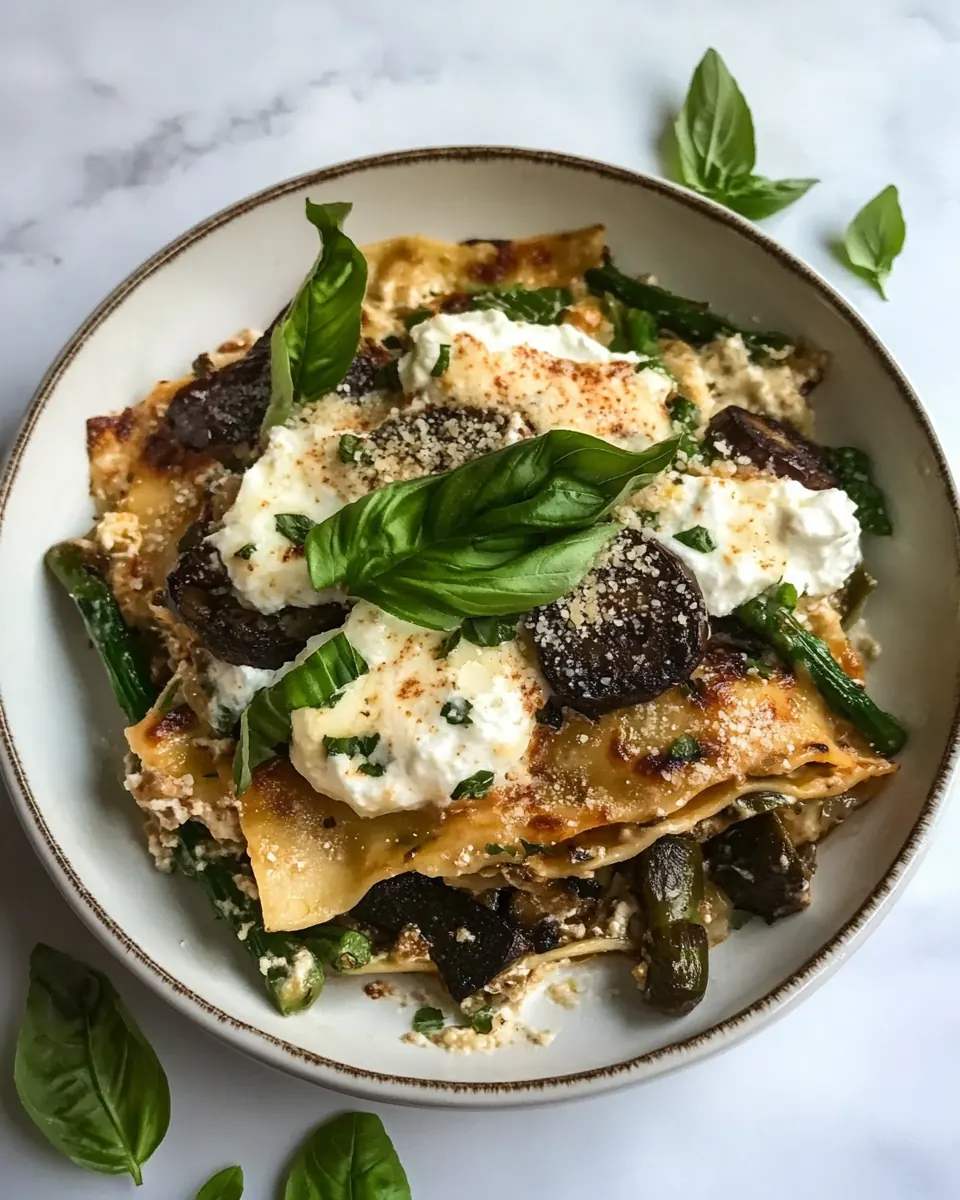
Heat a small saucepan over medium heat and add butter. Once sizzling, whisk in flour to create a roux and cook until golden brown and nutty, about 1-2 minutes. Add in milk and whisk continuously until the mixture is thickened, about 5 minutes. Stir in parmesan cheese. Season with a pinch of nutmeg, salt and pepper. Once the cheese is melted and the sauce is slightly thickened, pour over the vegetables in the skillet and turn off the heat. Add in the cooked lasagna noodles and gently toss to distribute. Cover with scoops of ricotta and the grated cheese.: The moment the butter begins to sizzle and foam, you will whisk in the flour , creating a smooth paste that smells toasty when properly cooked; this step removes raw flour taste and builds foundation for a silky sauce. Adding the milk gradually while whisking prevents lumps and produces a glossy, thickening béchamel; it will steam slightly and the whisk will leave trails when the sauce has body. Stirring in grated parmesan cheese adds a savory tang and slightly grainy texture that melts into silkiness. A pinch of nutmeg adds subtle warmth. Pouring the sauce over the vegetables should create visible pockets of cream coating the greens and mushrooms. When you fold in the cooked lasagna noodles , keep movements gentle so they do not break apart, and place dollops of ricotta and a layer of grated mozzarella cheese on top for creamy contrast. If the sauce seems too thin, simmer it a touch longer before pouring; if too thick, a splash of milk smooths it. Avoid heavy stirring which can turn the noodles into fragments.
Bake for 15-20 minutes, or until cheese is golden and bubbly. Remove and serve with extra parmesan!: Sliding the skillet into a hot oven will transform the cheese, producing bubbling edges and a warm, toasty aroma that signals readiness; watch for a golden flecking on the top which indicates caramelization of the cheeses. The sounds are subtle, a gentle simmer and occasional crackle as moisture escapes and cheese stretches when a spoon enters, giving a satisfying, comforting quality to the experience. Letting the dish rest for a few minutes after baking allows the sauce to set slightly and makes serving neater. A common mistake is under baking which leaves the center runny, or over baking which dries the surface; check for golden bubbles and give it a gentle jiggle to ensure creaminess. Serve hot from the skillet and sprinkle extra parmesan cheese for brightness.