Go Back
St. Patrick’s Day Charcuterie Board

St. Patrick’s Day Charcuterie Board

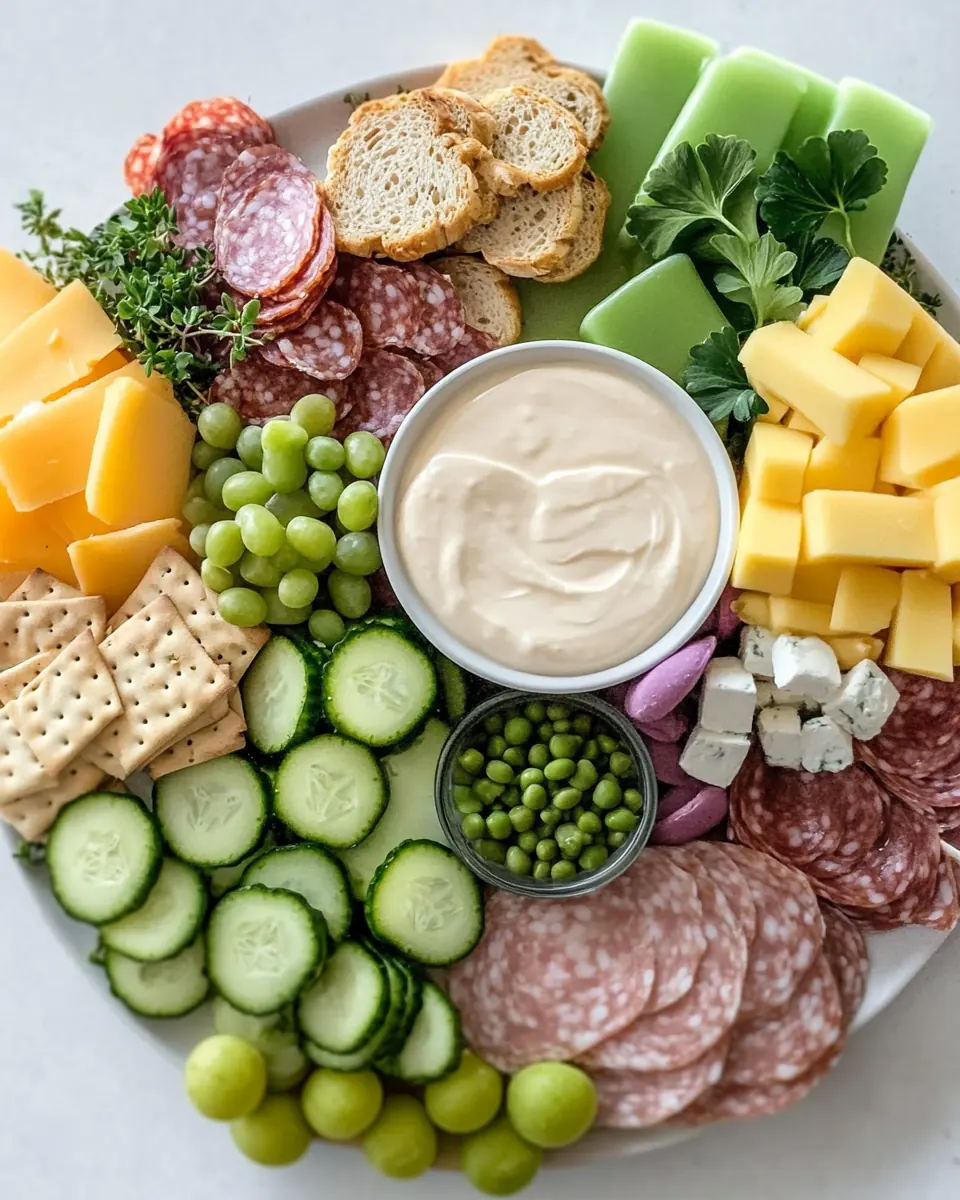
St. Patrick’s Day Charcuterie Board is a festive, easy to assemble grazing platter that pairs creamy Irish cheese with savory deli corned beef or pastrami, crunchy large soft pretzels, and bright produce. Perfect for spring gatherings and casual entertaining, it delivers a mix of textures and flavors that makes every bite interesting. Make it for your next get together to serve an inviting, shareable centerpiece.
Prep Time 20 minutes
Total Time 20 minutes
Servings: 4 servings
Course: Appetizers
Cuisine: American
Calories: 250

Ingredients
  

  • 2 green bell peppers stemmed, seeded, and left whole for dill dip and salad dressing (optional, see note 1) Stemmed and seeded, left whole to double as a crunchy vessel for dips and to provide a fresh, mild pepper flavor when sliced for the salad dressing; offers bright green color that enhances the board’s St. Patrick’s Day theme.
  • Dill Dip Creamy and herb-forward, meant for dipping vegetables and pretzels while adding a cool, tangy counterpoint to salty cured meats; can be prepared ahead to let flavors meld and served chilled.
  • Thousand Island salad dressing Tangy and slightly sweet, intended as a ready-made salad dressing option or a dipping sauce that complements the richness of cheeses and meats; balances heavier flavors on the board with its bright acidity.
  • spicy brown mustard or wholegrain mustard Spicy and robust, used to add a sharp, piquant kick to sandwiches, pretzels, or dolloped alongside meats; wholegrain texture can also provide visual contrast and a rustic mouthfeel.
  • sauerkraut Tangy and fermented, serves as a bold, savory accompaniment to corned beef or pastrami and brings acidic brightness to cut through rich flavors; also adds a traditional Irish deli element.
  • 16 ounces deli corned beef or pastrami (see note 2) Thinly sliced and savory, provides the primary protein focal point on the board with classic cured beef flavor; arrange in folds or piled slices for easy grabbing and attractive presentation.
  • 16 ounces Irish cheese such as Kerrygold Cheddar or Dubliner, sliced (see note 3) Rich and slightly savory, sliced to offer a buttery, creamy cheese option that pairs well with mustard and bread; choose Irish varieties for authentic flavor and St. Patrick’s Day relevance.
  • large soft pretzels Soft and chewy, intended as a hearty bread option that pairs especially well with mustard, cheeses, and pickles; warm pretzels add comforting texture and a communal snacking element.
  • toasted baguette slices (see note 4) Crisp and toasty, used as a versatile base for cheese and meat bites or as a vehicle for spreads; thin slices provide a crunchy textural contrast to softer components.
  • green grapes Juicy and sweet, intended to add a refreshing, palate-cleansing fruit component that contrasts salty and savory flavors; serve in small clusters for easy picking and visual appeal.
  • broccoli florets Crunchy and green, used raw to provide a fresh, fibrous bite and to serve as a neutral dipping vehicle for spreads; small florets add color and a healthy element to the board.
  • cucumbers sliced Cool and hydrating, sliced cucumbers contribute a crisp, mild-flavored element that pairs well with dips and cheeses; thin rounds create neat, easy-to-top pieces for assembled bites.
  • pickles Briny and tangy, offered as a sharp, acidic garnish to cut richness from meats and cheeses; provide whole or sliced pickles for variety in texture and intensity.
  • fresh herbs or clovers Fragrant and decorative, used to garnish the board and to impart a fresh herbal aroma; small sprigs or clover-shaped greens reinforce the holiday theme and brighten presentation.

Equipment

  • Small bowls
  • Cutting Board
  • Knife
  • Serving board
  • Tongs

Method
 

  1. Select a board, then set dips and spreads around the board as anchor points (use small bowls or hollowed-out green bell peppers).: The first sensory cue is the visual anchor, small bowls of Dill Dip or hollowed green bell peppers that catch the eye with color and height. Place these near the center or slightly off center so they feel natural, and notice how the light reflects off the glossy dip surfaces, which helps the arrangement feel intentional. The reason this matters is that anchor points prevent the board from looking flat, they create zones for different flavor families, and they make it easier for guests to navigate. A common mistake is overcrowding anchors too close together which makes the board look lopsided, so leave breathing room. If your dips look watery, drain or thicken them, because thin dips can run and ruin nearby crackers.
  2. Fold or roll corned beef and place in clusters around the dips. Add sliced cheese in piles around meat.: When you fold or roll the deli corned beef or pastrami , listen for the soft rustle as the slices overlap, and watch how the folds create shadows that add depth. Arrange three to four clusters so guests can grab meat from different spots without reaching across the board. Place piles of sliced Irish cheese near the meat to suggest pairings visually. This step matters because clustered meats and cheeses create natural pairings and keep flavors together, which makes assembling bites intuitive. Avoid laying slices flat in a single line which can look messy and be hard to pick up. If your meat seems dry, fold it more tightly to keep moisture contained and appealing.
  3. Fill in the gaps with pretzels, crostini, fruit, and vegetables. Layer and overlap when needed; step back to view the board from afar to spot any slim spots. Garnish with herbs or clover and tuck in forks, spreaders, tongs, and other utensils where needed.: Filling the spaces is where the board gains personality, and you will notice contrasting textures as you tuck in crunchy large soft pretzels , crisp toasted baguette slices , sweet green grapes , and crisp cucumbers sliced . Use layered placement so items slightly overlap, which helps create a continuous surface that is pleasing to the eye. This matters because gaps read as unfinished, and small items can get lost if not intentionally placed. A frequent error is clustering all similar textures in one spot; instead, scatter crunchy and soft elements across the board to keep each bite interesting. If something feels too crowded, remove a few pieces and redistribute them to even the composition.
  4. Layer and overlap when needed; step back to view the board from afar to spot any slim spots: Step back and take in the board from a distance to catch visual imbalances, paying attention to color blocks and negative space. Layering and overlapping create a sense of abundance and make it easy for guests to pick items without disturbing others. This technique matters because boards are seen as much as they are eaten, and a single glance should communicate plenty and variety. Avoid moving pieces too frequently, which can disturb delicate piles; instead adjust a few pieces at a time. If you see a slim spot, tuck in small items like grapes or herbs to create fullness without clutter.
  5. Garnish with herbs or clover and tuck in forks, spreaders, tongs, and other utensils where needed: The final touches are aromatic and functional, like the fresh scent of sprigs of fresh herbs or clovers and the metallic glint of tongs or spreaders, which signal readiness to eat. Tuck utensils into corners or near dips so guests can serve themselves without searching, and use herbs to soften hard edges of bread and meat piles. This matters because a thoughtful finish elevates the whole experience, making the board feel cared for and complete. A common oversight is forgetting utensils which forces guests to use fingers awkwardly, so plan these placements. If an herb starts to wilt, replace it or remove it so the presentation remains fresh.
Notes

  • Anchor with bowls Place two or three small bowls of dip or dressing first, this creates a structure so you can build outward and prevents runny items from crossing into dry items.
  • Vary textures Alternate soft and crunchy items across the board so each grab offers contrast, which keeps snacking interesting and balanced.
  • Keep items bite sized Cut larger pieces into approachable portions so guests can combine flavors without long knife work, which encourages faster, more confident grazing.
  • Chill fresh produce Keep grapes and cucumbers chilled until service to preserve snap and a crisp mouthfeel, which brightens rich bites.
  • Use herbs sparingly A few sprigs of fresh herbs make the board feel seasonal and aromatic, but too many can overwhelm the palette or obscure other items.
  • Plan utensils Place small spreaders, tongs, and forks near respective elements so guests can serve themselves cleanly and without fuss.