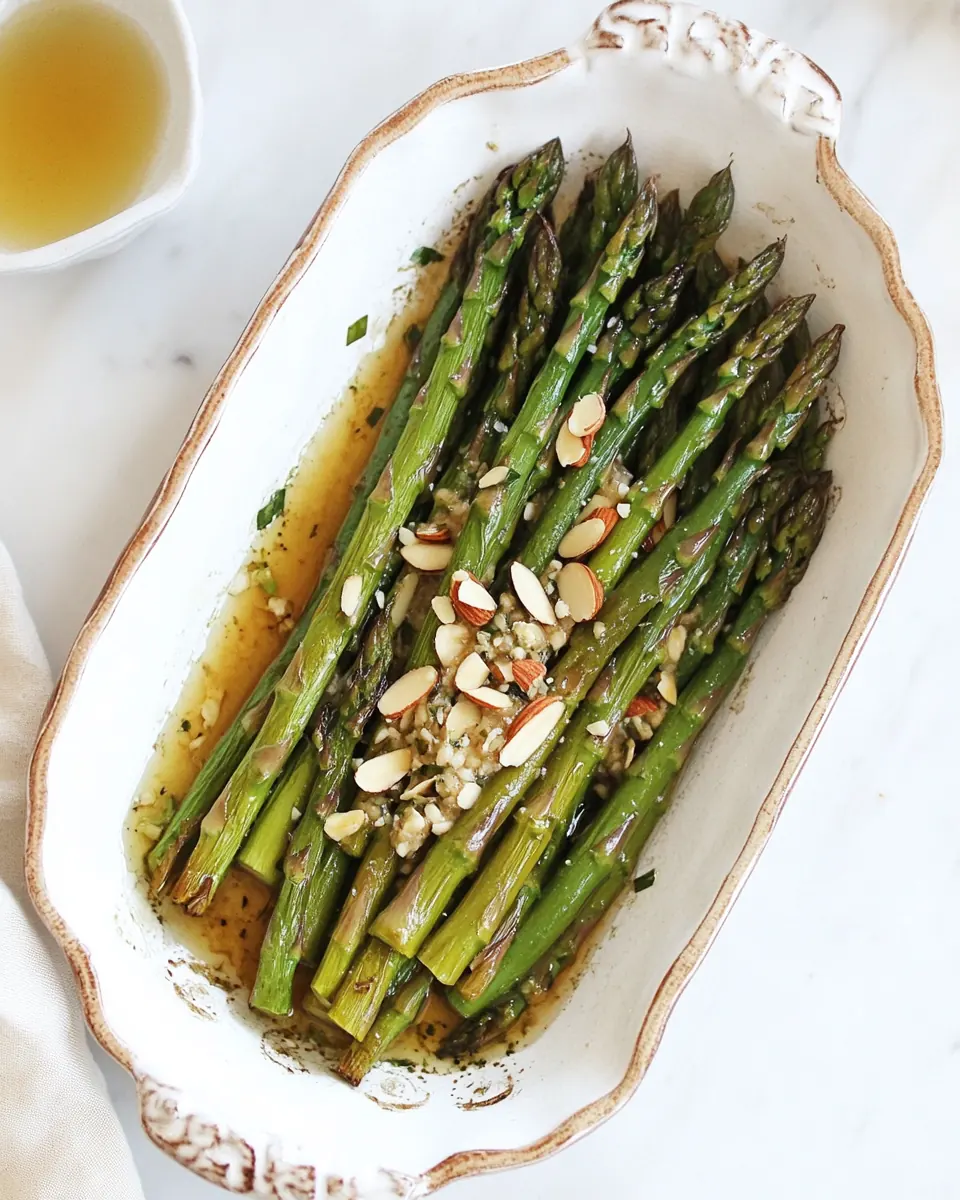
Steam the asparagus until crisp-tender.: As you heat the water for steaming, you will notice a faint vegetal perfume rising as the temperature climbs; when you place the asparagus into the steamer basket, listen for a gentle hiss rather than a violent boil, which signals a gentle cooking environment. Steam until the stalks are bright green and yield to a slight bend when you press the tip, usually just long enough for the outer layer to become tender while the core remains slightly firm, providing that satisfying snap when bitten. The visual cue is vivid color and a slight gloss on the surface. A common mistake is oversteaming, which makes the spears limp and dulls their flavor, so check at the lower end of the time range and test one spear. If your steamer is crowded, rotate or do smaller batches to keep consistent results.
Melt 1 tablespoon of the butter in a heavy large skillet over low heat. Add the shallots and garlic and saute until tender, about 5 minutes.: As the butter begins to melt, you will notice it foaming gently, releasing a warm dairy aroma that signals the start of flavor building. Keep the heat low so the butter does not brown prematurely, this slow melt preserves the creamy base you want for soft sautéing of aromatics. A heavy skillet distributes heat evenly, preventing hot spots that can burn delicate ingredients. If the butter smokes or smells acrid, reduce the heat immediately and start over with fresh butter to avoid bitterness in the sauce.
Add the remaining 5 tablespoons of butter, parsley, lemon juice and lemon zest to the shallot mixture and heat over medium to melt the butter.: As you add the finely chopped shallots and minced garlic , you should hear a faint, gentle sizzle rather than a loud pop, indicating the pan is at the right temperature. The aromatics will soften and become translucent, releasing sweet, fragrant notes that form the foundation of the sauce. Stir frequently to avoid localized browning, and watch for a light golden tint on the shallots which indicates they have sweetened sufficiently. Avoid rushing this step with high heat, since burnt garlic gives an acrid taste that cannot be rescued.
Add the almonds and cook until the butter browns, stirring occasionally, about 3 minutes. Add the steamed asparagus and spoon the sauce over the asparagus until heated through. Season to taste with salt and pepper.: When you add the larger portion of butter and the fresh parsley , along with the lemon juice and zest, the pan will briefly hiss as the cooler liquids meet the warm fat, creating a glossy emulsion if you stir gently. The acidity from the lemon brightens the savory base, and the chopped parsley adds a green aromatic lift; together they balance the richness. Heat over medium just until the butter melts and the mixture looks cohesive, swirling it so the flavors marry. A frequent oversight is adding the citrus too early or in excess which can separate the emulsion, so add a small amount then taste and adjust.
Add the almonds and cook until the butter browns, stirring occasionally, about 3 minutes: When you add the sliced almonds , they will hit the warm butter and begin to pop softly as their moisture leaves, releasing a toasty, nutty aroma that is unmistakable. Stirring occasionally ensures even browning and prevents hot spots that would burn the nuts. Visually, you are looking for a light golden tan on the almonds and a fragrant, slightly caramelized scent from the butter, both signs the sauce is developing complexity. Be vigilant as nuts can go from perfectly toasted to bitter very quickly; have your spatula ready and remove the pan from heat at the right moment.
Add the steamed asparagus and spoon the sauce over the asparagus until heated through: Returning the bright green asparagus to the pan, you will hear a gentle contact sound as the spears warm in the butter, and the sauce will cling to their surface creating a glossy finish. Use a spoon to baste each spear so the sauce distributes evenly, and heat only until the stalks are warmed throughout, preserving that desirable snap and preventing overcooking. The final visual should be vibrant green spears glazed with a nut speckled, lemon kissed butter. A common error is overheating at this stage which causes the spears to lose color and become limp, so keep it brief and attentive.
Season to taste with salt and pepper: After plating, take a moment to taste a spear and adjust seasoning; adding salt lifts the vegetal notes, while freshly ground pepper adds a subtle bite that contrasts the richness. Season in small increments and taste between additions, because the salted butter already contributes sodium. If you over-salt, try to balance with a touch more lemon juice, but do so sparingly. A frequent misstep is assuming the dish needs more salt without tasting first, which can overpower the delicate flavors.