Preheat oven to 350°F and spray a 13×9-inch baking pan with nonstick spray. Set aside.: The room fills with a faint warm scent as the oven climbs to temperature, and having the pan prepared ensures you can move quickly when the batter is ready. Preheating guarantees even baking and predictable timing, which is essential for getting that fudgy center. A common pitfall at this stage is skipping the spray or lining the pan incorrectly, which can make the brownies stick. I like to wipe a thin film of butter on the corners as insurance. You'll notice when the oven hits the right heat because a stable, dry warmth will radiate from the oven door and the preheated pan will feel slightly warm when you briefly touch it with a potholder.
In a small bowl, whisk the flour and salt together; set aside.: Whisking aerates the flour and evenly distributes the salt, which helps prevent pockets of salt and yields an even crumb. The dry aroma of the combined flour and salt is subtle but signals uniformity. Be careful not to overwork this mixture into the batter later; overmixing with flour develops gluten and will toughen the brownies. Use a light hand when you fold this mixture in and stop as soon as no dry streaks remain.
In a large bowl, using a hand mixer, beat the butter and sugar together until lighter in color and fluffy, about 2 minutes.: When you cream the butter and sugar , you incorporate air which slightly lifts the batter, contributing to a tender crumb. The texture will shift from glossy to matte and paler in color, and the kitchen will smell of sweet butter. A frequent mistake is creaming for too short a time, leaving the mixture grainy, or too long, which can over aerate the batter. I listen for a smoother, quieter hum from the mixer and look for a ribbon like trail when the beaters lift from the bowl.
Add eggs, one-at-a-time. Beat well after each addition.: Adding eggs slowly ensures they emulsify into the batter, creating a cohesive mixture that holds moisture and structure. You will see the batter take on a silkier sheen after each egg. If you add them too quickly, the mixture can separate or curdle; if that happens, a brief beating at low speed will usually bring it back together. Be mindful of temperature differences, as cold eggs introduced to a warm mixture can cause seizing or curdling.
Add syrup and vanilla. Beat well.: Stirring in the chocolate syrup and vanilla transforms the batter into a glossy chocolate mass that smells indulgent and cocoa forward. The syrup adds moisture and deep chocolate flavor, so measure carefully to keep the final texture fudgy. A common error is using a syrup that is too thin or too thick, which alters the batter consistency; if it seems off, adjust mixing time to achieve uniformity without overbeating.
Sprinkle the flour/salt mixture over the chocolate mixture and mix just until no dry flour remains.: At this stage, the batter will thicken and darken, and you should see no dry patches of flour . The sound changes to a more muffled scrape as the spatula moves through the mass. The why here is simple, minimal mixing prevents gluten development and preserves a tender, dense texture. The most common mistake is overmixing, which leads to a cakier result, so fold gently and stop at the first sign of uniformity.
Pour into the prepared baking pan.: Pouring the batter into the pan is tactile and visual, as the glossy batter levels out and the surface smooths from a thick ribbon into an even layer. Use an offset spatula to distribute it evenly into the corners for consistent baking. If you skip this careful leveling, you may end up with thin edges and a thicker center that bake unevenly. I tap the pan lightly on the counter to release air bubbles and to settle the batter.
Bake for 30 minutes (the brownie top will still appear wet). Transfer brownies to a wire rack to cool completely.: During baking the kitchen will be scented with warm chocolate, and the edges will pull slightly from the pan while the center retains a glossy sheen. This wet top is normal for fudgy brownies, and removing them too early will cause collapse, while overbaking will dry them out. Transfer to a wire rack for full air circulation and cooling. A common error is opening the oven too often, which disrupts temperature, so resist peeking until near the end of the bake time.
Cream together softened butter and powdered sugar. Beat until smooth.: For the filling, you will notice the mixture become pale and cloud like as butter and powdered sugar come together. The texture should be velvety rather than grainy, and this smoothness helps the jam integrate without breaking the emulsion. If you add the sugar too fast you risk a dusty, uneven mix; sift if necessary and beat at medium speed until silky.
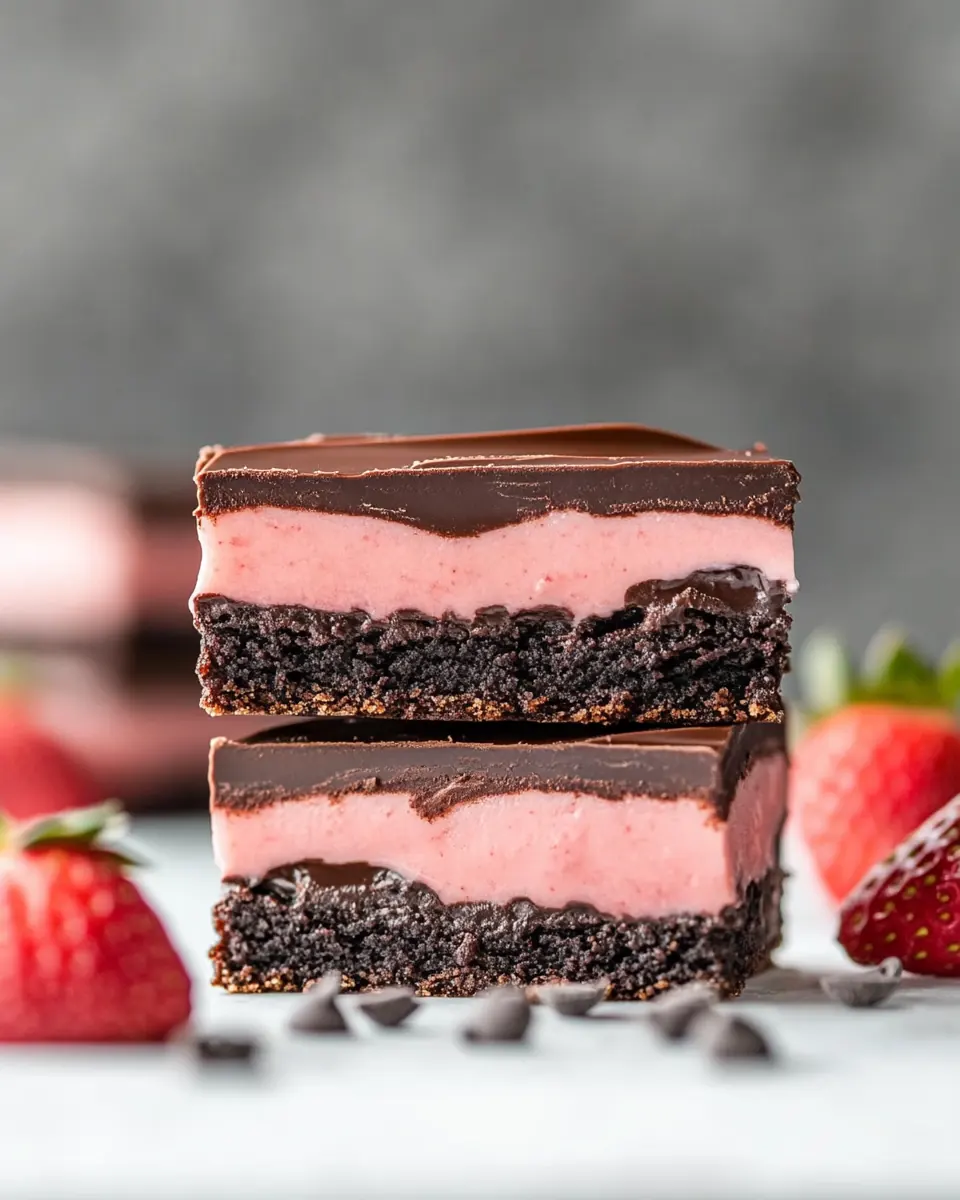
Add strawberry jam and cream together until well incorporated.: When the strawberry jam meets the creamed mixture, the scent brightens and the color shifts to a pale rosy tone. This layer gives the bars their signature fruity lift. If the jam is overly runny, chill briefly before spreading, or the filling may bleed into the brownie below. A typical misstep is adding too much jam which prevents the filling from setting properly, so measure carefully.
Spread the strawberry over the cooled brownies. Cover and refrigerate until set, about 2 hours.: Spreading the filling over fully cooled brownies prevents it from melting into the base, preserving distinct layers. The chill time firms the filling so the next step goes smoothly. If you skip refrigeration the jam will remain too soft and the glaze may slide, so be patient and let it set. You will notice the surface become slightly matte and the edges firm to the touch when ready.
Melt the chocolate chips and butter together. Stir until completely blended. Once the chocolate has cooled (at least 30 minutes), spread it over the strawberry layer and place the brownies back in the refrigerator.: Melting chocolate chips with butter yields a glossy, pourable glaze that seals the bars. Stirring constantly creates a uniform sheen and prevents burning. Allow the glaze to cool sufficiently so it thickens a bit before spreading or it will run off the sides. A common error is pouring piping hot chocolate over the jam which can cause the filling to loosen, so wait the recommended thirty minutes and test a small dollop first.
When ready to serve, cut into small bars.: The final moment comes when the knife slices through cool, set layers revealing clear strata of brownie jam and chocolate. A warm knife will smear the glaze, so use a sharp, room temperature knife and wipe it between cuts for clean edges. Serving too soon can result in squishy pieces, so ensure the bars are chilled enough to hold their shape.