Prep: Preheat the oven to 350˚F with a rack in the center of your oven. Line the bottom of a 9-inch springform pan with parchment for an easier release.: Preheat the oven to 350˚F with a rack in the center of your oven. Line the bottom of a 9-inch springform pan with parchment for an easier release. : As the oven warms you will smell the faint warmth of heated metal and the kitchen will feel ready for baking, which helps you move through steps confidently. Preparing the pan with parchment ensures the base lifts cleanly, avoiding ragged edges when you unmold the cake. When lining, press the parchment flat and trim any excess so the pan closes smoothly. A common mistake is skipping parchment, which makes release difficult; take the extra minute to line the pan carefully. Visually the pan should look tidy, and auditory cues are minimal here, just the soft rustle of parchment against metal.
In a medium bowl, combine graham crackers with sugar then stir in melted butter. Mix until moistened. Press crumbs into your prepared pan, going 3/4 of the way up the sides. Bake in the center of the oven at 350˚F for 8 minutes then cool to room temperature.: The crumbs should smell toasty and buttery after baking, and pressing them creates a compact, sandy surface that will hold the filling. I press with the back of a measuring cup for even density, paying special attention to the edges so slices stay intact. After the brief bake the crust firms and darkens slightly; cool it fully or the warm crust will destabilize the filling. Avoid pressing too hard which can make the crust rock hard; aim for firm but slightly springy. The crust should appear uniform and slightly set to the touch.
Increase the oven to 450˚F. Place 2 sheets of extra-wide heavy-duty foil on the counter. Set the springform pan in the center and fold the foil up the sides of the pan ensuring there are no rips. Fan the foil out slightly at the tops to keep the rim clear for rising.: Wrapping the pan in foil prepares it for a water bath which creates humid, even heat and prevents cracks. The foil needs to be snug with no holes so water cannot seep in. As you mold the foil the stainless shine will reflect light differently, and the foil should look smooth against the pan sides. A tear here leads to leaks later, so check thoroughly. The fan at the top keeps the rim unobstructed so the cake can rise without catching foil.
In the bowl of a stand mixer fitted with a paddle attachment, beat cream cheese and 1 cup sugar on medium/high speed for 5 minutes until completely smooth, scraping down the bowl as needed.: As you beat, the aroma will turn creamy and slightly sweet, and you'll see the mixture go from lumpy to silky. Scraping prevents pockets of unblended cream cheese and guarantees a lump free batter. The texture should be glossy and dense, not airy; overbeating can whip too much air which causes cracking, so keep an eye on consistency. A common trap is starting with cold cream cheese ; room temperature ensures a smooth, even mix.
Reduce speed to medium and add eggs one at a time, letting them incorporate between each addition and scraping down the bowl as needed.: Adding eggs slowly helps maintain an emulsion, which gives the filling its silky, cohesive texture. Each egg should be fully absorbed before the next goes in, resulting in a glossy, unified batter. If you rush and add them all at once the mixture can separate or become lumpy. You should hear a steady hum from the mixer and see the batter gain a slightly looser sheen after each egg. Scrape the bowl to ensure no streaks of unblended egg remain.
Reduce speed to low and add sour cream and vanilla and mix just until incorporated. Pour batter over the cooled crust.: At low speed the addition of sour cream adds a smooth silkiness and a gentle tang, while vanilla extract deepens aroma. Mix briefly to avoid incorporating unnecessary air. Pouring the batter reveals its weight as it settles into the crust; it should spread evenly and appear glossy. Take care not to overmix, because trapped air causes cracks while baking. The batter will be thick and pour slowly, settling into a uniform layer.
Boil a pot of water (boil more than you think you'll need). Set your foil-wrapped cheesecake pan in a deep roasting pan. Pour hot water around the edges about halfway up the sides of the springform pan.: The water bath produces a moist oven environment that cooks the cheesecake gently, preventing the edges from overcooking while the center sets. You should hear the quiet hiss of water pouring and see steam rise, but avoid splashing water into the foil or onto the batter. A common error is too little water which reduces the bath's buffering effect; ensure the water comes halfway up the pan sides. The visual cue is a shimmer of water around the pan's edge.
Carefully transfer the cheesecake to the center rack of the oven and bake at 450˚F for 15 minutes then reduce heat to 225˚F and, without opening the door, bake an additional 65-75 minutes or until the center of the cheesecake wobbles slightly when you jolt the pan.: The initial high heat sets the top and helps create a thin outer crust while the long slow bake firms the center gently. You will notice a delicate golden hue forming at the edges and a barely perceptible jiggle in the middle when done. Resist opening the door, as sudden temperature changes can cause collapse. A common pitfall is overbaking; the center should still wobble slightly to ensure creaminess after chilling. Listen for the oven hum and watch the surface for even color without cracking.
Remove the cheesecake from the oven and let it rest in the roasting pan with water for 45 minutes then transfer the pan to a wire rack to cool completely. Cover and chill in the refrigerator overnight to fully set before slicing.: The slow cool down prevents dramatic temperature swings that crack the surface, and the residual heat will continue gentle carryover cooking. After the water bath rest the cake should feel firm around the edges and tender at the center. Once chilled overnight the texture becomes dense and sliceable. Avoid cutting it too soon, which yields a runny center; patience yields the perfect firm yet creamy slice. You'll notice a deeper aroma of cream cheese after chilling which signals readiness.
In a medium saucepan, combine chopped strawberries, lemon juice, and sugar. Set over medium heat and bring to a boil. Reduce the heat and continue simmering, stirring occasionally for 20-23 minutes, or until the sauce is thickened. Cool to room temperature then refrigerate until serving.: As the sauce cooks the kitchen fills with the fruity perfume of strawberries , and the mixture transforms into a glossy, richly flavored topping. Simmering concentrates flavors and reduces water, giving you a thick sauce that clings to a fork. Stir to prevent sticking and adjust sweetness at the end. A common mistake is boiling too vigorously which can cause burning; maintain a gentle simmer. The sauce should coat the back of a spoon and cool to a jam like consistency.
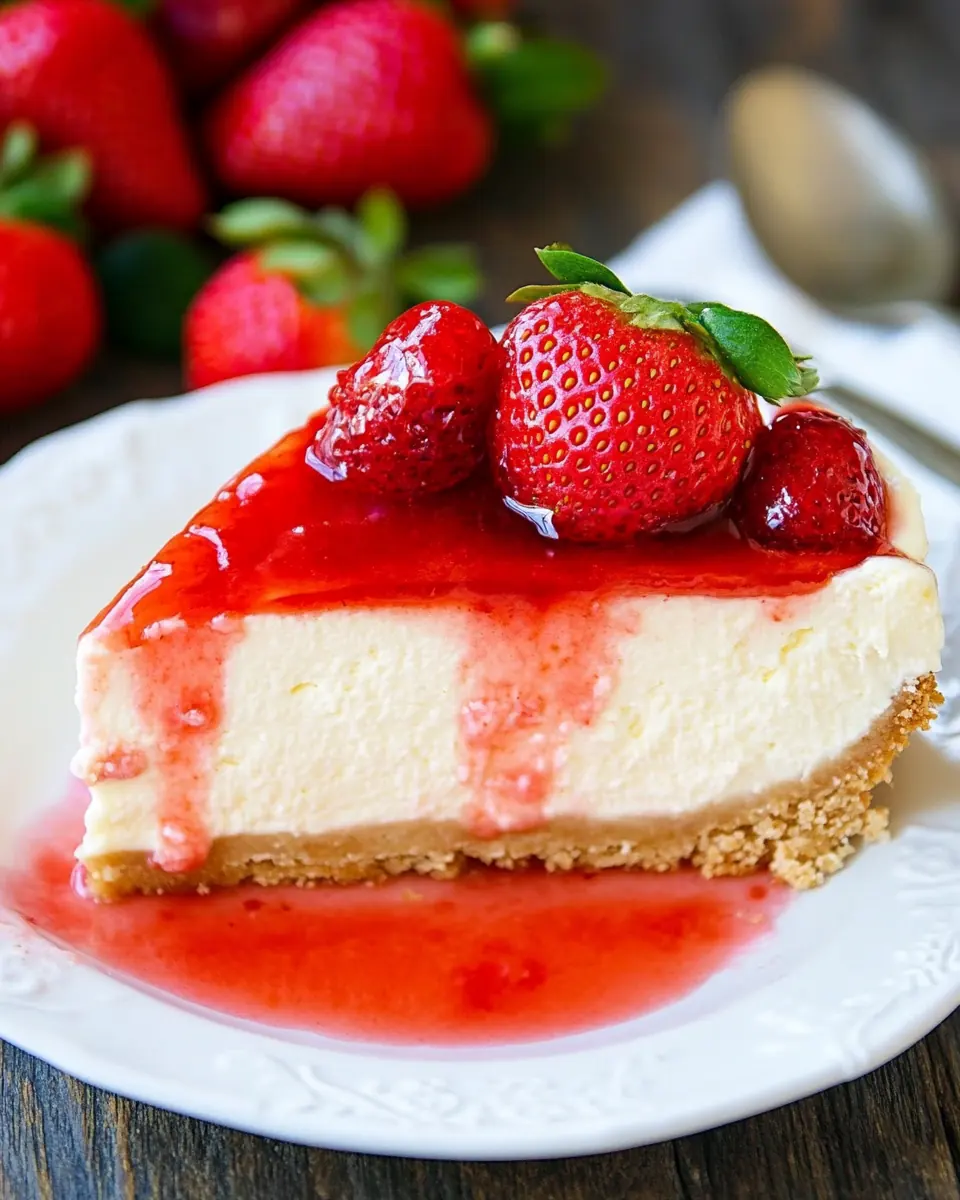
When ready to serve the cheesecake, garnish the top with fresh halved or quartered strawberries. Serve slices of cheesecake generously drizzled with the strawberry sauce topping.: The final presentation is where textures and temperatures meet, the cool, dense slice contrasted by warm or room temperature sauce and bright fresh strawberries . Arrange fruit decoratively and spoon sauce so it cascades down the side. Cutting clean slices requires a hot, dry knife wiped between cuts for neat edges. A common oversight is slicing while too cold from the freezer, which can flake the filling; chilled but not frozen yields the best slices.