Preheat your oven to 325°F. Prepare a 9-inch springform pan by lightly greasing it.: The warm oven smell will start to calm your nerves as you assemble, and a lightly greased pan ensures the cheesecake releases cleanly after chilling. Use your fingers to feel that the grease is evenly applied, not pooled, so the crust does not stick. A common mistake is skipping this step, which makes unmolding difficult; take the extra minute to prevent frustration.
In a bowl, mix graham cracker crumbs, sugar, and melted butter until well combined. Press the mixture firmly into the bottom of the pan and about 1 inch up the sides. Bake the crust for 10 minutes. Remove and let cool slightly.: As you press the crumb mixture, you should hear a faint compacting sound and feel resistance under the back of a spoon, indicating it is packed firmly. The butter scent becomes more toasty as it bakes, and the edges will take on a light golden note. Pressing firmly matters because it gives structural integrity to the base, preventing the filling from collapsing it. Avoid pressing unevenly, or you may get thin spots that crumble when sliced.
In a large bowl, beat the softened cream cheese until smooth. Add sugar and sour cream, then mix in the vanilla extract and eggs one at a time until just combined. If using, stir in the lemon zest. Pour the filling evenly over the prepared crust.: When you beat the cream cheese , stop once it becomes silky and free of lumps, the texture should be satiny and slightly glossy. Adding the eggs one at a time creates a stable emulsion, and you will notice the batter become more fluid after each addition. The aroma will be rich and dairy forward, with a hint of vanilla . Overworking the batter can incorporate air, which causes bubbling and potential cracks, so mix gently and watch for smoothness rather than speed.
Place the springform pan into a larger baking dish. Pour hot water into the larger dish until it reaches halfway up the side of the pan. Bake for 55 minutes, or until the edges are set and the center is slightly jiggly.: The water bath creates humidity in the oven, which prevents the cheesecake surface from drying and cracking, resulting in an unctuous texture. You will hear a soft hiss as the hot water meets the dish, and the oven will smell faintly of warm dairy. Look for the edges to appear firm and the center to wobble like jelly when nudged this indicates proper doneness. Avoid opening the oven early, as sudden temperature changes can cause your cheesecake to sink.
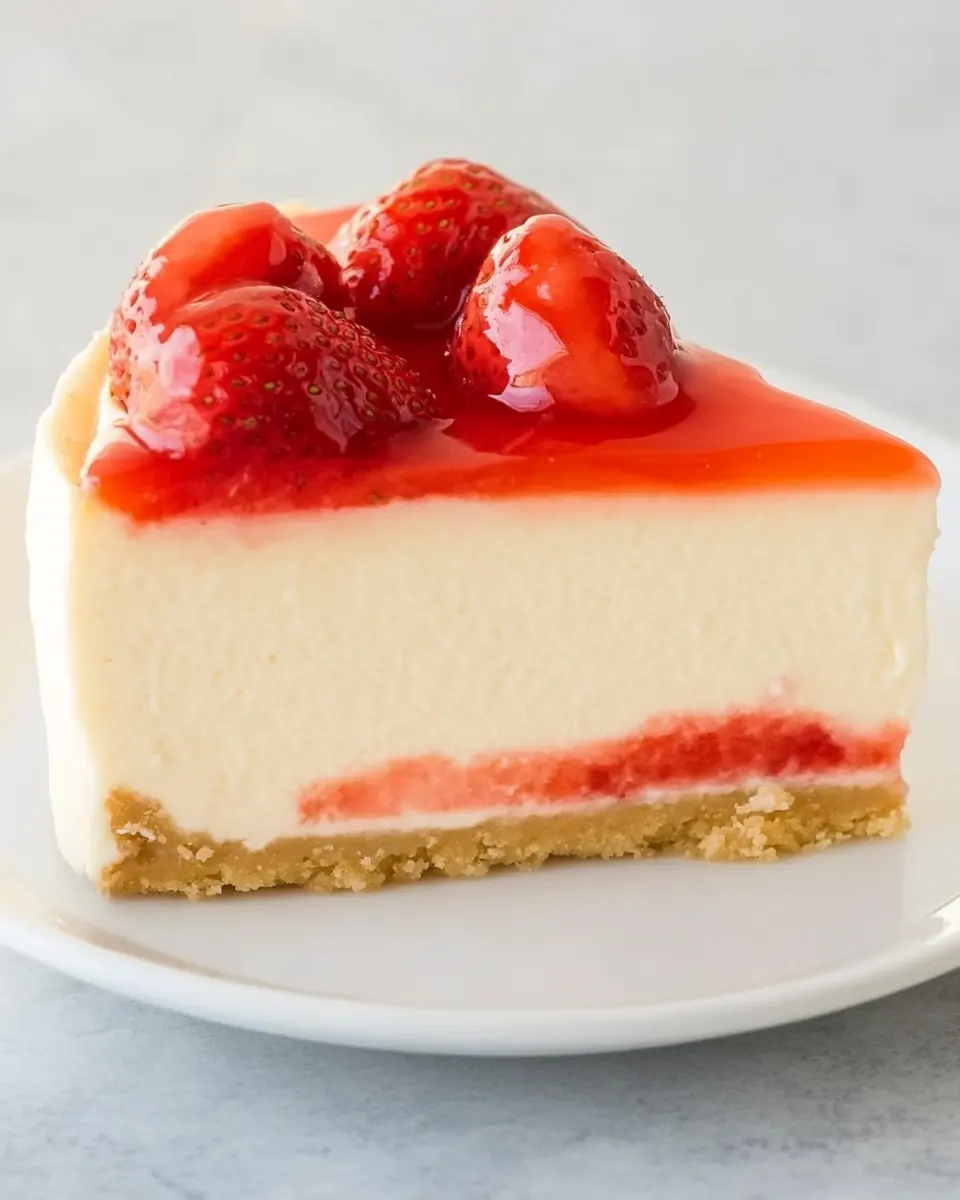
Remove from the oven and let the cheesecake cool to room temperature. Then refrigerate for at least 4 hours, preferably overnight, before serving.: Cooling slowly is key, the cheesecake will release steam and settle into that dense yet creamy interior we all love. At room temperature the surface will go from glossy to matte, which means it is stabilizing. Chilling allows the fats to firm and flavors to meld; overnight chilling deepens the flavor and makes slicing neater. A common error is trying to slice too soon, which yields a sloppy cut and overly soft texture.
For the topping, combine the quartered strawberries, sugar, and lemon juice in a small saucepan over medium heat. Bring to a simmer and allow the strawberries to break down.: As the mixture heats, you will hear a gentle bubbling and smell bright, sweet berry notes mingled with citrus, and the fruit will begin to soften and release juices. This breakdown concentrates flavor and forms the base of a glossy topping. Stir occasionally to prevent burning, and stop simmering once the berries are soft but still maintain some shape; overcooking can make the sauce too thin or overly reduced.
Mix the cornstarch with water to create a slurry, then stir it into the saucepan. Cook for about 2 minutes until the sauce thickens. Let cool, then spoon evenly over the chilled cheesecake before serving.: Adding the cold slurry will cause the sauce to visibly thicken and become shiny, clinging to a spoon and coating the back when properly done. The aroma will deepen into a cooked jam scent and the color will deepen to a richer red. Cooling the sauce is important so it does not melt the chilled filling on contact. A mistake to avoid is adding the slurry too late, which can create lumps, so whisk it well before stirring it in and cook just long enough to activate the thickener.