Preheat your oven to 350°F.: Warm air fills the kitchen as the oven comes up to temperature, and that steady heat at 350°F ensures the chicken cooks through gently after searing. Preheating is crucial, because starting in a cold oven will change your bake time and can dry the meat. A common mistake is not waiting for the oven to fully preheat, which leads to inconsistent doneness.
Place the chicken between two layers of parchment paper and use a rolling pin or meat mallet to pound it out thinly. Sprinkle both sides with salt and dried basil (no need to measure).: When you pound the chicken , you should feel the fibers relax and hear a soft slap as the meat flattens. This creates an even thickness so the center cooks at the same rate as the edges. The salt draws out a bit of moisture and seasons the meat through, while dried basil adds base herb notes. Avoid pounding so thin that the meat tears, which will make rolling difficult and cause filling leakage.
Place 1/2 ounce of cheese at the end of each breast and roll up tightly, using toothpicks to secure if needed.: The tactile pleasure here is forming neat little logs of chicken with a creamy center. The goat cheese should be firm enough to handle but soft enough to melt slightly during baking. Rolling tightly helps maintain shape and creates that contrast between a crisp exterior and a melted core. A common error is overfilling which causes the cheese to escape during searing and baking.
Heat the oil in a large, oven-safe pan on high heat. Sear the chicken breasts until golden brown on both sides, about 1 to 2 minutes per side.: You want the pan hot enough that the olive oil shimmers and gives a satisfying sizzle when the chicken hits the surface. That initial sear creates browned, aromatic crusts and locks in juices, producing savory notes that contrast the sweet sauce. Look for even golden coloration rather than blackened spots. If the pan is overcrowded, the chicken will steam instead of sear, so give each piece space.
Transfer to the oven and bake until an instant-read thermometer inserted into the chicken breast reads 165°F degrees, about 15 to 20 minutes.: In the oven, the heat finishes cooking through gently, melting the goat cheese and allowing flavors to meld. The thermometer is your best friend, and reaching 165°F ensures food safety while keeping the meat juicy. If you skip the thermometer, you risk overcooking, which dries the chicken out. If the cheese starts leaking, tent lightly with foil to protect edges while allowing internal heat to continue.
While the chicken bakes, combine the strawberries and water in a large pot and bring to a boil. Once boiling, reduce the heat to medium and simmer until the strawberries break down and the sauce thickens up slightly, about 7 to 10 minutes.: The pot will soon fill with the bright aroma of warm strawberry s as they soften and release juices. Boiling then simmering concentrates the fruit, and you should see the mixture bubble and reduce to a glossy sauce. Use a wooden spoon to break larger pieces as they soften. A frequent mistake is simmering too long which can overly reduce the sauce to a jammy texture rather than a spoonable glaze.
Remove from heat and stir in the vinegar and honey.: Off the heat, the steam eases and the sauce cools slightly, which is the perfect moment to add the balsamic and honey so they integrate without evaporating. The vinegar adds acid and depth, while the honey balances and shines. Stir until smooth and taste for balance. If you add the vinegar while the sauce is boiling hard, the acid can become harsh, so gentle mixing off heat is best.
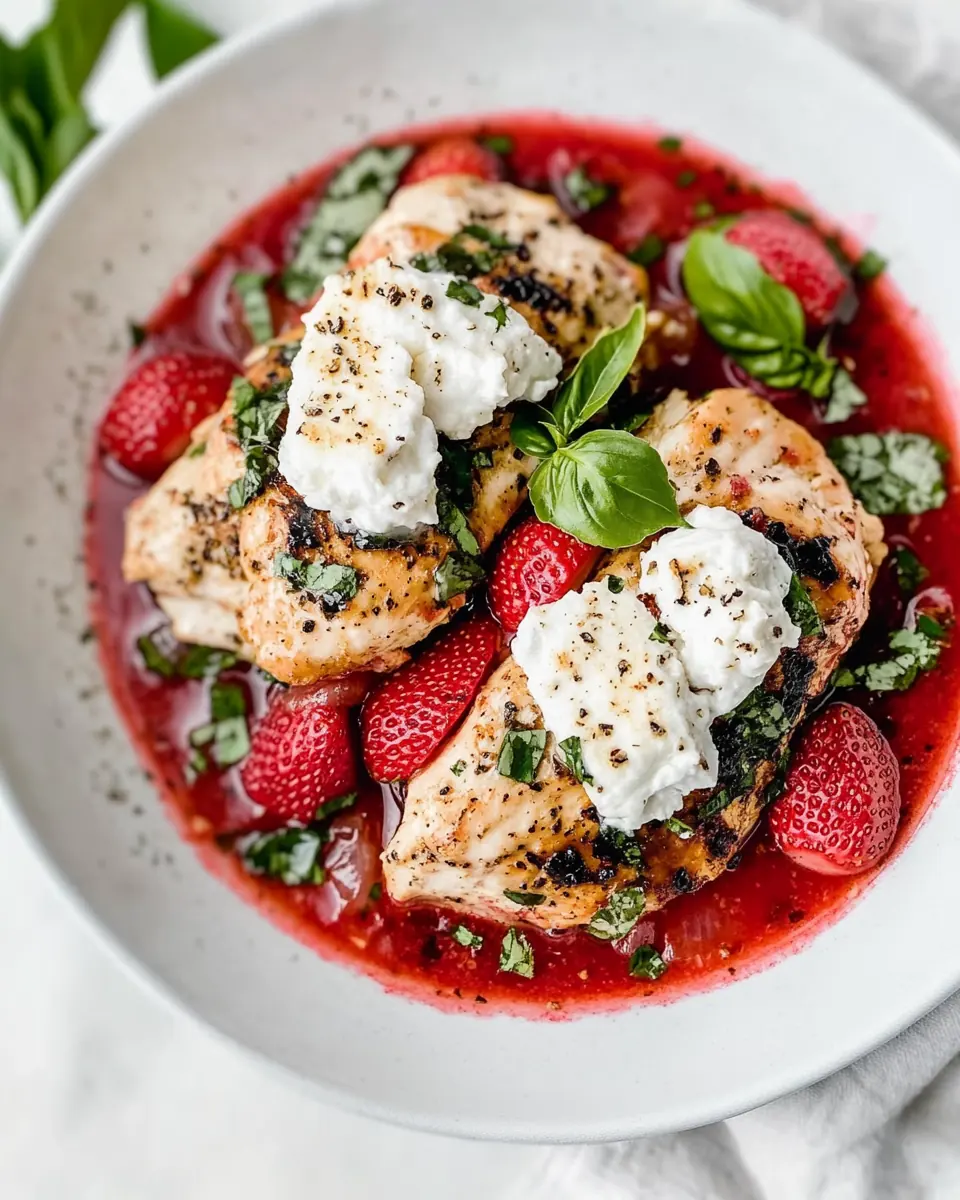
Spoon the sauce over the chicken and garnish with basil and extra thick balsamic if desired. Serve hot.: The final assembly is visual and aromatic, a glossy ribbon of strawberry sauce splashed over warm chicken that releases a mix of savory and fruity scents. Fresh basil torn on top lifts the flavors and adds a green note. Serve immediately so the textures remain distinct. Letting the plated dish sit too long will cause the sauce to soften the crust and reduce the contrast that makes this recipe memorable.