Preheat the oven to 350 degrees Fahrenheit.: The oven warming creates the right environment for the crust to set and slightly toast, producing that subtle browned aroma you want. As it heats the kitchen, you will smell a dry warmth that hints at toastiness, and after baking the crust you should notice a deeper, nutty scent. A common mistake is not waiting for the oven to reach temperature, which can result in a crust that does not firm correctly. If your oven runs hot, use an oven thermometer to confirm accuracy.
If you are using whole graham crackers you can crush them in a ziplock bag and a rolling pin, or you can blend them into fine crumbs using a food processor or a blender.: Crushing releases the cracker's toasty aroma and creates a sandy texture that becomes the structure for your pie. When using a rolling pin, listen for the steady crunch, and in a food processor watch for an even crumb that looks like fine sand. An uneven grind leaves larger bits that can create weak points in the crust. Avoid crushing too coarsely, and if you see large chunks, pulse a few more times until uniform.
Combine the 2 cups graham cracker crumbs, 2 tablespoons granulated sugar, and 5 tablespoons salted butter together in a medium bowl until it resembles damp sand.: The visual cue here is crucial, you want the crumbs to clump when pressed between your fingers but not feel greasy. The mixture should glisten slightly from the butter , and it will smell pleasantly buttery and sweet. If the mixture seems dry, add a little more melted butter a teaspoon at a time. Overly wet crumb will create a soggy base, so balance is key.
Press the crumbs evenly into the bottom and up the sides of a 9-inch pie dish. I like to use the bottom of a flat measuring cup to pack it down tightly.: When pressing, you want a firm, even layer that will hold slices together. The surface should be compact and smooth, without thin spots along the rim. You'll feel resistance as you pack, and the sound is a muted, solid thump. A common error is uneven pressure, which leads to cracks when slicing. Start from the center and work outward and upward for an even finish.
Bake for 10 minutes. Set on a cooling rack to cool completely.: As the crust bakes the kitchen fills with a warm, toasty fragrance, and the crumbs firm into a sliceable shell. Letting it cool fully prevents the filling from loosening the crust. If you slice while warm, the crust may crumble or collapse, so patience pays off. Watch the edges in the last minute to avoid overbrowning, which can introduce a bitter note.
Add 8 ounces cream cheese and 1 teaspoon vanilla extract to a large bowl and beat with a hand mixer until smooth.: The sound of the mixer changes as the cream cheese smooths, going from thudding to a steady hum. Visual cues include a glossy, lump free texture and a faint vanilla aroma rising. Room temperature cream cheese makes this easy, so if it resists, let it sit a little longer. Overbeating can introduce excess air, which creates tiny holes in the filling, so stop once smooth.
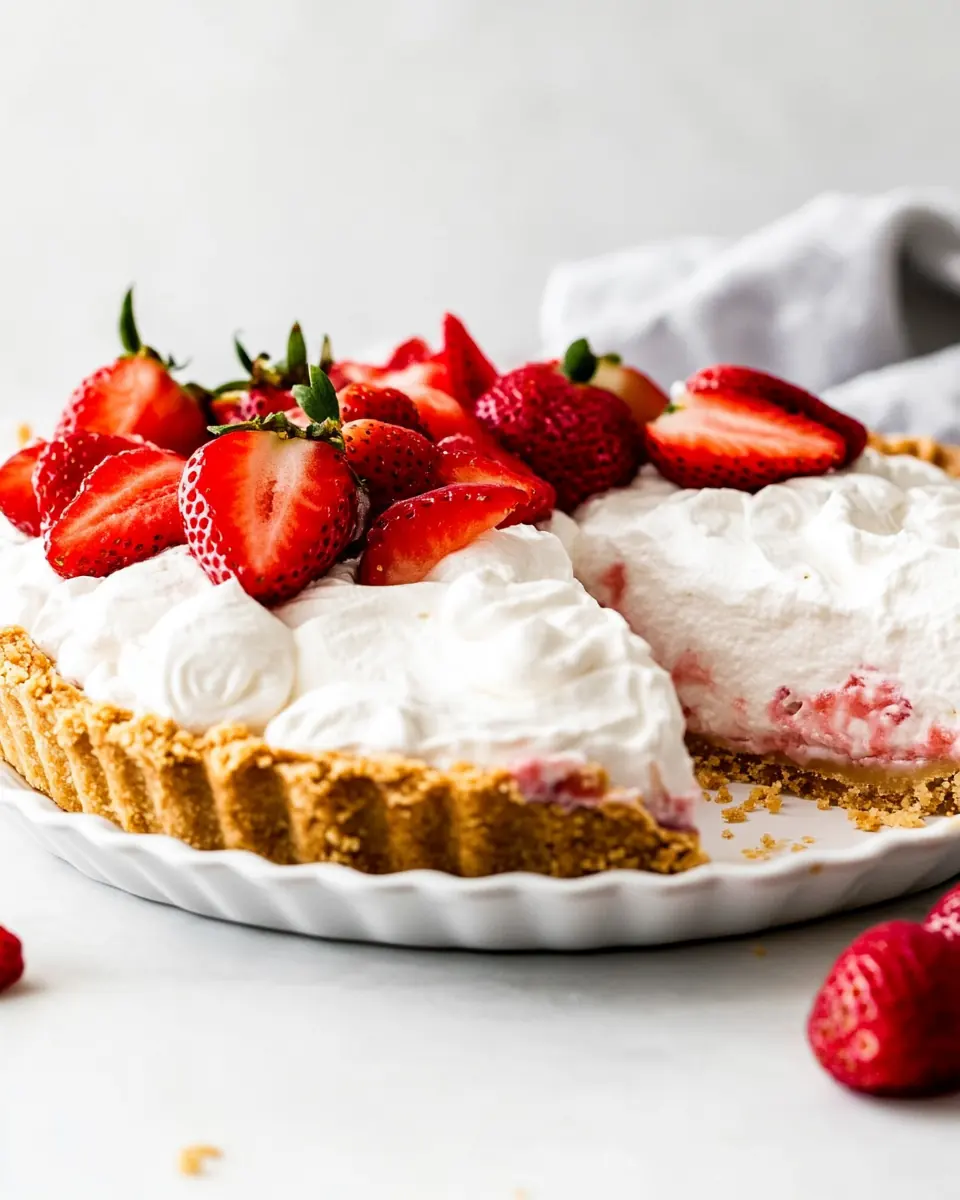
Fold in 8 ounces whipped topping until the mixture is smooth. Spread into the cooled pie crust and smooth over the top. Cover with plastic wrap or foil and chill for at least 3 hours.: Folding preserves the airy structure of the whipped topping , delivering a light, cloudlike filling. The texture should be pillowy and hold gentle peaks without collapsing. As you smooth it into the crust, you can feel how it settles and hear a quiet, soft swish. The chill firms the filling so slices hold shape. A frequent slipup is pressing too hard while spreading, which deflates the mixture, so use a gentle hand and a flexible spatula.
Just before serving toss 1 1/2 pounds fresh strawberries in a large bowl with 2 tablespoons strawberry jam, keeping in mind that the longer the berries sit in the jam, the more juice they will release.: Tossing wakes the strawberries , releasing their perfume and glossy juices that cling to the fruit. Stir gently until the jam thinly coats the slices and you see a soft shine. If you let them sit too long, the berries will weep and become syrupy, which can water down the topping. A good sign is a light shimmer and still distinct berry shapes.
Top the chilled pie with the berries, discarding the liquid. Serve immediately.: The final assembly is visual and sensory, the chilled, pale filling contrasting with ruby strawberries that glisten. The first forkful should combine crisp crust, creamy filling, and juicy fruit. If the berries released liquid, drain it so the filling does not become soggy. Serve right away for the best texture because prolonged standing makes the fruit soften further.