In a large bowl, mix sliced strawberries with sugar, cornstarch, and lemon juice. Cover and chill until ready to use, then drain any excess juice before filling the crostata.: The moment you fold the strawberries with sugar , you will notice juices begin to collect, smelling sweet and bright, which is a sign the fruit is macerating properly. Chilling helps the flavors meld and keeps the fruit firm for filling, while draining prevents a soggy bottom. A common mistake is skipping the drain, which leads to a wet crust; if you see more liquid than expected, gently blot the berries with a paper towel before filling.
In a food processor, blend on low speed the sugar, eggs, olive oil, lemon zest and a pinch of salt.: As the mixture emulsifies, you will hear a consistent whir and see a glossy batter forming, fragrant with lemon oils and olive oil richness. This early emulsification ensures an even distribution of fat and moisture, which yields an even crumb. Avoid overblending, which can warm the mixture and affect dough texture; pulse until just combined.
Gradually incorporate 2/3 of the flour and baking powder until the dough begins to form.: Adding most of the flour in stages lets you monitor texture; you want a shaggy, slightly cohesive mass that indicates gluten is developing just enough. The sound shifts from loose grains to a quieter, thicker mix, and the surface looks matte rather than glossy. A common error is dumping all the flour at once, which can make the dough dry and hard to bring together.
Transfer the dough to a work surface and add the remaining flour, whilst working the dough with your hands until you have a smooth even dough (you'll probably have some leftover flour, it's ok). Flatten into a disk, wrap with cling film and store in the fridge for 30 minutes.: When you press and fold the dough, you feel it go from sticky to pliable, and the aroma of olive oil becomes more subtle. Resting in the fridge relaxes the gluten and firms the fat, which makes rolling easier and creates a tender final crust. Avoid overworking, which heats the dough and tightens gluten, causing toughness.
Preheat oven to 170°C / 340°F (or 150°C / 300°F with fan option on), and arrange the oven tray onto the middle shelf.: As the oven comes to temperature, you might smell a faint warm scent from the element, signaling readiness. Positioning the tray in the middle encourages even browning of the crust and gentle cook of the fruit. A typical misstep is using the wrong shelf, which can cause uneven color, so set the rack to the middle before preheating.
Cut off a small piece of dough and set it aside for the topping. Roll out the rest on a lightly floured surface until it's about 1/4 inch (1/2 cm) thick. Gently transfer the dough to an 8-inch (20 cm) tart pan, trim any excess around the edges, and prick the base with a fork.: Rolling reveals a silky surface and the flour dust will whisper under your rolling pin, signaling the right thinness. After transferring, the tactile sensation of smoothing the dough into the pan helps remove air pockets and creates a uniform base. Pricking the base prevents bubbles during baking. Avoid stretching the dough into the pan, which can cause it to shrink during baking.
Spread the sliced strawberries over the base to cover it fully and evenly.: Laying the fruit in a single layer ensures even cooking and an attractive slice, and as you arrange the strawberries you should see the berry juices glisten. The even distribution helps the crust bake consistently beneath the fruit. One common slip is piling fruit too high, which can release excess liquid and weigh down the crust, so keep it relatively flat.
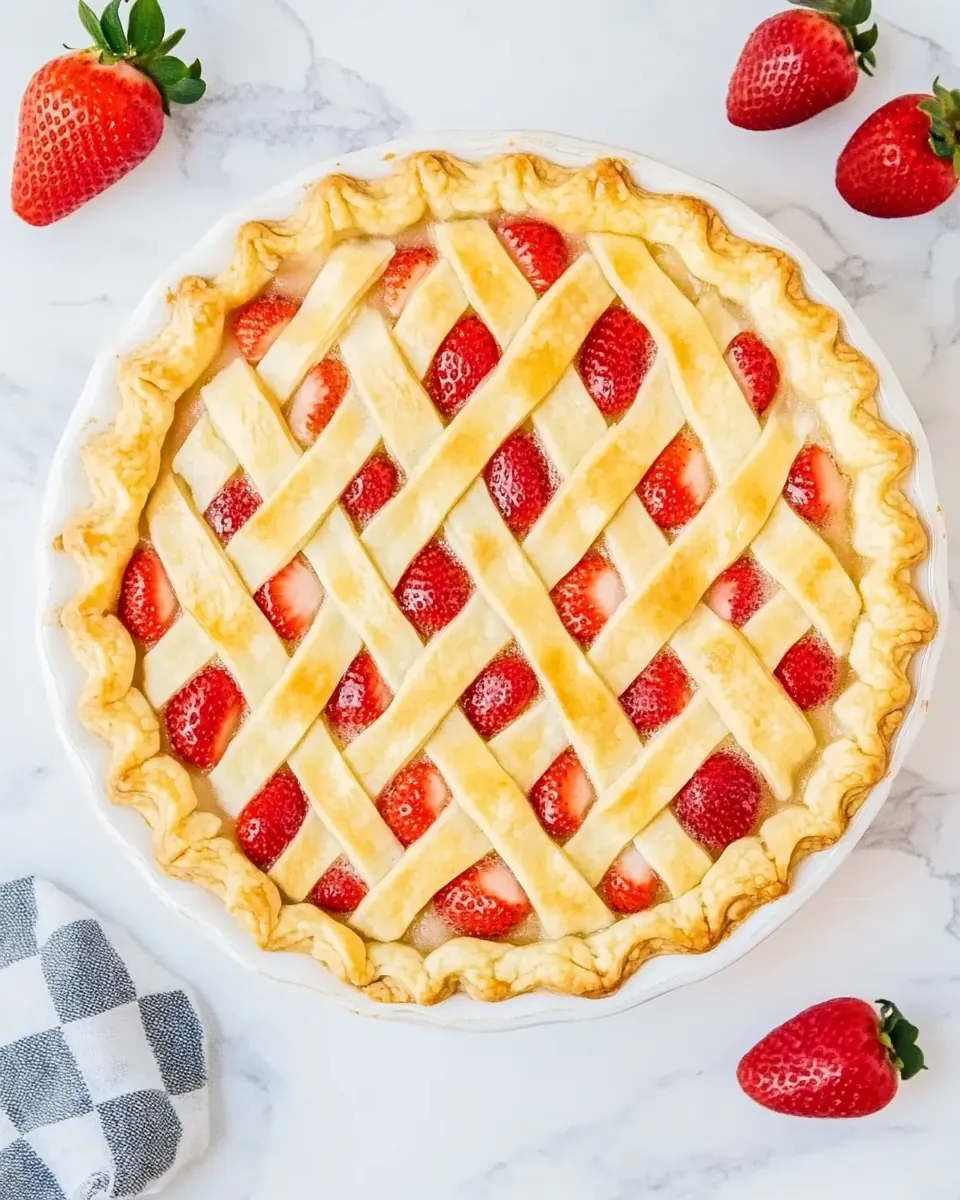
Use the reserved dough and any trimmed scraps to make long strips or ropes about 2 cm (2/3 inch) wide. Lay half of the strips over the strawberries, then place the remaining ones on top in the opposite direction to create a simple crisscross pattern.: As you weave the lattice, the dough strips should feel supple yet firm; their edges will slightly blur as they warm from your hands, which helps them join. The lattice shields the fruit while allowing steam to escape and creates that classic rustic look. Avoid making strips too thin, because they can bake brittle and break, or too thick, which can overwhelm the fruit.
Bake the jam tart in the oven for 35-40 minutes, or until it's golden on top. Remove from the oven and let it cool completely before cutting into slices.: During baking you will smell caramelizing sugars and notice the crust turn an inviting golden brown, with edges crisping beautifully. The fruit will bubble gently, releasing glossy juices that thicken as they cool, creating a luscious bite. Cooling fully is essential so the filling sets and slices hold shape; cutting too soon often yields a runny slice.