Preheat oven to 350℉ (175℃). Grease an 8 x 8 baking dish or line it with parchment paper and set aside.: Warm, gentle oven heat prepares the environment so the crust begins to set immediately when it goes in, helping the shortbread keep a crisp bottom and tender interior. You should feel a consistent warm breeze when you open the oven, and the rack should be placed in the center to ensure even browning. Greasing or lining the pan prevents sticking and gives you clean edges when you lift the bars out, and parchment also makes chilling and slicing easier after cooling. A common mistake is putting the pan on the top rack which can brown the top too quickly while leaving the center underbaked; use the center rack for balance.
For the Shortbread Base and Crumble: In a food processor fitted with an s-blade, combine 1 1/2 cup all-purpose flour, 1/3 cup granulated sugar, dash table salt, and 1/2 cup unsalted butter (cold and cubed). Pulse together until pastry dough is crumbly and butter is evenly distributed. Remove 1/2 cup mixture for the crumble topping.: In a food processor fitted with an s blade, combine 1 1/2 cup all purpose flour, 1/3 cup granulated sugar, dash table salt, and 1/2 cup unsalted butter cold and cubed. Pulse together until pastry dough is crumbly and butter is evenly distributed. Remove 1/2 cup mixture for the crumble topping : As you pulse, listen for the change in texture from dry flour to a coarse, sandy mixture; the pulses will create pea sized pieces of butter coated in flour which melt in the oven to create tender layers. The aroma will be a faint buttery sweetness, and visually you want a mixture that holds when pressed but still falls apart. Reserving 1/2 cup gives you a crunchy top that toasts and adds contrast. Overprocessing is easy to do, and if you puree the butter the dough will become greasy and dense, so pulse cautiously.
Press the remaining shortbread mixture into the prepared baking dish and bake for 15 minutes.: When pressing the dough, use the bottom of a measuring cup for even pressure so the base is uniform; an uneven base will bake irregularly, leaving thin spots or thick clumps that affect texture. After pressing, the dough should look compacted and matte, not cracked. As it bakes you will notice a faint golden edge and a rich, buttery scent filling the kitchen, which signals the shortbread is developing flavor. One common pitfall is pressing the base too thin which can cause it to overbake and become hard, so keep a consistent thickness across the pan.
While crust is baking, combine 1/2 cup full-fat sour cream, 1/4 cup granulated sugar, 1 teaspoon vanilla, 1 large egg, 1 teaspoon lemon zest, and 2 teaspoons fresh lemon juice together. Gently fold in 4 cups fresh strawberries.: Mixing these components off heat lets the sour cream and egg emulsify without cooking, creating a silky filling that sets gently in the oven. The scent will be a bright citrus and vanilla lift, and the filling should look glossy and cohesive. Folding the strawberries preserves some whole pieces while distributing juices, which gives textural variety. If you stir too vigorously you may macerate the berries and create an overly liquid filling, so fold with a spatula until combined.
When the crust comes out of the oven, pour the strawberry batter over the crust and sprinkle the reserved 1/2 cup crust batter over the berry mixture evenly.: Pouring the filling onto a warm crust allows the base to start absorbing moisture without collapsing, and the contrast of hot and cool elements helps create defined layers. Sprinkling the reserved crumbs produces a dotted, golden top once baked, contributing crunch and visual appeal. You should see the filling settle slightly into the crust and the topping remain distinct. A typical error is pressing the topping into the filling, which will prevent it from crisping; just sprinkle lightly so it toasts on the surface.
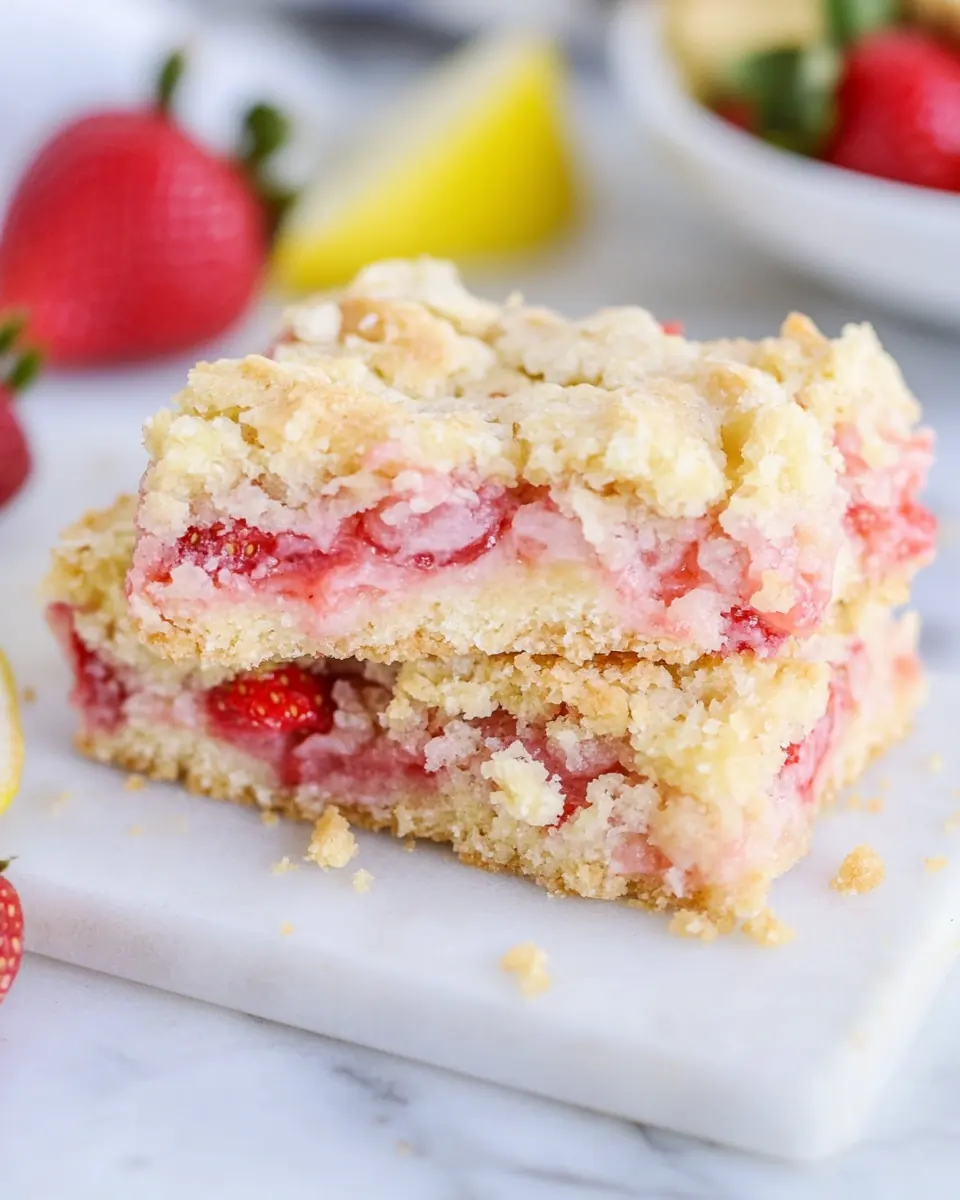
Return to the oven and bake for 45-50 minutes or until pie bars are set and crumble over top is slightly browned.: During this longer bake the filling will thicken and the top will turn golden; look for gentle bubbling around the edges and a center that no longer jiggles like a liquid. The aroma will deepen into a warm berry and buttery perfume, and the crumble will produce a subtle toasted scent. If the top is browning too quickly but the center is not set, loosely tent with foil to prevent overbrowning while the interior finishes. Underbaking leaves the center too loose, while overbaking dries the custard, so aim for a slightly wobbly center when removed.
Allow the bars to cool for at least an hour before slicing or refrigerate overnight before enjoying.: Cooling lets the filling fully set and makes slicing cleaner, yielding neat squares rather than a messy spread. As they cool, the aroma mellows and the texture firms to a satisfying bite, and refrigeration overnight improves sliceability and flavor melding. Expect the bars to feel more cohesive and slightly denser after chilling. A common mistake is slicing while too warm which causes squashed bars, so be patient and chill if you can.